
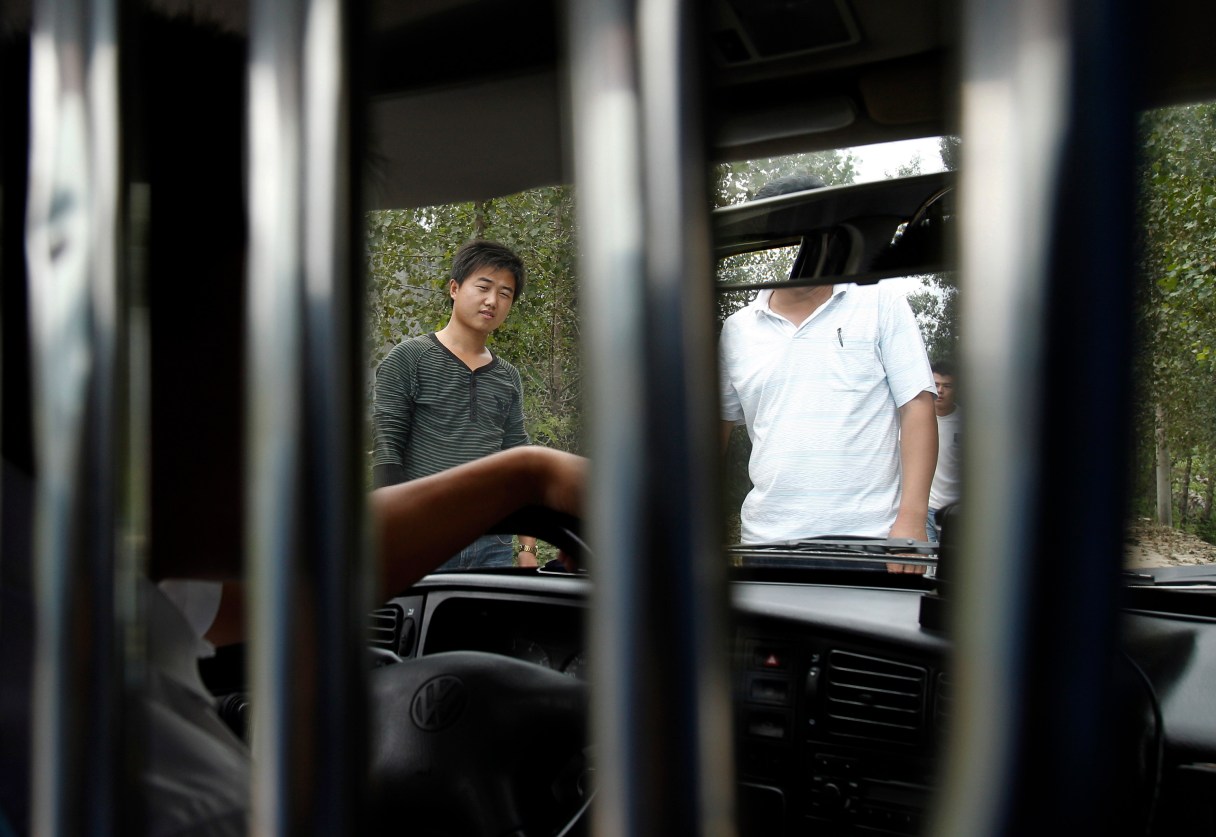
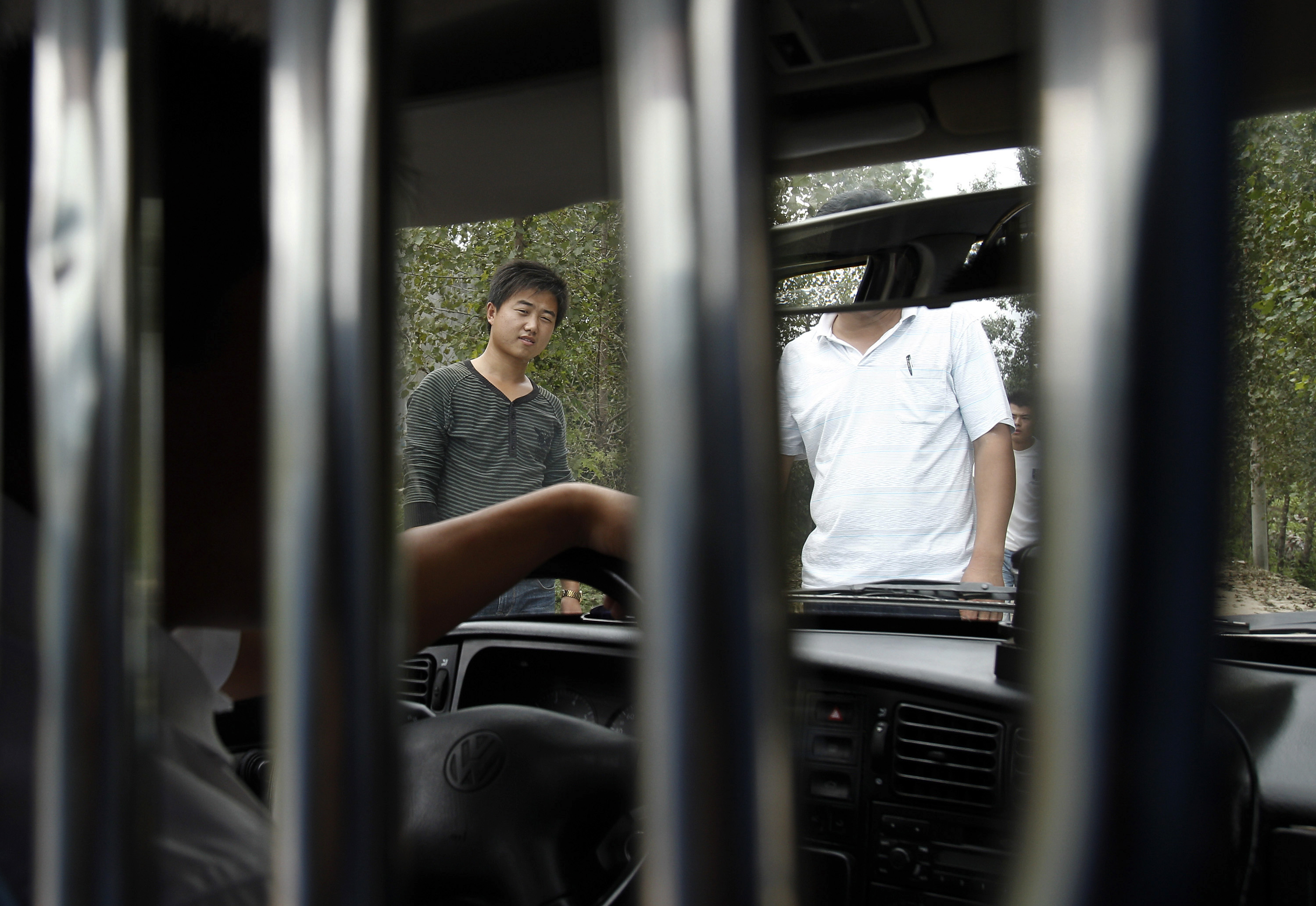
 In this Sept. 9, 2010 file photo, unidentified men block a journalist’s vehicle from entering Dongshigu Village where blind activist Chen Guangcheng was locked down, in eastern China’s Shandong province. While China has long been a police state, controls on these non-offenders mark a new expansion of police resources at a time the authoritarian leadership is consumed with keeping its hold over a fast-changing society. (AP Photo/Andy Wong, File)
CHARLES HUTZLER
BEIJING (AP) – Every workday at 7:20 a.m., colleagues pick up Yao Lifa from his second-floor apartment and drive him to the elementary school where he taught for years.
This is no car pool. Yao is a prisoner, part of a China boom in outsourced police control.
By day, Yao is kept in a room, not allowed to work and watched by fit, young gym teachers and other school staff. At dinner time or later, he is sent back to the apartment that he shares with his wife and 3-year-old daughter. A surveillance camera monitors the building entrance, while police sit in a hut outside.
“At school, if I have to go to the bathroom, someone escorts me. Most of the time, I’m not allowed to speak with others or answer the phone,” Yao said in a recent late-night Internet phone interview from his home in Qianjiang city. “When they bring me home, they sign me over to the next shift.”