
Tuesday, November 10, 2026Nov 10

University of California unveils plan to curb climate change

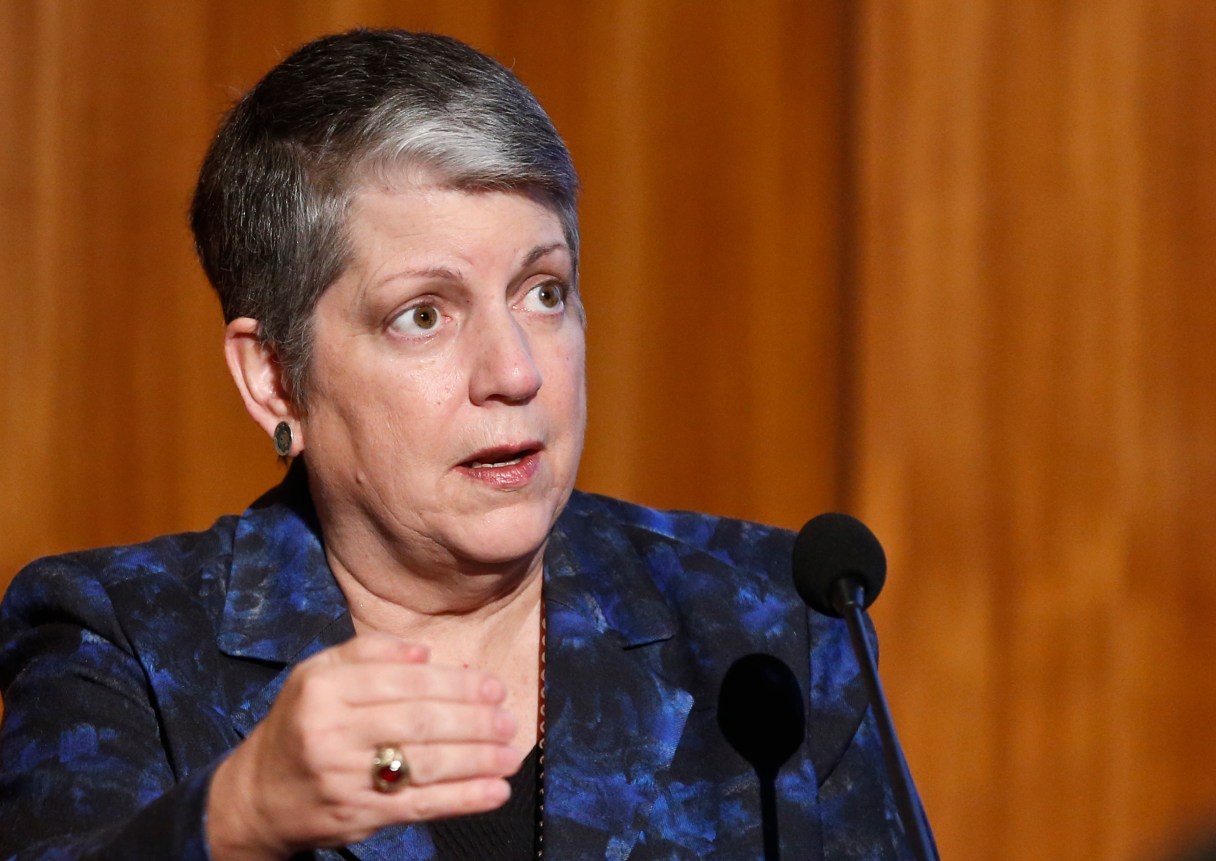
Janet Napolitano, the President of the University of California, speaks at Carbon Neutrality Initiative at the University of California-San Diego Tuesday, Oct. 27, 2015, in San Diego. Napolitano says reducing the human carbon footprint is a "moral imperative" and vows to turn the system's 10 campuses into a living laboratory for solutions. (AP Photo/Lenny Ignelzi)
Janet Napolitano, the President of the University of California, speaks at Carbon Neutrality Initiative at the University of California-San Diego Tuesday, Oct. 27, 2015, in San Diego. Napolitano says reducing the human carbon footprint is a "moral imperative" and vows to turn the system's 10 campuses into a living laboratory for solutions. (AP Photo/Lenny Ignelzi) Janet Napolitano, the President of the University of California, speaks at Carbon Neutrality Initiative at the University of California-San Diego Tuesday, Oct. 27, 2015, in San Diego. Napolitano says reducing the human carbon footprint is a "moral imperative" and vows to turn the system's 10 campuses into a living laboratory for solutions. (AP Photo/Lenny Ignelzi)

SAN DIEGO (AP) – Reducing the human carbon footprint is a “moral imperative,” University of California President Janet Napolitano said Tuesday as she vowed to turn the system’s 10 campuses into a living laboratory for solutions that can be scaled up to state, national and global levels.

Napolitano made the comments at a two-day climate change summit at UC San Diego, where researchers discussed their blueprint for actions that they say the state and the world should undertake to tackle the problem – including reducing the carbon footprint of the wealthiest 1 billion people.

The plan will be presented at next month’s landmark climate change conference in Paris.

UC officials say global warming could be slowed dramatically by reducing greenhouse gases such as methane emissions by 50 percent and black carbon by 90 percent over the next 15 years. The wealthiest need to cut back dramatically, while green energy needs to be made more available to the poorest 3 billion people, the plan says.

UC experts are asking religious leaders to help foster change.