
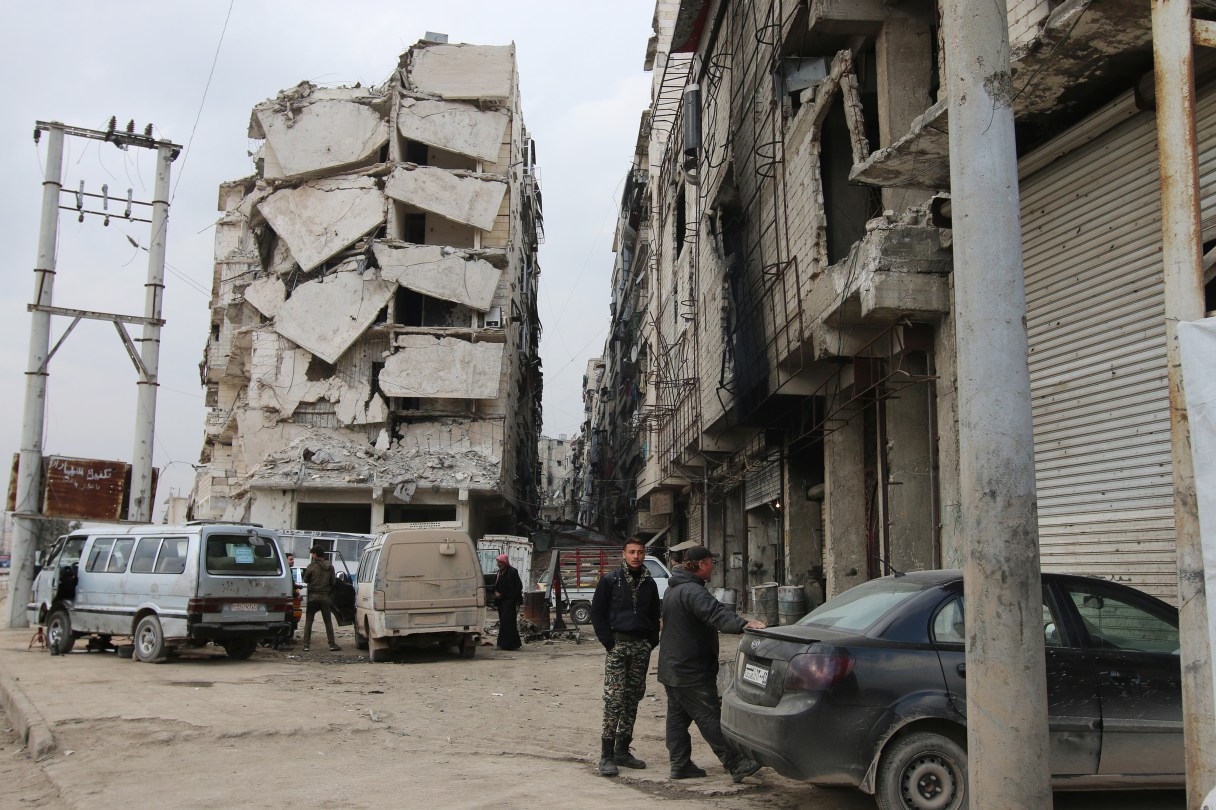
Diplomats from a dozen countries, led by the United States and Russia, are struggling to make progress in Syria, even as fighting in the north sends tens of thousands fleeing and threatens a deepening humanitarian crisis. Next month, Syria’s civil war will reach the end of its fifth year, and its consequences continue to reach new and disastrous levels.
An AP News Guide to the latest events:
WAS A CEASE-FIRE AGREEMENT REACHED?
No. The U.S. and Russia and other nations agreed to try to work for a less ambitious goal: a pause in fighting or “cessation of hostilities,” within a week. And even that vague formula will be difficult to pull off.
Moscow and Washington disagree over which armed factions would be covered under the cessation. Russia says it and its ally, the Syrian government, will continue to hit “terrorists,” by which they mean not just the Islamic State group and al-Qaida’s branch, the Nusra Front, but also a number of rebel factions opposing President Bashar Assad and backed by Saudi Arabia and Turkey. So that would effectively mean fighting would continue on many fronts even if a cessation is declared.