
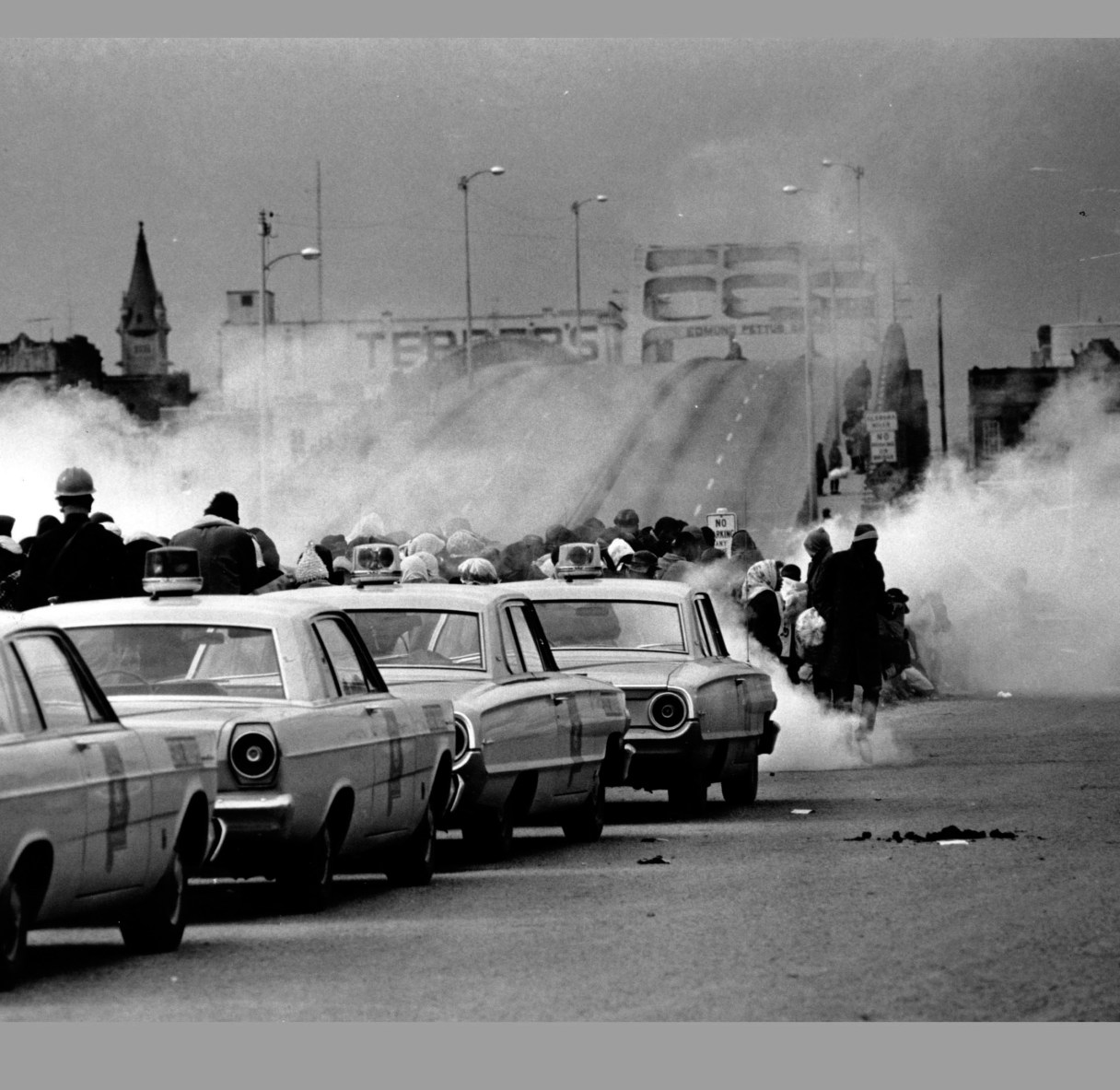
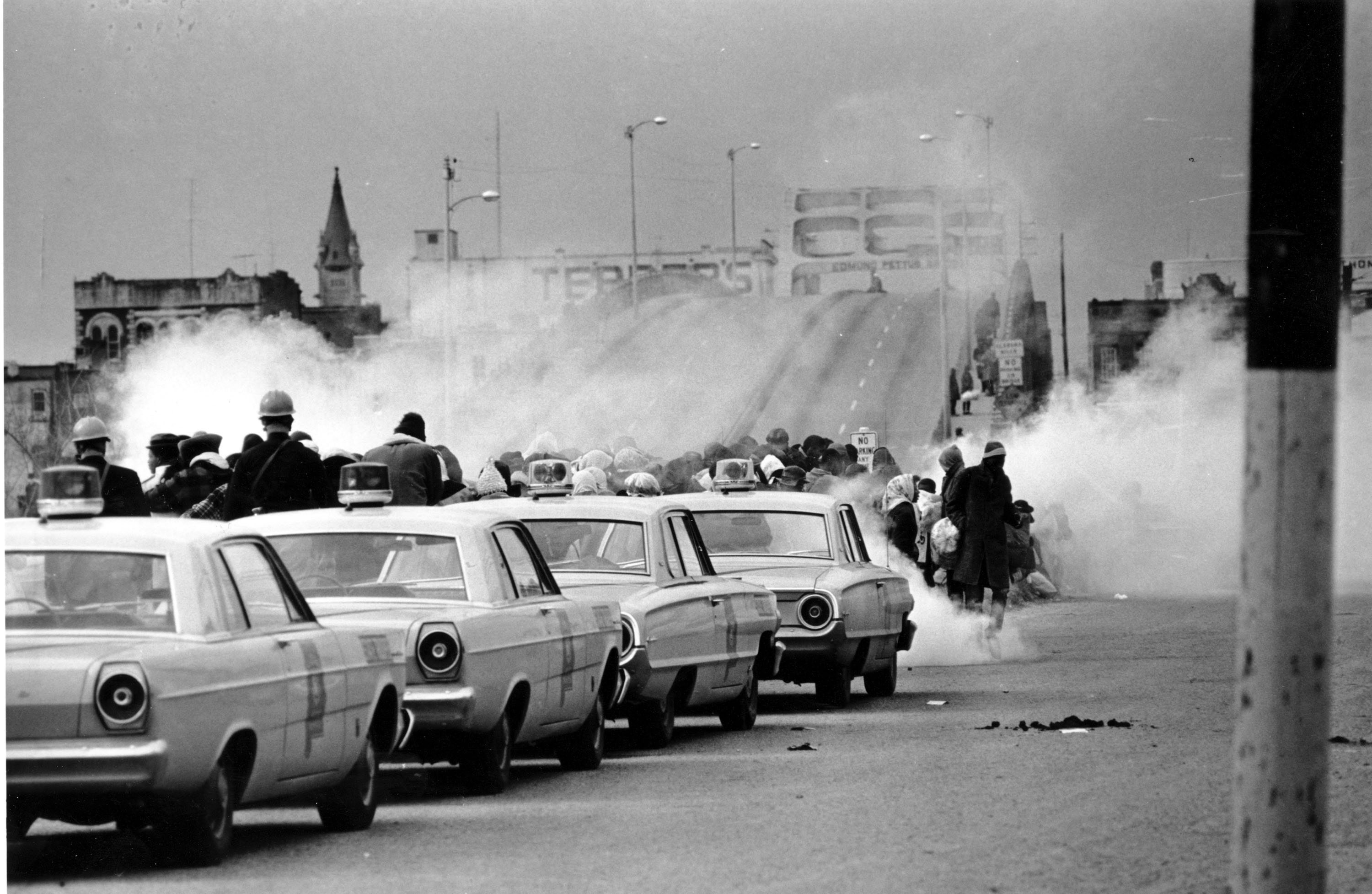
 FILE – Tear gas fills the air as state troopers, ordered by Alabama Gov. George Wallace, break up a march at the Edmund Pettus Bridge in Selma, Ala., on what became known as Bloody Sunday in this March 7, 1965, file photo. (AP Photo/File)
SELMA, Ala. – Speakers at the annual commemoration of a key event in African Americans’ fight for voting rights urged Congress to resurrect the requirement for many Deep South states to get federal approval of their election laws.
The son of Martin Luther King Jr. said blood spilled on Selma’s Edmund Pettus Bridge helped pave the way for the Voting Rights Act of 1965. But a court case also arising out of Alabama led the U.S. Supreme Court last year to effectively abolish preclearance, a key provision of the Voting Rights Act.
“I’m very concerned because it is ironic that the state that helped to give us so much, has temporarily set up a scenario to take it away. That we must change,” Martin Luther King III said in a speech this morning.
Thousands of people gathered in Selma on Sunday to honor the 49th anniversary of “Bloody Sunday,” when civil rights marchers were beaten by law enforcement officers on the city’s Edmund Pettus Bridge. Outrage over the melee helped galvanize support for the passage of the Voting Rights Act of 1965. Speakers at the annual event put the focus on the death of the preclearance provision and a slate of new voting laws, including photo voter ID requirements, being rolled out across the country.
This was the first celebration since the Supreme Court ruled last year in Shelby County’s challenge to the Voting Rights Act. The court struck down the formula used to determine which states were subject to federal preclearance of their election laws. Justices said that the country had changed and the decades-old formula determining which states would be covered by preclearance was no longer applicable.