
If you go
› What: Breaking Up Christmas: An Old Christmas Tradition.› When: 6 p.m. today, Jan. 5.› Where: Museum Center at Five Points, 200 E. Inman St., Cleveland, Tenn.› Admission: $5 (free to museum and Cleveland Storytelling Guild members).› Phone: 423-339-5745.› Email: tellone@bellsouth.net.Did you know?Cleveland Storytelling Guild member Judy Baker says much folklore surrounds Old Christmas.For example, many believed that on Old Christmas Eve, as the hour approached midnight, the animals in their stalls would kneel and begin to low as if praying or crying. It also was believed, she says, that elderbushes would sprout and even burst into bloom, no matter how hard the ground might be frozen and that bees would swarm, humming the 100th Psalm.
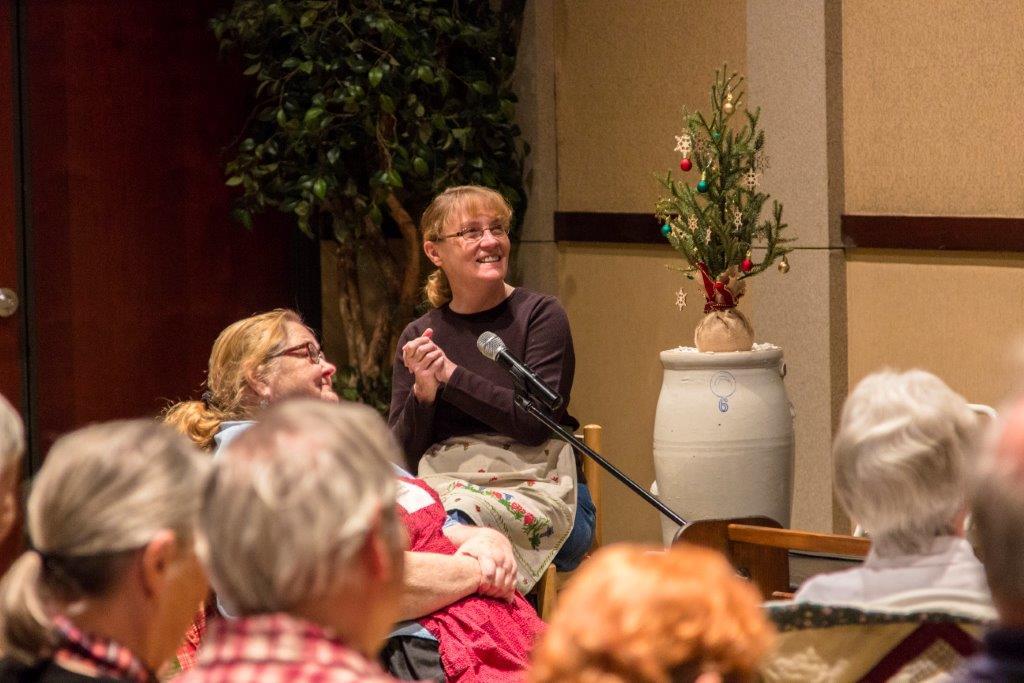
A program of traditional songs and stories coming up tonight, Jan. 5, in Cleveland, Tenn., will explain the custom of Old Christmas in Appalachia.
In a nod to regional heritage, the Cleveland Storytelling Guild and Museum Center at Five Points have revived “at least a part of the old traditions,” says guild member Judy Baker.
Breaking Up Christmas: An Old Christmas Tradition, she says, will present “traditional Appalachian songs and stories, along with simple treats, much like our ancestors may have done – without the gunfire or bonfires, of course.”
Gunfire and bonfires?
The history takes a little explaining.
While Old Christmas and Epiphany occur on the same day, Jan. 6, they are not the same.
“The celebration of Epiphany, traditionally seen as the day the Magi visited the Christ Child, revealing him to the world, dates back to before 194 A.D., while the observance of the Nativity, in the form on Christmas, did not actually catch on until the 4th century AD,” says Baker.
“Jan. 6 was celebrated as Christmas in the Julian calendar until Pope Gregory reformed the calendar in 1582, removing 11 days between Dec. 25 and Jan. 6, making Dec. 25 the ‘official’ Christmas Day.
“Even though the British Empire and the American colonies adopted the new calendar in 1752, many communities, especially in the Appalachian mountains, continued to celebrate what became known as Old Christmas, in addition to New Christmas, resulting in a 12-day celebration that became known as ‘Breaking Up Christmas.'”
Tonight’s program, she says, “will hearken back to the days in Appalachia before the advent of electricity, television and radio when neighbors gathered in homes during the 12 days between what we now celebrate as Christmas on Dec. 25 and ‘Old Christmas’ on Jan. 6.”
Baker says history isn’t clear why Old Christmas continued – whether because calendar reform had removed 11 days, turning Dec. 25 into Jan. 6, or because Jan. 6 was traditionally celebrated as Epiphany, but many in the mountains continued to celebrate Old Christmas on Jan. 6.
“During the days between Dec. 25 and Jan. 6, neighbors in the mountains would gather in one another’s homes and celebrate with food, music, storytelling and dancing,” she says. “On Jan. 5, Old Christmas Eve, many would celebrate the end of the season with bonfires, gunfire, singing and storytelling. Then, after the raucous celebrations, Old Christmas Day, Jan. 6, would usually be celebrated quietly, with churchgoing, family meals and other family-oriented events.”
Baker says that music, food, storytelling and dancing were all part of the Breaking Up Christmas celebration “and a part of the season that everyone looked forward to.”