
Monday, November 16, 2026Nov 16

Former Volkswagen CEO charged with fraud in Germany

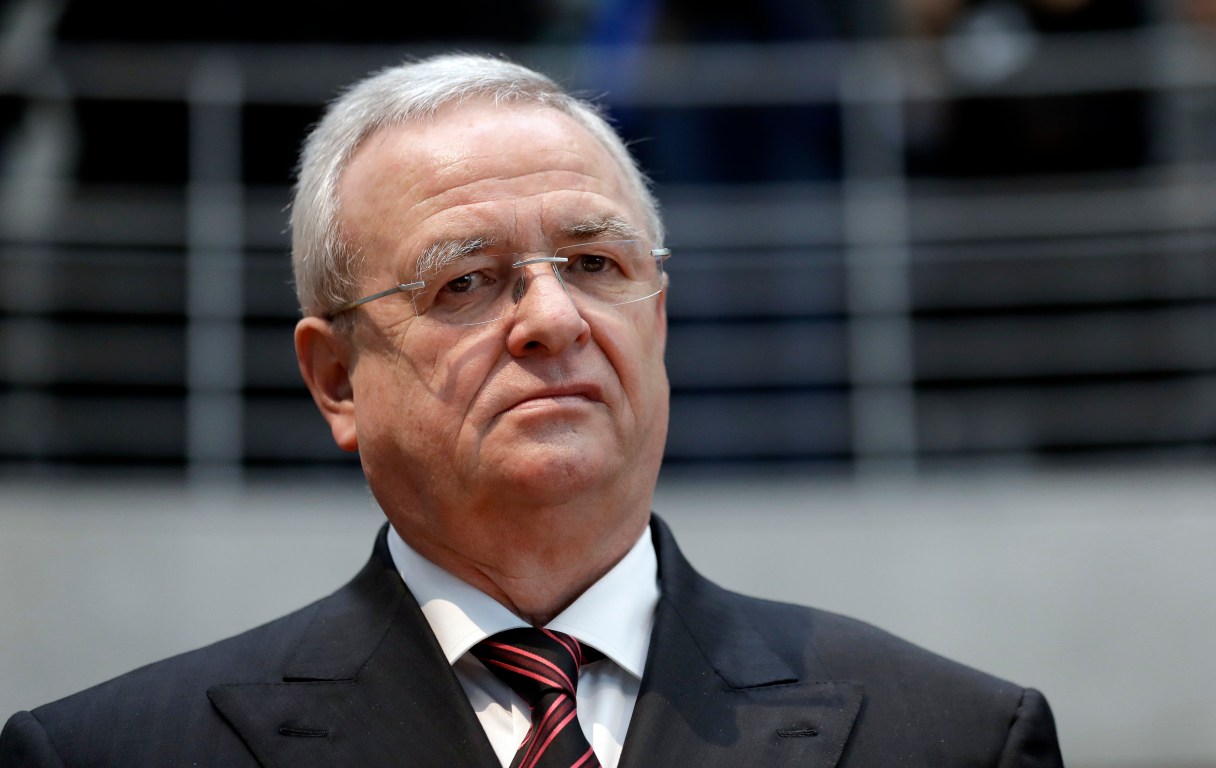
FILE - In this Jan. 19, 2017 file photo Martin Winterkorn, former CEO of the German car manufacturer 'Volkswagen', arrives for a questioning at an investigation committee of the German federal parliament in Berlin, Germany. VW spokesman  Michael Brendel says the German automaker’s supervisory board is checking whether it can demand damage claims from former VW CEO Martin Winterkorn in connection with the company's diesel emissions cheating scandal. German newspaper Frankfurter Allgemeine Sonntagszeitung reported Sunday May 6, 2018  that Winterkorn could stand to lose his entire property in connection with the company’s investigation. (AP Photo/Michael Sohn, file)
FILE - In this Jan. 19, 2017 file photo Martin Winterkorn, former CEO of the German car manufacturer 'Volkswagen', arrives for a questioning at an investigation committee of the German federal parliament in Berlin, Germany. VW spokesman Michael Brendel says the German automaker’s supervisory board is checking whether it can demand damage claims from former VW CEO Martin Winterkorn in connection with the company's diesel emissions cheating scandal. German newspaper Frankfurter Allgemeine Sonntagszeitung reported Sunday May 6, 2018 that Winterkorn could stand to lose his entire property in connection with the company’s investigation. (AP Photo/Michael Sohn, file)

FRANKFURT, Germany — German prosecutors have charged former Volkswagen CEO Martin Winterkorn and four others with fraud and other offenses in connection with the company’s massive, multi-year effort to cheat on diesel emissions testing.

Prosecutors said Monday that Winterkorn knew about the deceptive practice since at least May 2014, and failed to put a stop to it. That contradicted Winterkorn’s claim that he didn’t learn of the problem until shortly before U.S. investigators announced it in September 2015. Winterkorn resigned as CEO days later.

The prosecutors said in a statement that the defendants — all of them top Volkswagen managers — were part of an ongoing deception that started in 2006.

The company has admitted installing software that could tell when the cars were on test stands for emissions certification. When the cars went on to everyday driving, the emission controls were turned off, improving performance but emitting far more than the U.S. legal limit of nitrogen oxides, a class of pollutant that is harmful to health.

In all, some 11 million cars worldwide were equipped with the illegal software, in a case that damaged the reputation of diesel technology and accelerated the shift to electric cars in Europe.