
Tuesday, November 10, 2026Nov 10

Farm in a box: Shipping containers reused for fresh produce

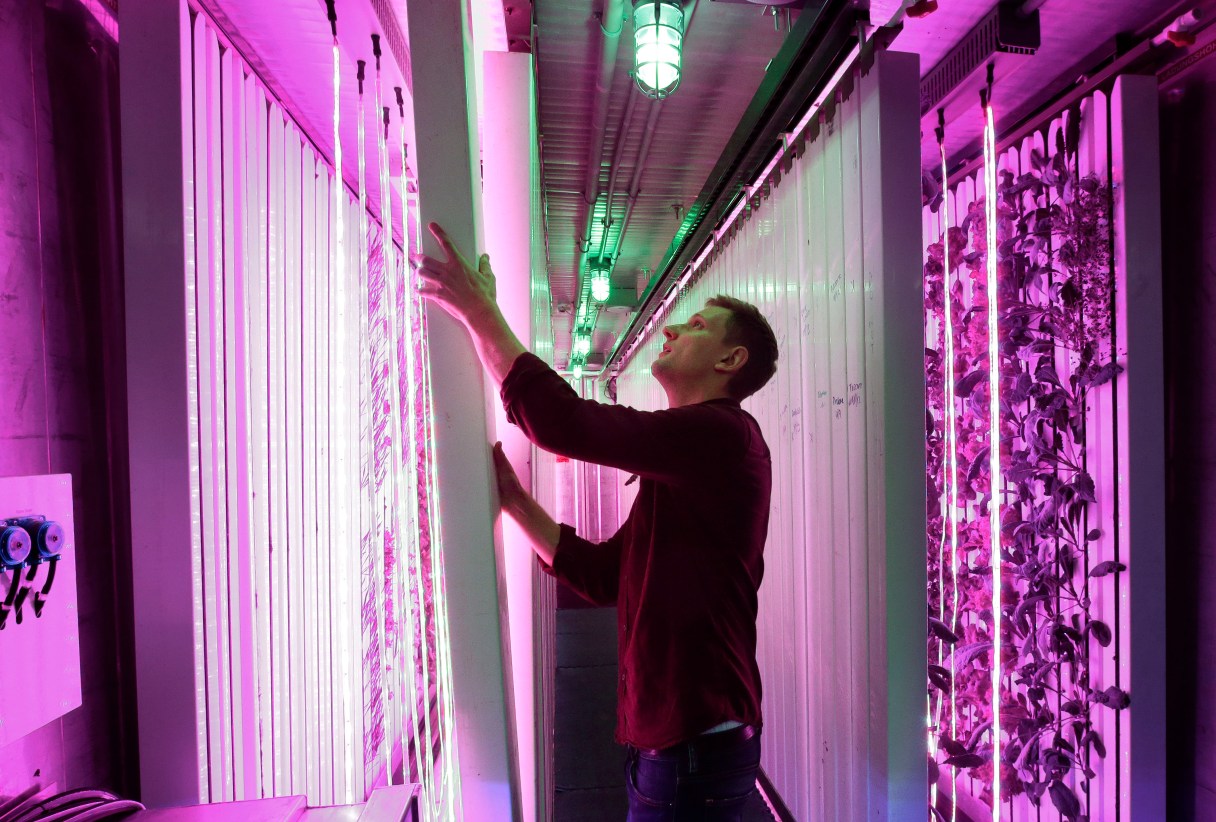
In this Tuesday, Dec. 8, 2015, photo, Freight Farms co-founder Jon Friedman positions a seedling tower under red light, inside a freight container converted into a vegetable garden in Boston. The Boston-based company is repurposing shipping containers as mobile farms. Freight Farms sells 320-square-foot containers equipped with high-tech hydroponic equipment that’s capable of producing the typical yield for two acres of farmland in any climate, and uses 90 percent less water. (AP Photo/Steven Senne)
In this Tuesday, Dec. 8, 2015, photo, Freight Farms co-founder Jon Friedman positions a seedling tower under red light, inside a freight container converted into a vegetable garden in Boston. The Boston-based company is repurposing shipping containers as mobile farms. Freight Farms sells 320-square-foot containers equipped with high-tech hydroponic equipment that’s capable of producing the typical yield for two acres of farmland in any climate, and uses 90 percent less water. (AP Photo/Steven Senne) In this Tuesday, Dec. 8, 2015, photo, Freight Farms co-founder Jon Friedman positions a seedling tower under red light, inside a freight container converted into a vegetable garden in Boston. The Boston-based company is repurposing shipping containers as mobile farms. Freight Farms sells 320-square-foot containers equipped with high-tech hydroponic equipment that’s capable of producing the typical yield for two acres of farmland in any climate, and uses 90 percent less water. (AP Photo/Steven Senne)

BOSTON (AP) – Shipping containers have been turned into housing, art, even playgrounds. Now, a Boston company is recycling them into high-tech mobile farms as part of a new wave of companies hoping to bring more innovation to agriculture.

Freight Farms and other indoor agriculture companies are looking to meet the growing demand for high-quality, locally grown and sustainable produce by farming fruits and vegetables in non-traditional spaces such as warehouses, industrial buildings and containers.

They’re using hydroponics and other longstanding methods to grow plants without soil and incorporating technology that automates much of the work and reduces waste.

“The food system needs to be designed around technology and equipment that’s available today,” says Brad McNamara, Freight Farms’ CEO and co-founder. “It was designed 100 years ago without the right technology to reach the level that it needs to. The whole system needs to be modernized.”

The company says its Leafy Green Machine helps farmers produce a consistently bountiful crop – roughly the typical yield of an acre of farmland – while using 90 percent less water, no pesticides, and just 320 square feet of space.