
Tuesday, November 10, 2026Nov 10

Playboy magazine founder Hugh Hefner dies at 91

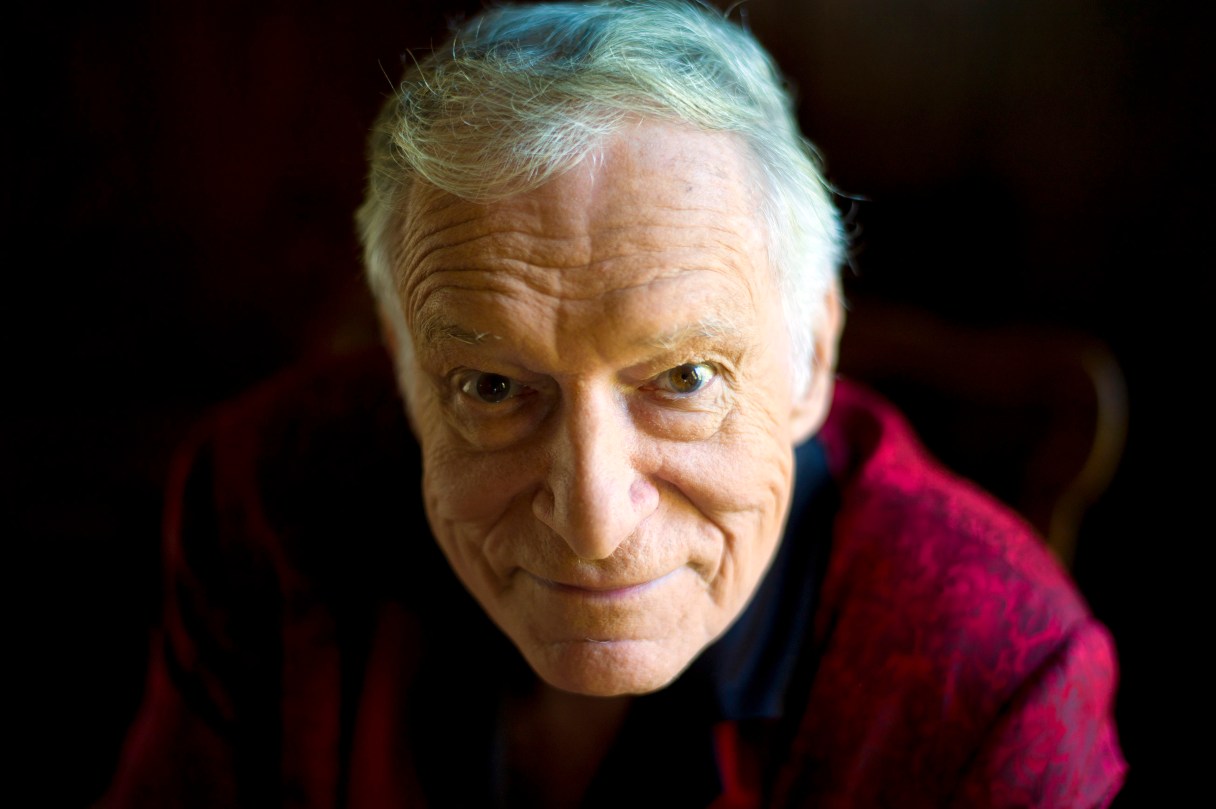
This Oct. 13, 2011, file photo shows American magazine publisher, founder and Chief Creative Officer of Playboy Enterprises, Hugh Hefner at his home at the Playboy Mansion in Beverly Hills, Calif. Playboy magazine founder and sexual revolution symbol Hefner has died at age 91. The magazine released a statement saying Hefner died at his home of natural causes on Wednesday night, Sept. 27, 2017, surrounded by family.  (AP Photo/Kristian Dowling, File)
This Oct. 13, 2011, file photo shows American magazine publisher, founder and Chief Creative Officer of Playboy Enterprises, Hugh Hefner at his home at the Playboy Mansion in Beverly Hills, Calif. Playboy magazine founder and sexual revolution symbol Hefner has died at age 91. The magazine released a statement saying Hefner died at his home of natural causes on Wednesday night, Sept. 27, 2017, surrounded by family. (AP Photo/Kristian Dowling, File) This Oct. 13, 2011, file photo shows American magazine publisher, founder and Chief Creative Officer of Playboy Enterprises, Hugh Hefner at his home at the Playboy Mansion in Beverly Hills, Calif. Playboy magazine founder and sexual revolution symbol Hefner has died at age 91. The magazine released a statement saying Hefner died at his home of natural causes on Wednesday night, Sept. 27, 2017, surrounded by family. (AP Photo/Kristian Dowling, File)

LOS ANGELES (AP) – Playboy founder Hugh M. Hefner, the pipe-smoking hedonist who revved up the sexual revolution in the 1950s and built a multimedia empire of clubs, mansions, movies and television, symbolized by bow-tied women in bunny costumes, has died at age 91.

Hefner died of natural causes at his home surrounded by family on Wednesday night, Playboy said in a statement.

As much as anyone, Hefner helped slip sex out of the confines of plain brown wrappers and into mainstream conversation.

In 1953, a time when states could legally ban contraceptives, when the word “pregnant” was not allowed on “I Love Lucy,” Hefner published the first issue of Playboy, featuring naked photos of Marilyn Monroe (taken years earlier) and an editorial promise of “humor, sophistication and spice.” The Great Depression and World War II were over and America was ready to get undressed.

Playboy soon became forbidden fruit for teenagers and a bible for men with time and money, primed for the magazine’s prescribed evenings of dimmed lights, hard drinks, soft jazz, deep thoughts and deeper desires. Within a year, circulation neared 200,000. Within five years, it had topped 1 million.