
Tuesday, November 10, 2026Nov 10

Citing drought, California town rushes water plant

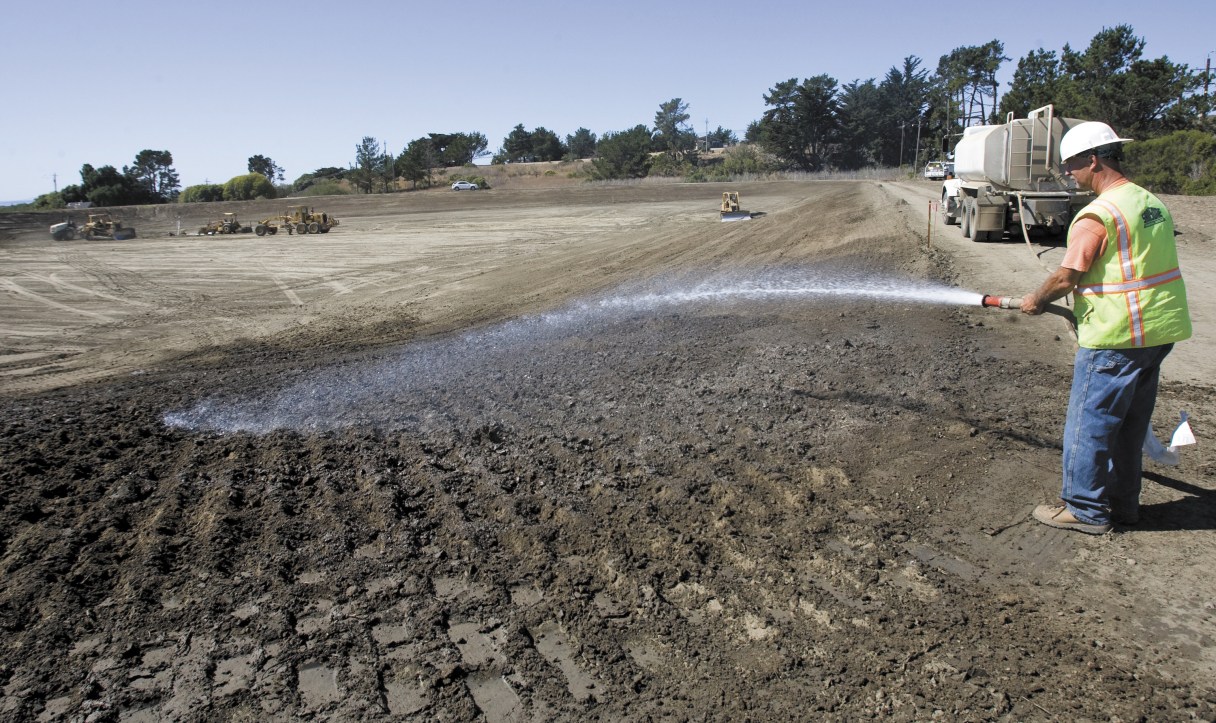
In an Oct. 2, 2014 photo, Jim Tuzzio sprays non-potable water used for dust control and compaction at the site of a roughly 3-acre evaporation pond that will hold brine from the desalination  plant, in Cambria, Calif. The oceanside resort town of Cambria is opening the plant under a state drought-emergency declaration, using a novel mix of brackish estuary water, fresh water, and more than a bit of recycled sewage wastewater. (AP Photo/The Tribune (of San Luis Obispo), David Middlecamp)
In an Oct. 2, 2014 photo, Jim Tuzzio sprays non-potable water used for dust control and compaction at the site of a roughly 3-acre evaporation pond that will hold brine from the desalination plant, in Cambria, Calif. The oceanside resort town of Cambria is opening the plant under a state drought-emergency declaration, using a novel mix of brackish estuary water, fresh water, and more than a bit of recycled sewage wastewater. (AP Photo/The Tribune (of San Luis Obispo), David Middlecamp) In an Oct. 2, 2014 photo, Jim Tuzzio sprays non-potable water used for dust control and compaction at the site of a roughly 3-acre evaporation pond that will hold brine from the desalination plant, in Cambria, Calif. The oceanside resort town of Cambria is opening the plant under a state drought-emergency declaration, using a novel mix of brackish estuary water, fresh water, and more than a bit of recycled sewage wastewater. (AP Photo/The Tribune (of San Luis Obispo), David Middlecamp)

SAN FRANCISCO (AP) – California’s drought declaration has triggered only local limits such as restrictions on washing cars or watering lawns for most communities, but one Pacific Coast tourist town has seized it as an opportunity to build a long-desired desalination plant.

The new project will turn salty water to drinking water for the 6,000-resident town of Cambria, which hugs the cliffs of the central coast, 6 miles south of William Randolph Hearst’s famous castle at San Simeon. It is one of the biggest infrastructure projects undertaken in response to Gov. Jerry Brown’s drought emergency decree last year.

The plant is expected to go online early this month after being finished in just six months, unusually fast in California. Projects of this sort typically take years, and often decades, of environmental reviews, public hearings and lawsuits.

Dozens of other cities and towns over the years have considered desalination plants as the way out of water shortages. Critics, however, say the technology is expensive, energy intensive and produces huge amounts of brine waste that damages the environment. California has 11 other desalination plants, and another 16 proposed.

Citing Brown’s drought declaration, San Luis Obispo County and local Cambria officials announced the water-plant project in May and finished it by December.