
Tuesday, November 10, 2026Nov 10

AP-GfK Poll: Minorities, young Americans still backing Obama

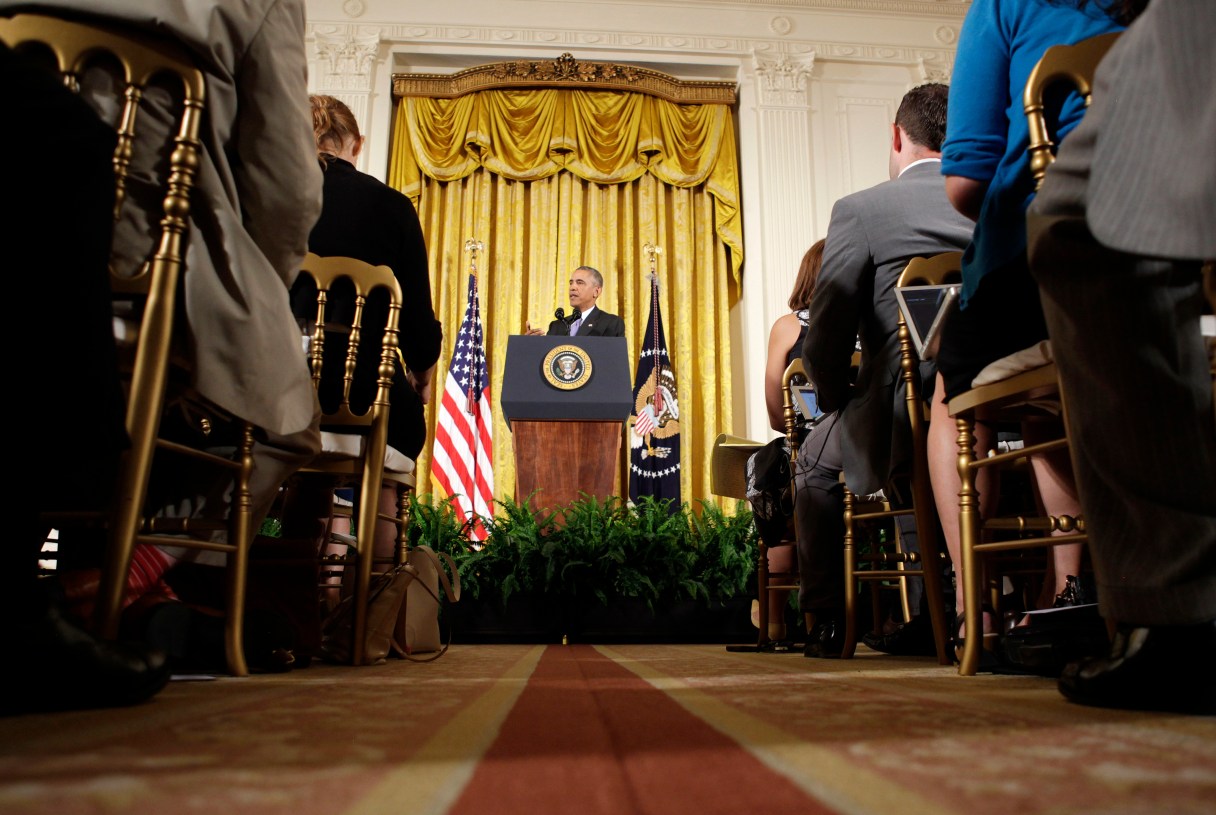
In this July 15, 2015, photo, President Barack Obama answers questions about the Iran nuclear deal during a news conference in the East Room of the White House in Washington. Obama is holding on to relatively high levels of support among the so-called "Obama coalition" of minorities, liberals and young Americans, suggesting the president could play a potent role helping the next Democratic presidential nominee's bid for election, an Associated Press-GfK poll found.  (AP Photo/Pablo Martinez Monsivais)
In this July 15, 2015, photo, President Barack Obama answers questions about the Iran nuclear deal during a news conference in the East Room of the White House in Washington. Obama is holding on to relatively high levels of support among the so-called "Obama coalition" of minorities, liberals and young Americans, suggesting the president could play a potent role helping the next Democratic presidential nominee's bid for election, an Associated Press-GfK poll found. (AP Photo/Pablo Martinez Monsivais) In this July 15, 2015, photo, President Barack Obama answers questions about the Iran nuclear deal during a news conference in the East Room of the White House in Washington. Obama is holding on to relatively high levels of support among the so-called "Obama coalition" of minorities, liberals and young Americans, suggesting the president could play a potent role helping the next Democratic presidential nominee's bid for election, an Associated Press-GfK poll found. (AP Photo/Pablo Martinez Monsivais)

WASHINGTON (AP) – Barack Obama is holding on to relatively high levels of support among the so-called “Obama coalition” of minorities, liberals and young Americans, suggesting the president could play a potent role helping the next Democratic presidential nominee’s bid for election, an Associated Press-GfK poll found.

Yet even with that support from his core supporters, less than half the public has a positive view of his presidency.

Hillary Rodham Clinton is viewed somewhat less favorably by the key voting groups whose record-setting turnout in 2008 propelled Obama to the White House.

Roughly two-thirds of Hispanics view Obama favorably, compared to just over half of Hispanics who say the same about Clinton. Among self-identified liberals, Obama’s favorability stands at 87 percent, to Clinton’s 72 percent. Half of Americans under the age of 30 view Obama favorably, compared to just 38 percent for his former secretary of state.

The findings offer a window into the factors at play as Clinton decides how closely to embrace Obama, his record and his policies in her campaign for president. Although associating herself with Obama could turn off some independent and Republican-leaning voters, electoral math and changing demographics make it critical for Democrats to turn out high numbers of Hispanics, African Americans and young voters.