
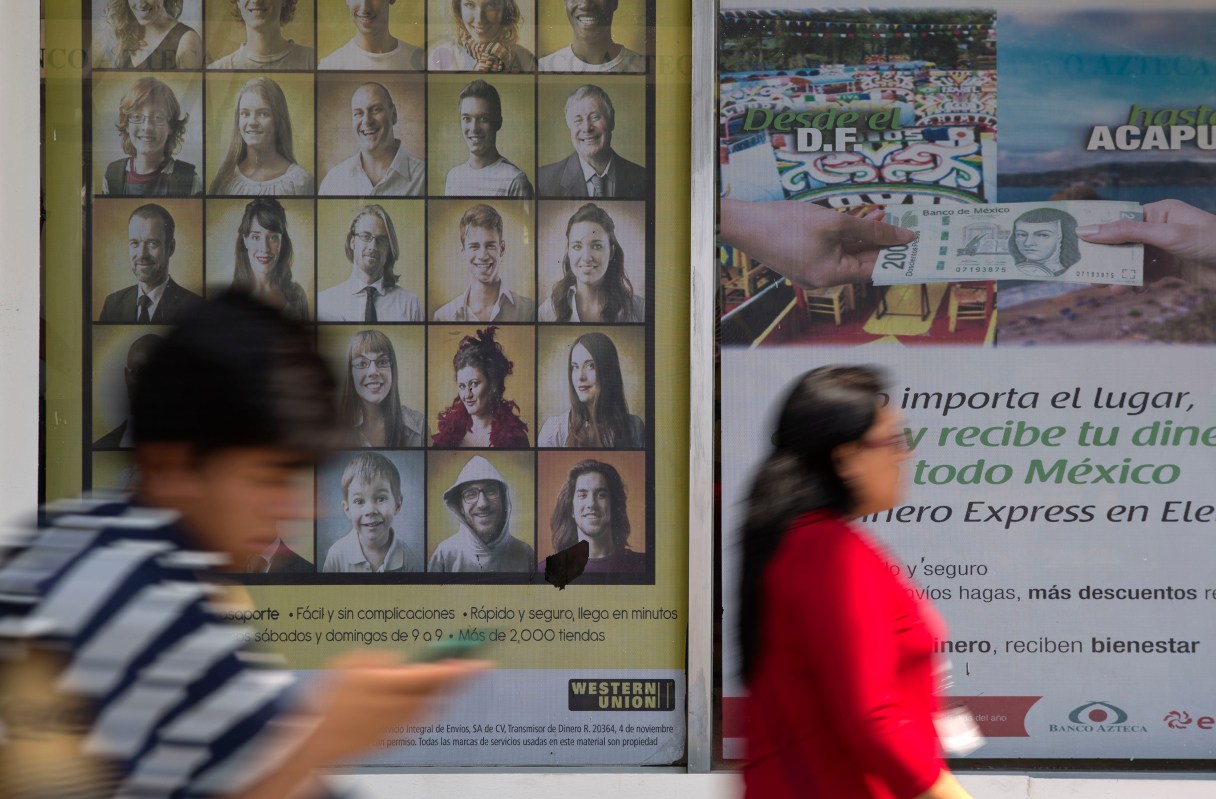
MEXICO CITY (AP) – The billions of dollars in U.S. remittances that Donald Trump is threatening to block to force Mexico to pay for a border wall are a financial lifeline for the Latin American country’s economy and millions of individuals who are supported by relatives up north.
For families across Mexico, the transfers help put food on the table and clothe children. They can make it possible to start a small business, put an addition on a cinderblock home or buy a secondhand truck to use on a farm.
So it’s not surprising many Mexicans had negative reactions Tuesday to the Republican presidential candidate’s proposal to cut off remittances from the more than 11 million Mexicans living in the United States unless Mexico makes a one-time payment of $5 billion to $10 billion.
“That money they send so their family here can live, I don’t know how they could do that to them,” said Ramiro Altamirano Macedo de la Concha, a 76-year-old taxi driver in Mexico City. “That man is half-crazy.”
One U.S. group that favors reduced immigration called for less emphasis on the wall and more on ensuring people in the United States without authorization cannot work or enjoy benefits and services.