
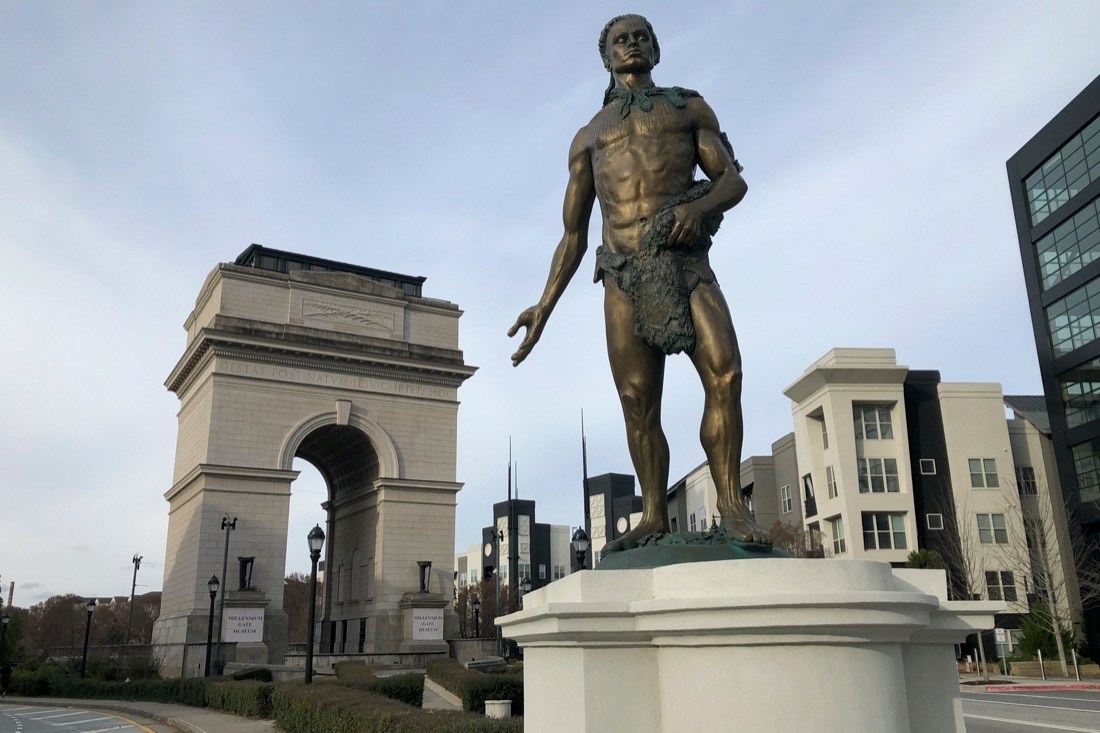
ATLANTA (AP) – There’s a problem with putting someone on a pedestal: Exposed on all sides, a hero to some can be seen as a traitor to others.
Atlanta plans to install a statue of a Native American man atop a 110-foot (34-meter) column in its new Peace Park, where it will tower over statues of 17 civil rights icons, including the Rev. Martin Luther King Jr.
Developer Rodney Mims Cook Jr. calls Chief Tomochichi “a co-founder of Georgia” who prevented massacres by warmly inviting British Gen. James Oglethorpe to colonize his people’s land in 1733.
“They became the closest of friends, initiating from the moment of Georgia’s founding a practice of diplomatic negotiation and cohabitation,” a narrator asserts in a video promoting the park. “Nearly three centuries later, Georgia’s tradition of peaceful coexistence continues to thrive.”
But Cook didn’t ask the Muscogee about their ancestor, and now that he’s unveiled the $300,000 bronze statue, historians say it’s all wrong. “Disrespectful” and “incredibly inappropriate” are some of the reactions three tribal historians shared with The Associated Press.