
Wednesday, November 11, 2026Nov 11

Tour guides win appeals court ruling against city

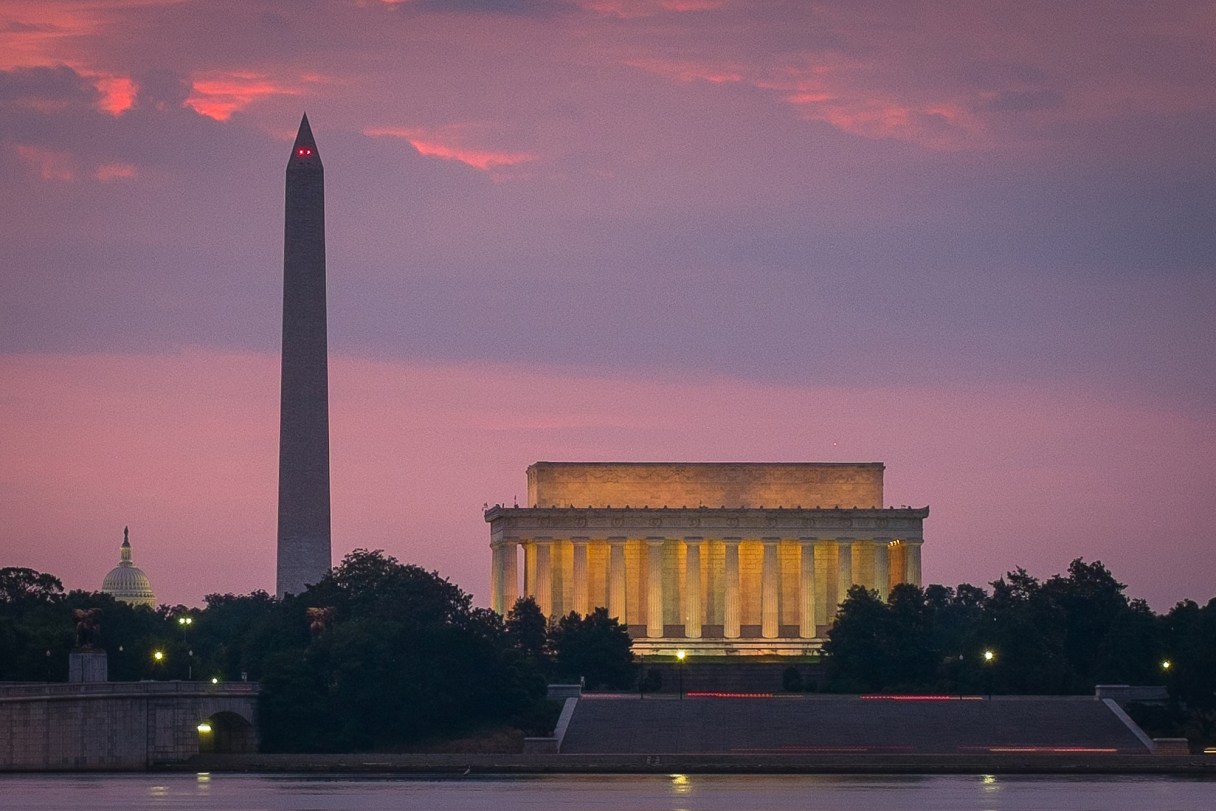
FILE - This June 21, 2014 shows sunrise over, from left, the Capitol Dome, Washington Monument and Lincoln Memorial in Washington. A federal appeals court has ruled in favor of tour guides in the nation’s capital who challenged city rules that require guides to pay the government $200 and to pass a 100-question multiple-choice exam. In Washington, operating as a paid, unlicensed tour guide is punishable by up to 90 days in jail and a $300 fine. (AP Photo/J. David Ake, File)
FILE - This June 21, 2014 shows sunrise over, from left, the Capitol Dome, Washington Monument and Lincoln Memorial in Washington. A federal appeals court has ruled in favor of tour guides in the nation’s capital who challenged city rules that require guides to pay the government $200 and to pass a 100-question multiple-choice exam. In Washington, operating as a paid, unlicensed tour guide is punishable by up to 90 days in jail and a $300 fine. (AP Photo/J. David Ake, File) FILE - This June 21, 2014 shows sunrise over, from left, the Capitol Dome, Washington Monument and Lincoln Memorial in Washington. A federal appeals court has ruled in favor of tour guides in the nation’s capital who challenged city rules that require guides to pay the government $200 and to pass a 100-question multiple-choice exam. In Washington, operating as a paid, unlicensed tour guide is punishable by up to 90 days in jail and a $300 fine. (AP Photo/J. David Ake, File)

WASHINGTON (AP) – A federal appeals court ruled Friday in favor of tour guides in the nation’s capital who challenged licensing regulations that require guides to pay the government $200 and to pass a 100-question multiple choice exam.

The licensing requirement ensures that prospective guides are who they say they are and have at least a minimal grasp of the city’s history and geography, the city has said in defending the rule.

In a 3-0 decision on a free speech issue, the U.S. Court of Appeals for the District of Columbia Circuit said the city failed to present any evidence the problems it sought to thwart actually exist.

The court said that even assuming the harms are real, there is no evidence the exam requirement is an appropriately tailored antidote.

“The city has provided no convincing explanation as to why a more finely tailored regulatory scheme would not work,” appeals judge Janice Rogers Brown wrote for the court.