
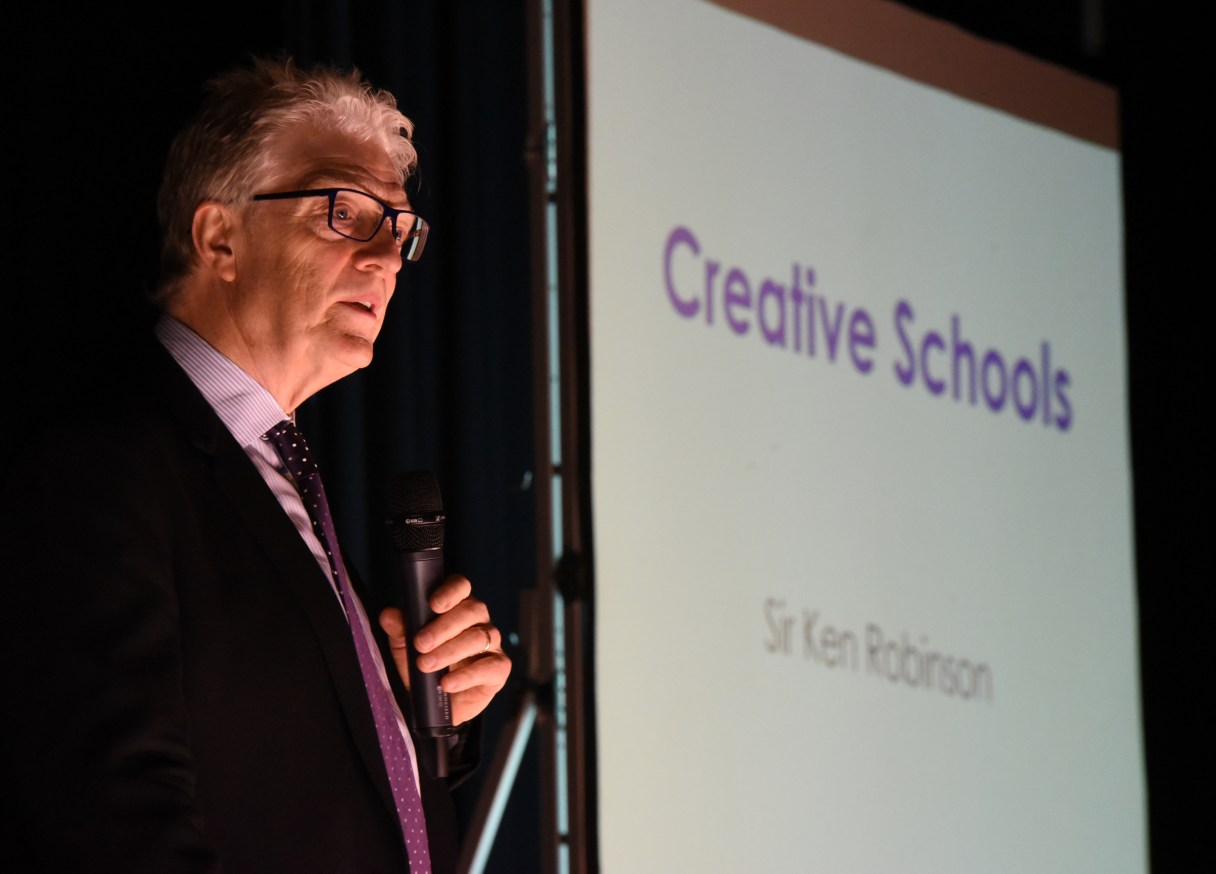
We are the most abundantly creative creatures to ever walk the earth. Creativity is what we should cultivate in our schools and not compliance.
Success in education happens when the rules are relaxed, said Sir Ken Robinson.
The author told a crowd filling The Howard School’s auditorium Monday night that education focuses too much on students shading the correct bubbles on multiple choice tests and not enough on cultivating individual creativity.
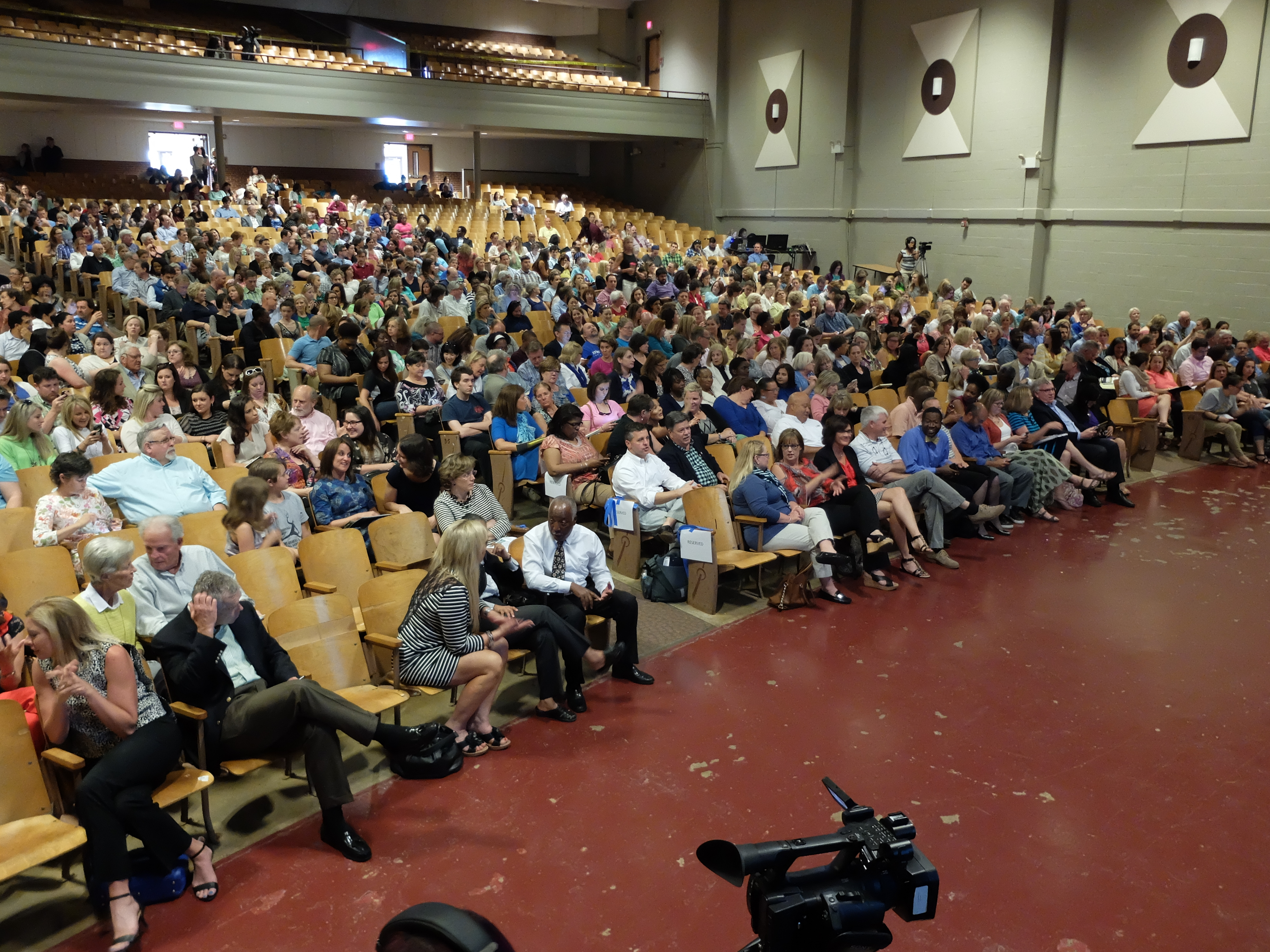 Sir Ken Robinson speaks to a large crowd Monday night at The Howard School. His talk is a part of the Chattanooga 2.0 series.
Upcoming events hosted by Chattanooga 2.0
May 16: Chattanooga 2.0 will host a community conversation at the Bessie Smith Cultural Center. People are invited to drop in from 4-8 p.m. to discuss the initiative.June 2: Tiffany Anderson will speak at 5:30 p.m. Location to be determined, and her talk is titled “Putting Schools at the Center of a Community.”Each talk is open to the public free of charge. For more information visit chatt2.org/events.
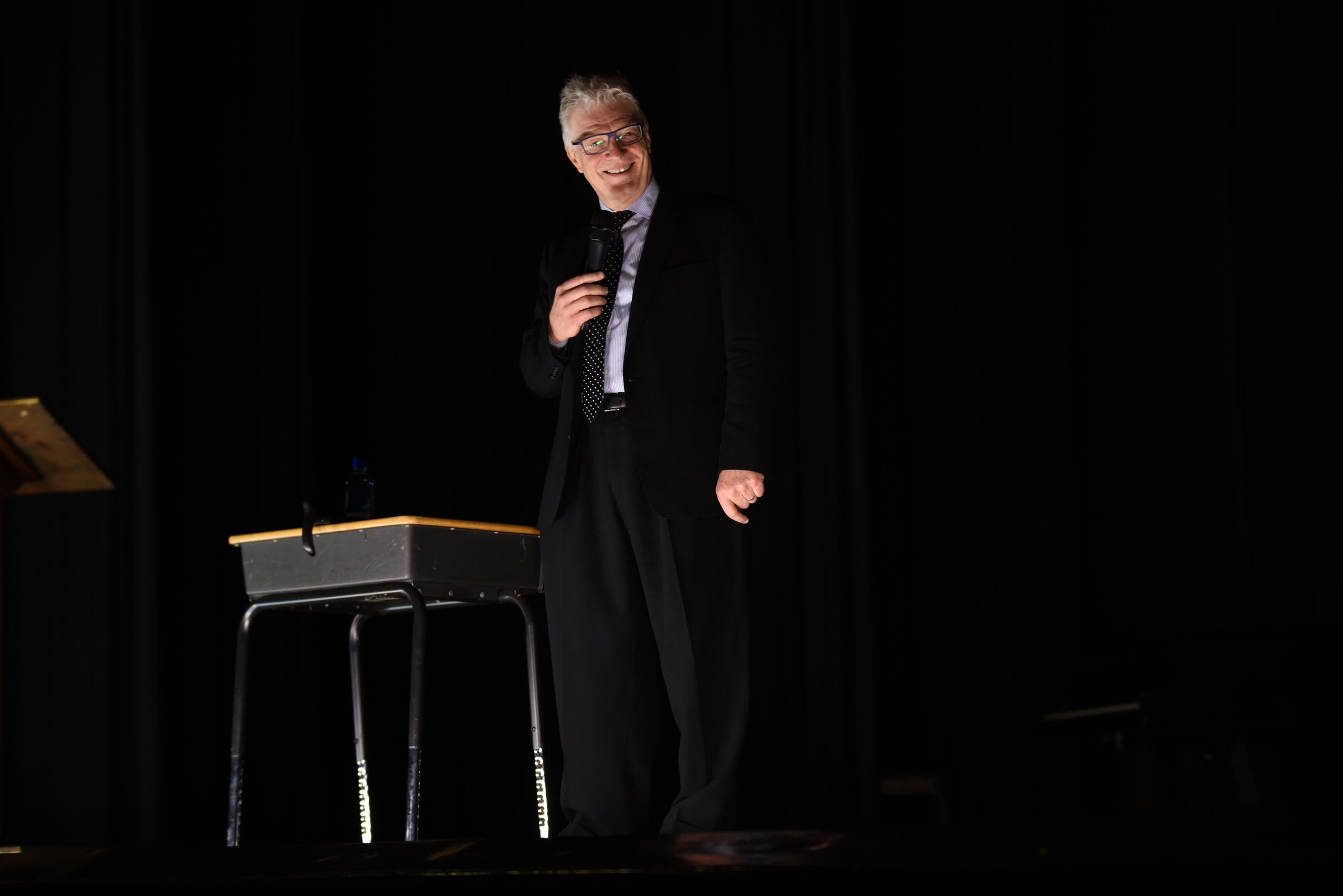 Sir Ken Robinson speaks on Building Creative Schools Monday night at The Howard School. His talk is a part of the Chattanooga 2.0 series.
Robinson’s 2006 TED Talk, “Do Schools Kill Creativity?” is the most viewed in the organization’s history, and his most recent book is titled “Creative Schools.”
He is the third of four speakers in the Chattanooga 2.0 speaker series, as David Dodson, president of the nonprofit research organization MDC, previously talked about how communities can close the gaps separating people from opportunity; and author and journalist Amanda Ripley shared last month what she’s learned from researching successful education reform around the world.
Robinson talked to those gathered Monday night about how education should take a highly personalized and organic approach.
Human talent is diverse and multifaceted, taking on a variety of forms, Robinson said, but the American education system does not reflect this.
“Our education system focuses on a particular type of talent,” Robinson said. “There are very many smart people leaving school thinking they are not smart because they are only being told all the things they aren’t good at.”
Robinson said he thinks three principles the American education system are based upon need to be reformed: conformity, compliance and anticipating a student’s course.
Talking about how diverse just two children from the same parents can be, Robinson said the system cannot expect to educate all children the same way.
“We have to start from the principle of diversity and not conformity when educating children,” he said.
Criticizing increased testing mandates, Robinson said schools are too focused on testing and kids selecting the correct answers on multiple choice tests and neglecting students’ creativity.
“We are the most abundantly creative creatures to ever walk the earth,” he said. “Creativity is what we should cultivate in our schools and not compliance.”
Robinson also warned selecting paths for students is harmful, saying people should be able to create their own paths by their talents and the things they enjoy.
He said education must be a personal process, and one of its main goals is to help children understand the world around and within them.
Zack Brown, principal of The Howard School, introduced Robinson and talked about the work of Chattanooga 2.0, which aims to improve public education and the county’s workforce.
The Chattanooga 2.0 movement is nearing the end of a 100-day planning period, and in June those who have been strategizing on ways to improve early childhood education and the K-12 education system, as well as strengthen the pipeline between graduation and establishing a career, will release ideas the community can begin using to meet those goals.
“It is essential that we look to big ideas, successful strategies across our city, our country and world,” Brown said.
Contact staff writer Kendi Anderson at kendi.anderson@timesfreepress.com or 423-757-6592. Follow on Twitter @kendi_and.