
Monday, November 9, 2026Nov 9

Krugman: Health Reform Realities

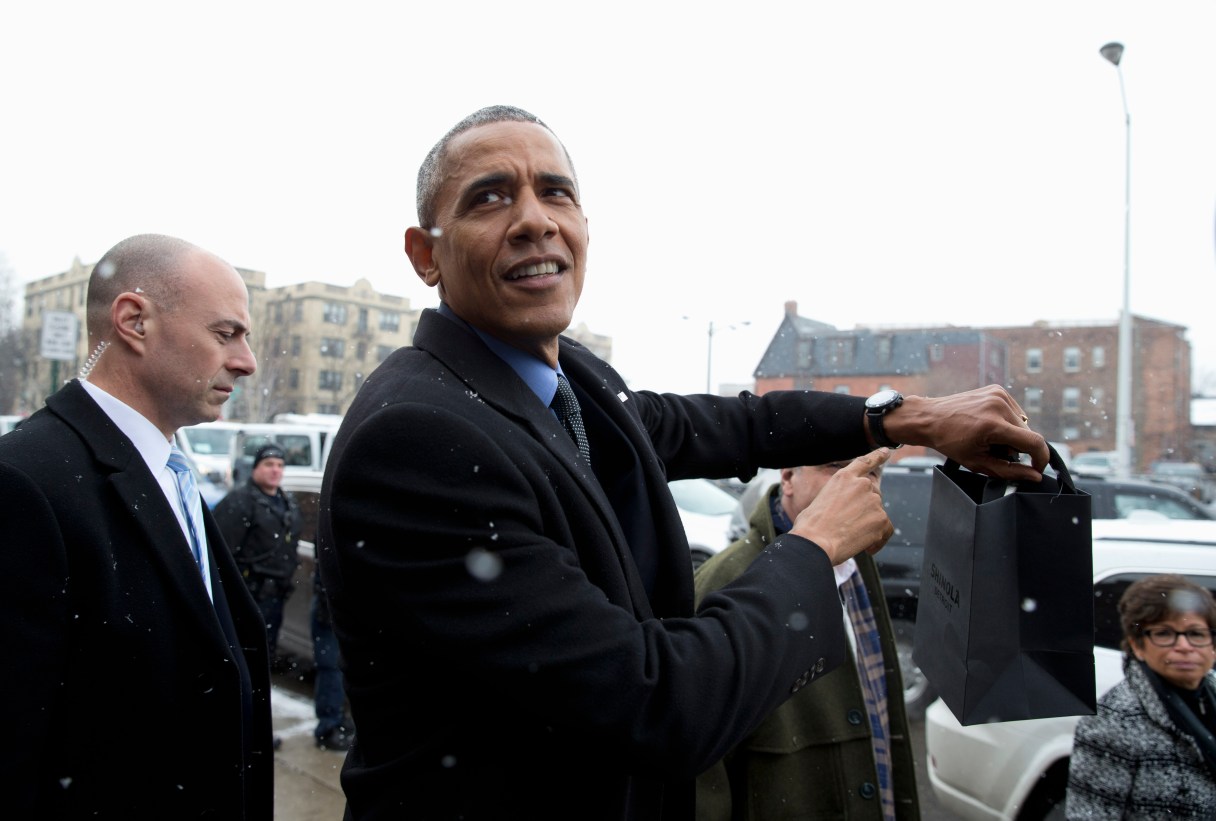
President Barack Obama points to his watch as he leaves a tour of Shinola, a domestic manufacturer of watches and other goods, Wednesday, Jan. 20, 2016, in Detroit. While in Detroit the president is scheduled to visit the 2016 North American International Auto Show and speak of the progress made by the city, its people and neighborhoods, and the American auto industry. (AP Photo/Carolyn Kaster)
President Barack Obama points to his watch as he leaves a tour of Shinola, a domestic manufacturer of watches and other goods, Wednesday, Jan. 20, 2016, in Detroit. While in Detroit the president is scheduled to visit the 2016 North American International Auto Show and speak of the progress made by the city, its people and neighborhoods, and the American auto industry. (AP Photo/Carolyn Kaster) President Barack Obama points to his watch as he leaves a tour of Shinola, a domestic manufacturer of watches and other goods, Wednesday, Jan. 20, 2016, in Detroit. While in Detroit the president is scheduled to visit the 2016 North American International Auto Show and speak of the progress made by the city, its people and neighborhoods, and the American auto industry. (AP Photo/Carolyn Kaster)

Health reform is the signature achievement of the Obama presidency. It was the biggest expansion of the social safety net since Medicare was established in the 1960s. It more or less achieves a goal – access to health insurance for all Americans – that progressives have been trying to reach for three generations.

Obamacare is, however, what engineers would call a kludge: a somewhat awkward, clumsy device with lots of moving parts. This makes it more expensive than it should be, and will probably always cause a significant number of people to fall through the cracks.

The question for progressives – a question that is now central to the Democratic primary – is whether these failings mean that they should re-litigate their own biggest political success in almost half a century, and try for something better.

My answer, as you might guess, is that they shouldn’t, that they should seek incremental change on health care.

If we could start from scratch, many, perhaps most, health economists would recommend single-payer, a Medicare-type program covering everyone. But single-payer wasn’t a politically feasible goal in America, for three big reasons.