
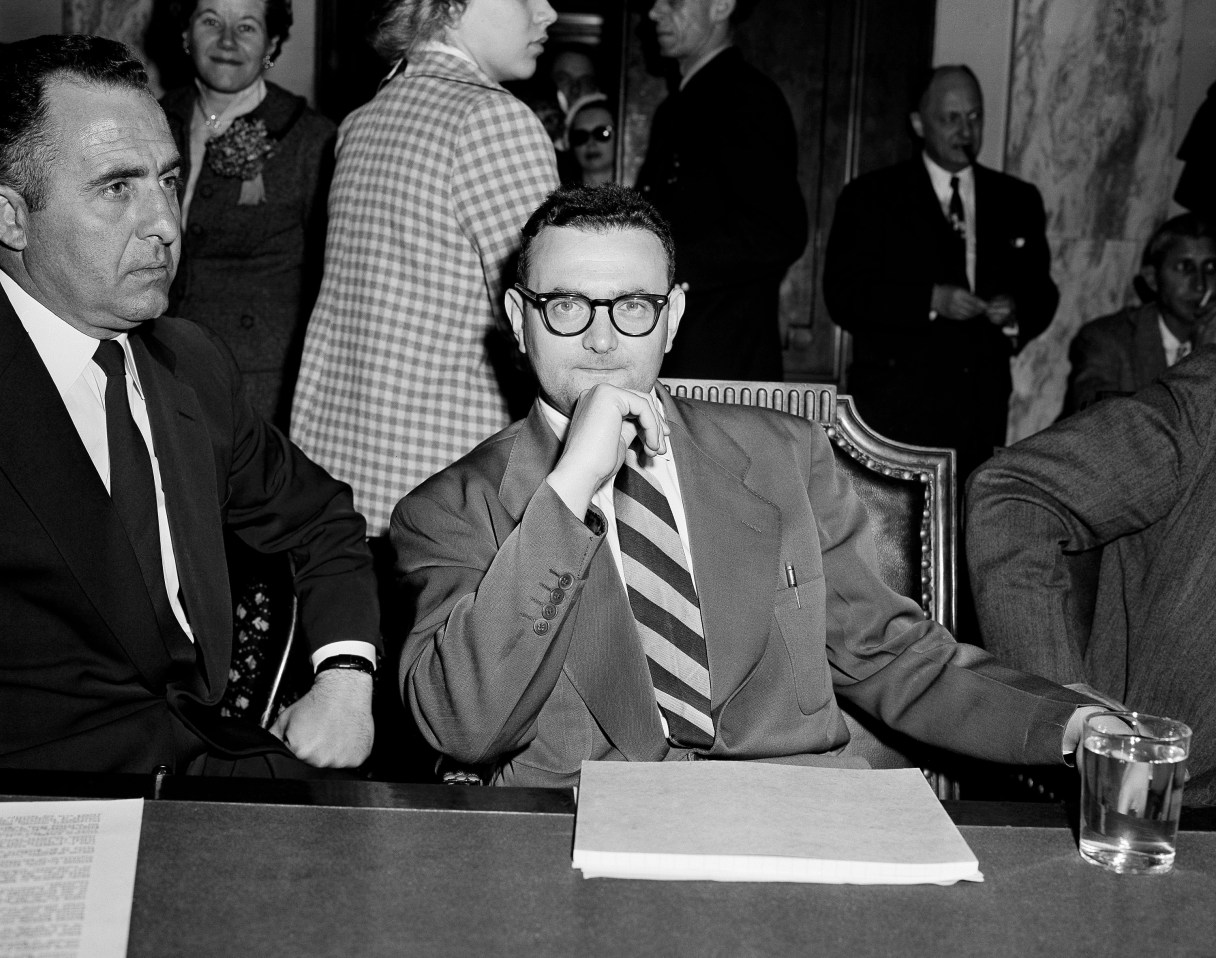
WASHINGTON (AP) – The federal government on Wednesday unsealed decades-old grand jury testimony from the brother of Ethel Rosenberg, who along with her husband, Julius, was put to death in 1953 in a sensational Cold War-era atomic spying case.
The testimony from David Greenglass, whose statements helped secure the convictions of his sister and brother-in-law, had been withheld from public view even as other crucial court records have been unsealed in the last decade. Historians had greatly anticipated the release of the records, the final piece of evidence to be made public in a case that consumed national attention.
A federal judge in New York ordered the testimony released following Greenglass’ death last year at age 92.
With Greenglass as the government’s star witness, the Rosenbergs were convicted in 1951 of conspiring to steal secrets about the atomic bomb for the Soviet Union. They maintained their innocence until their deaths, and since then public suspicion has mounted that Ethel Rosenberg was wrongly convicted of espionage.
Greenglass was indicted as a co-conspirator and was himself sentenced to 10 years in prison. He held a wartime job as an Army machinist at the Los Alamos, New Mexico, headquarters of the top-secret Manhattan Project to build the atomic bomb. During the couple’s trial, he testified that he had given them research data that he had obtained. He said he saw his older sister transcribing the information on a portable typewriter at the Rosenbergs’ New York apartment in 1945.
But decades later, he was quoted by a New York Times journalist as having admitted to lying on the stand about his sister in order to protect his wife. Greenglass said then that it was likely his wife, and not his sister, who had typed up the notes to give to the Soviets.
A group of historians and archivists asked the federal judge to unseal grand jury records related to the indictments. Testimony of 43 of the case’s 46 witnesses had been released before Wednesday, but the remaining three, including Greenglass, had objected and their transcripts had been withheld.
U.S. District Judge Alvin Hellerstein ordered the transcripts unsealed in May, calling the records “critical pieces of an important moment in our nation’s history.”