
Tuesday, November 10, 2026Nov 10

Sweden cuts key interest rate further below zero

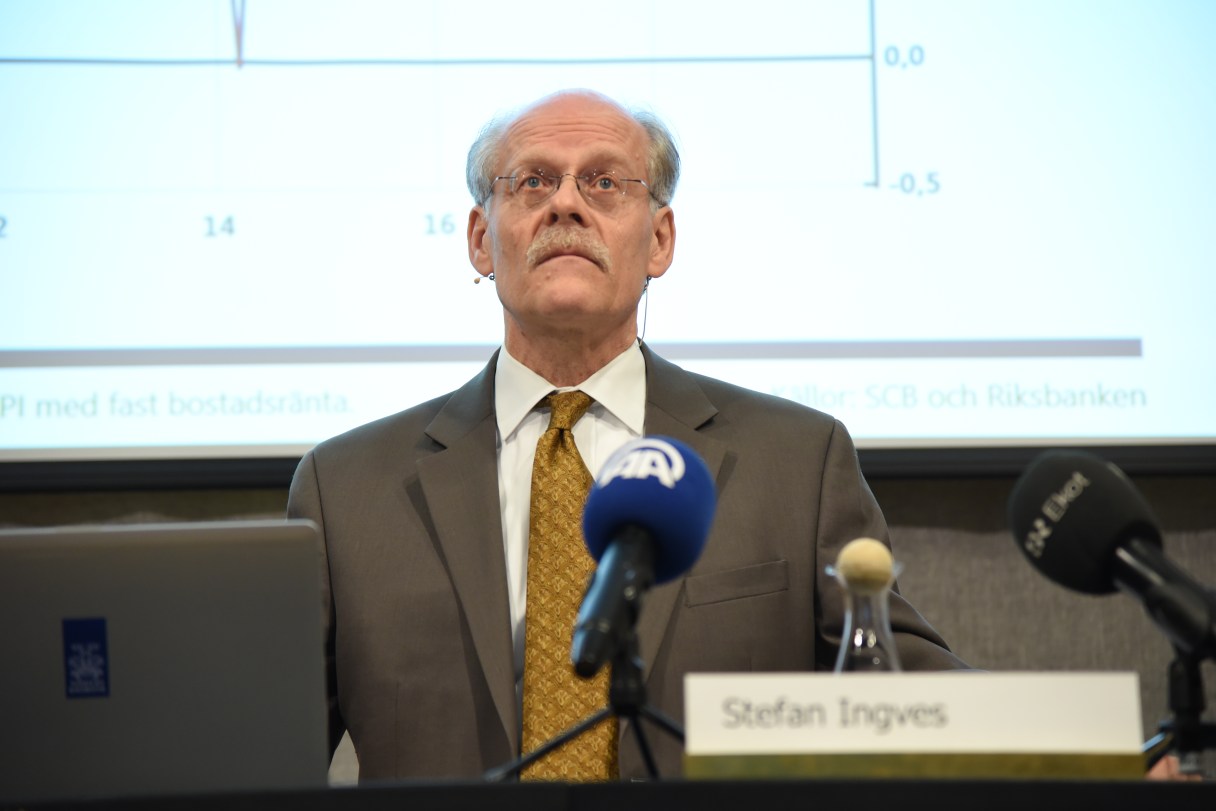
Governor of the Central Bank of Sweden, Stefan Ingves talks during a media presentation at the bank headquarters in Stockholm, Sweden, Thursday Feb. 11, 2016. Sweden's central bank cut its benchmark rate on Thursday and said it was ready to do more if necessary to counter worries about sluggish global growth. (Thommy Tengborg / TT via AP) SWEDEN OUT
Governor of the Central Bank of Sweden, Stefan Ingves talks during a media presentation at the bank headquarters in Stockholm, Sweden, Thursday Feb. 11, 2016. Sweden's central bank cut its benchmark rate on Thursday and said it was ready to do more if necessary to counter worries about sluggish global growth. (Thommy Tengborg / TT via AP) SWEDEN OUT Governor of the Central Bank of Sweden, Stefan Ingves talks during a media presentation at the bank headquarters in Stockholm, Sweden, Thursday Feb. 11, 2016. Sweden's central bank cut its benchmark rate on Thursday and said it was ready to do more if necessary to counter worries about sluggish global growth. (Thommy Tengborg / TT via AP) SWEDEN OUT

STOCKHOLM (AP) – Sweden’s central bank, worried about a long period of low inflation, decided Thursday to cut its key interest further below zero to a record minus 0.50 percent – and didn’t rule out further action.

Describing it as a “uniquely low interest rate,” Riksbank Governor Stefan Ingves didn’t want to speculate on future measures but said that “unfortunately the world looks different to what it did in December,” when the bank last discussed the economic situation.

He pointed to a further drop in oil prices, turmoil in global markets and Japan’s decision last week to cut one of its key rates into negative territory, which has pushed down the yields payable on its bonds.

“The period of low inflation will be longer than we expected, increasing the risk of weakening confidence in the inflation target … and (of) inflation not rising toward the expected target,” of some 2 percent in 2017, Ingves said.

Analysts at Capital Economic say the 0.15 percentage point cut was slightly larger than investors had expected but was in line with its own expectations.