
When you think of democracy in America, you probably think of those dudes in their powdered wigs striking a pose at Independence Hall, or – more modernly – people standing in line for five hours just to cast a vote. You probably don’t think of the U.S. Post Office.
Maybe you should think again. You know who got this better than we do? Alexis de Toqueville, the French writer, thinker and traveler who famously came to America in 1831 and chronicled what at the time truly was an exceptional nation. He was particularly impressed with the role the post office played in spreading information through a vibrant newspaper scene that had no rival in any other developed nation. That was no accident, but the result of good government.
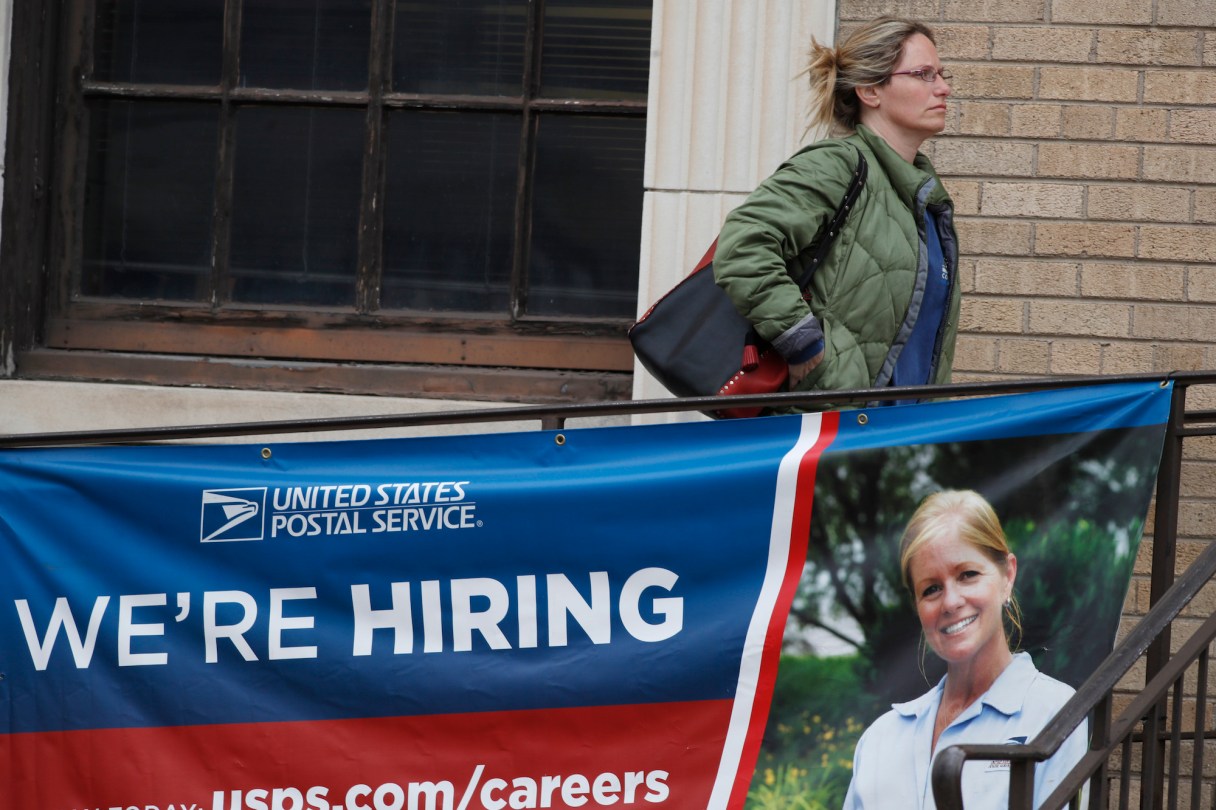
More than two centuries later, the U.S. Postal Service needs good government and an appreciation of its role in democracy more than at any time in its history. Already bleeding money for a variety of reasons – yes, partly the rise of email and private delivery services, but also a ridiculous cost burden created by an all-GOP government in 2006 – the rapid drop in business activity during the coronavirus crisis brought the post office to the brink of extinction.
The sudden disappearance of about one-third of its business translates to a whopping $13 billion in lost revenue for the USPS, and at this pace, the post office will be out of money by the end of September. Of course, in that sense the Postal Service – with its massive workforce of 600,000 people – is little different from restaurants, boutiques or most other businesses, but with the federal government doling out coronavirus relief money, surely a critical service like the USPS gets to cut to the front of the line, right?
Right?
Well, so far, no. Like many of the other pillars of a supposedly functioning government, the post office hasn’t been popular with the dominant Republicans in Washington for a while, and that was before Donald Trump and his overflowing basket of grudges arrived in town. President Trump hates the post office because he hates its biggest customer, Amazon, because he hates Amazon’s billionaire owner, Jeff Bezos, because he hates a newspaper that Bezos also happens to own, the Washington Post.
Like most political debates, the fight over the future of the Postal Service has tended to dwell on the immediate, and the immediate problems are indeed significant. For one thing, the crisis and the USPS cash crunch hit right in the middle of the federal 2020 census, so efficient and uninterrupted mail service is critical right now for the government to get an accurate head count.
Even more important, though, could be the impact on 2020’s elections – both in the handful of remaining state primaries and then the big general election in November. At the start of the year, five states (four of which voted for Hillary Clinton over Trump, for what it’s worth) had gone to exclusively vote-by-mail while others, including Pennsylvania, have been moving toward an expansion of absentee ballots in which the post office plays a critical role as well.
With the pandemic, replacing in-person voting with the mail option seems to be a critical health measure, but efforts both in the states and in Washington to both make it much easier to vote by mail in all 50 states and to allocate more dollars for holding safe and fair elections are facing GOP headwinds.
A functioning Postal Service is a center for community and thus a sense of shared purpose, the things that seem to be slipping away in today’s United States. Democracy needs communication, whether that’s dissent or missives of the heart, like those wrenching Civil War letters that documentarian Ken Burns helped us never to forget.
We need to all lean on our members of Congress – regardless of party – to lean on the White House to save our post office. With a little political common sense, the current occupant of 1600 Pennsylvania Ave. will surely be stamped “Return to Sender” on Nov. 3.
The Philadelphia Inquirer