
Tuesday, November 10, 2026Nov 10

Egypt invites expert behind new theory on Nefertiti’s tomb

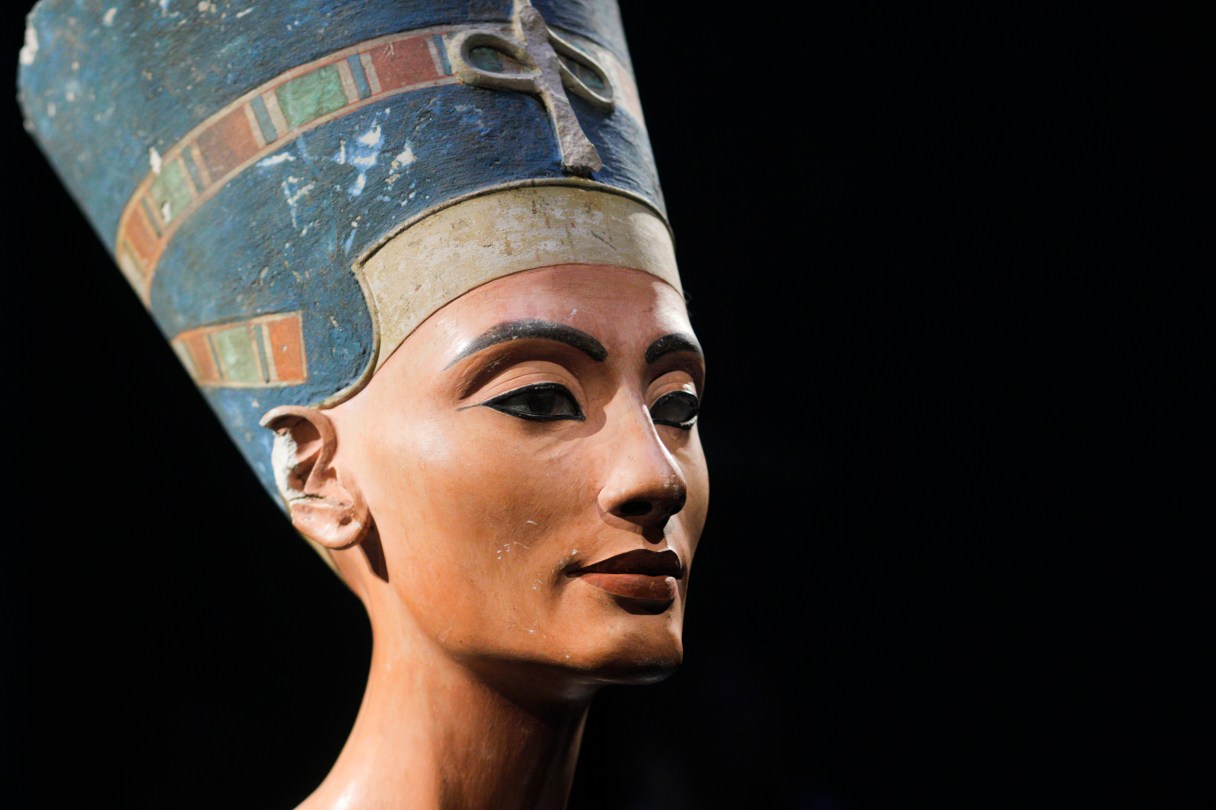
FILE - In this Oct. 15, 2009 file photo, a 3,300-year-old bust of Queen Nefertiti is seen at the New Museum, in Berlin, Germany. Egypt's Antiquities Ministry announced Wednesday, Aug. 19, 2015, that it is inviting an Egyptologist behind a theory that the tomb of Queen Nefertiti may be located behind King Tutankhamun's 3,300-year-old tomb in the famed Valley of the Kings. British-educated expert Nicholas Reeves has been invited to Cairo in September to debate his theory with Egyptian colleagues. (AP Photo/Markus Schreiber, File)
FILE - In this Oct. 15, 2009 file photo, a 3,300-year-old bust of Queen Nefertiti is seen at the New Museum, in Berlin, Germany. Egypt's Antiquities Ministry announced Wednesday, Aug. 19, 2015, that it is inviting an Egyptologist behind a theory that the tomb of Queen Nefertiti may be located behind King Tutankhamun's 3,300-year-old tomb in the famed Valley of the Kings. British-educated expert Nicholas Reeves has been invited to Cairo in September to debate his theory with Egyptian colleagues. (AP Photo/Markus Schreiber, File) FILE - In this Oct. 15, 2009 file photo, a 3,300-year-old bust of Queen Nefertiti is seen at the New Museum, in Berlin, Germany. Egypt's Antiquities Ministry announced Wednesday, Aug. 19, 2015, that it is inviting an Egyptologist behind a theory that the tomb of Queen Nefertiti may be located behind King Tutankhamun's 3,300-year-old tomb in the famed Valley of the Kings. British-educated expert Nicholas Reeves has been invited to Cairo in September to debate his theory with Egyptian colleagues. (AP Photo/Markus Schreiber, File)

CAIRO (AP) – An Egyptologist behind a new theory that ancient Queen Nefertiti’s tomb may be hidden behind King Tutankhamun’s 3,300-year-old tomb in the famed Valley of the Kings has been invited to come to Cairo to debate his ideas, Egypt’s Antiquities Ministry said Wednesday.

The ministry said Britain-educated Nicholas Reeves will have the opportunity to discuss his theory with Egyptian colleagues in September. A joint expedition to Luxor, where the 18th Dynasty King Tut’s tomb is located, could be on the agenda, the ministry said.

There was no immediate response from Reeves, whose theory has attracted a lot of attention on the Internet and social media but has not been officially reviewed by peers.

Reeves argues that Tut, who died at the age of 19, may have been rushed into an outer chamber of what was originally the tomb of Nefertiti.

He claims high-resolution images of what is known as King Tut’s tomb include linear traces underneath plastered surfaces of painted walls, showing there could be two unexplored doorways, one of which leading possibly to Nefertiti’s tomb. He also argues that the design of King Tut’s tomb suggests it was built for a queen, rather than a king.