
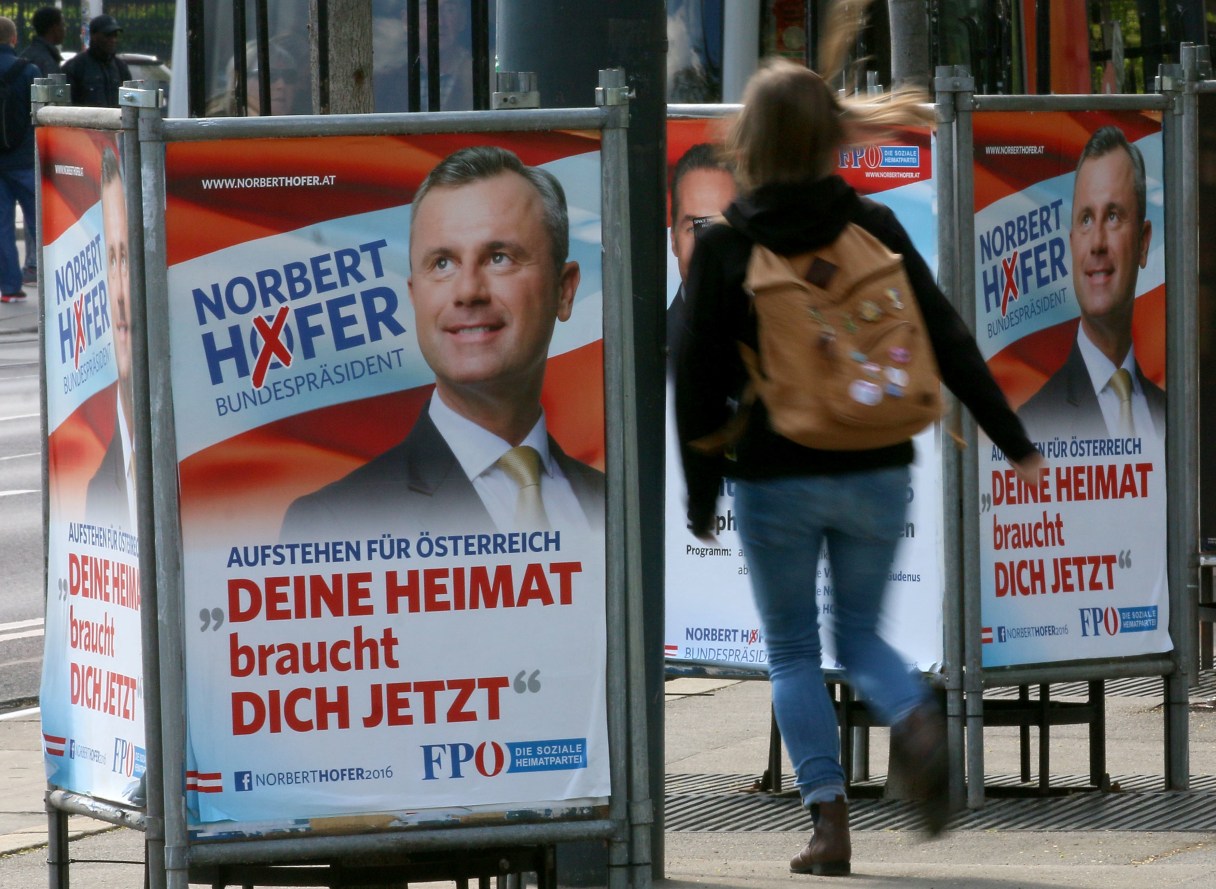
VIENNA (AP) – For the first time, Austria’s next president will likely be someone who is not officially backed by either of the two parties that have dominated politics since the end of World War II. That reflects massive voter unhappiness – and spells possible political turmoil ahead.
The steadily eroding popularity ratings of the governing coalition – made up of the center-left Social Democrats and the centrist People’s Party – are reflected in the dismal chances of their candidates in Sunday’s presidential election, compared with the right-wing Freedom party hopeful and two others running as independents.
Social Democratic candidate Rudolf Hundstorfer has 15 percent support and Andreas Khol, his People’s Party counterpart, 11 percent. That compares with support of between 22 and 24 percent for Freedom Party candidate Norbert Hofer, and independents Alexander Van der Bellen and Irmgard Griss, according to an OGM survey published six days before the vote.
Strongly criticized over its handling of the migrant crisis, the government coalition has swung 180 degrees this year as it tries to claw back support lost to the Freedom Party. It has turned from open borders to one of the EU’s most restrictive asylum regimes.
But the two mainstream parties have been foundering even ahead of the presidential election and long before the migrant crisis.