
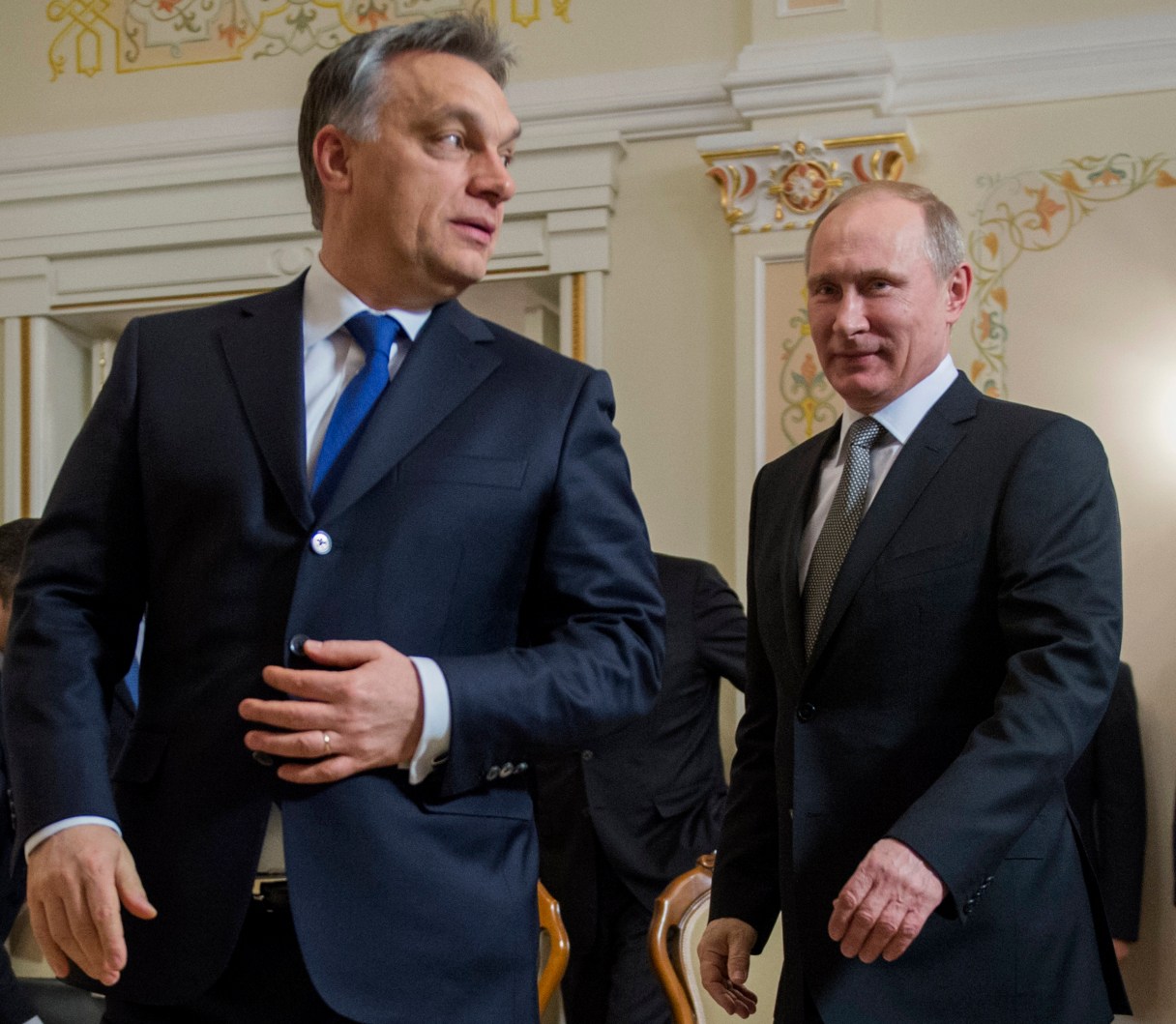
BUDAPEST, Hungary (AP) – Russian President Vladimir Putin travels to Budapest on Tuesday to meet the leader some Hungarians cast as his alter ego – “Little Putin.”
It’s a striking moniker for Hungarian Prime Minister Viktor Orban, who rose to international prominence in the 1980s as anti-Soviet student leader. His transformation into a populist who cozies up to the Kremlin and stifles dissent mirrors a broader eastern European narrative in which rebellion against Moscow has evolved into mixed feelings about the neighboring Russian giant. Leaders in Hungary, Serbia, Slovakia, and the Czech Republic all increasingly play a double game of courting EU riches while also flirting with Russian patronage.
The rise in support for Russia despite its aggression in Ukraine is playing out among some eastern European governments and ordinary people who may identify more with the political certainties of Russia than the complicated, messy and sometimes painful ways of Western-style democracy.
For Putin, now shunned by many nations around the world, the visit is important because it shows he still has friends even within the European Union. Orban has much more down-to-earth concerns: He is seeking a good price for the Russian gas Hungary desperately needs, as well as assurances that Russia will make good on a promise for a 10 billion euro loan to upgrade a Hungarian nuclear reactor.
“It is important for Moscow to show that there still are states whose governments are ready to host Russia,” said historian and Russia expert Zoltan Sz. Biro. “Symbolically, the meeting is much more important for Russia.”