
Monday, November 9, 2026Nov 9

Risky business: Some Capitol riot defendants forgo lawyers

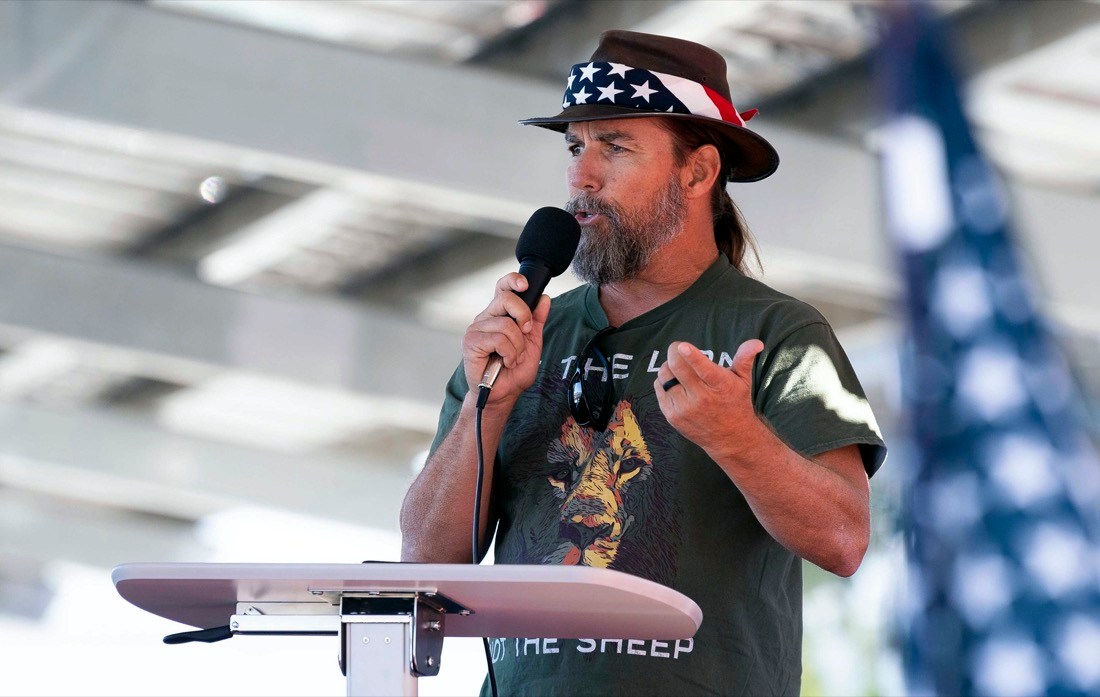
FILE - In this Nov. 9, 2020, file photo, Alan Hostetter speaks during a pro-Trump election integrity rally he organized at the Orange County Registrar of Voters offices in Santa Ana, Calif. Hostetter is one of at least five people charged in the riot at the U.S. Capitol on Jan. 6, 2021, who have chosen to defend themselves in court, brushing aside federal judges' repeated warnings about the risks of trying to navigate their high-stakes cases without an attorney. (Paul Bersebach/The Orange County Register via AP)
FILE - In this Nov. 9, 2020, file photo, Alan Hostetter speaks during a pro-Trump election integrity rally he organized at the Orange County Registrar of Voters offices in Santa Ana, Calif. Hostetter is one of at least five people charged in the riot at the U.S. Capitol on Jan. 6, 2021, who have chosen to defend themselves in court, brushing aside federal judges' repeated warnings about the risks of trying to navigate their high-stakes cases without an attorney. (Paul Bersebach/The Orange County Register via AP) FILE - In this Nov. 9, 2020, file photo, Alan Hostetter speaks during a pro-Trump election integrity rally he organized at the Orange County Registrar of Voters offices in Santa Ana, Calif. Hostetter is one of at least five people charged in the riot at the U.S. Capitol on Jan. 6, 2021, who have chosen to defend themselves in court, brushing aside federal judges' repeated warnings about the risks of trying to navigate their high-stakes cases without an attorney. (Paul Bersebach/The Orange County Register via AP)

Some of the defendants charged in the storming of the U.S. Capitol are turning away defense lawyers and electing to represent themselves, undeterred by their lack of legal training or repeated warnings from judges.

That choice already has led to some curious legal maneuvers and awkward exchanges in court.

A New York man charged in the Jan. 6 insurrection wants to bill the government for working on his own case. A Pennsylvania restaurant owner is trying to defend herself from jail. A judge told another New Yorker that he may have incriminated himself during courtroom arguments.

The right to self-representation is a bedrock principle of the Constitution. But a longtime judge cited an old adage in advising a former California police chief that he would have “a fool for a client” if he represented himself.

And Michael Magner, a New Orleans criminal defense lawyer and former federal prosecutor, observed, “Just because you have a constitutional right to do something doesn’t necessarily mean that it’s smart.”