
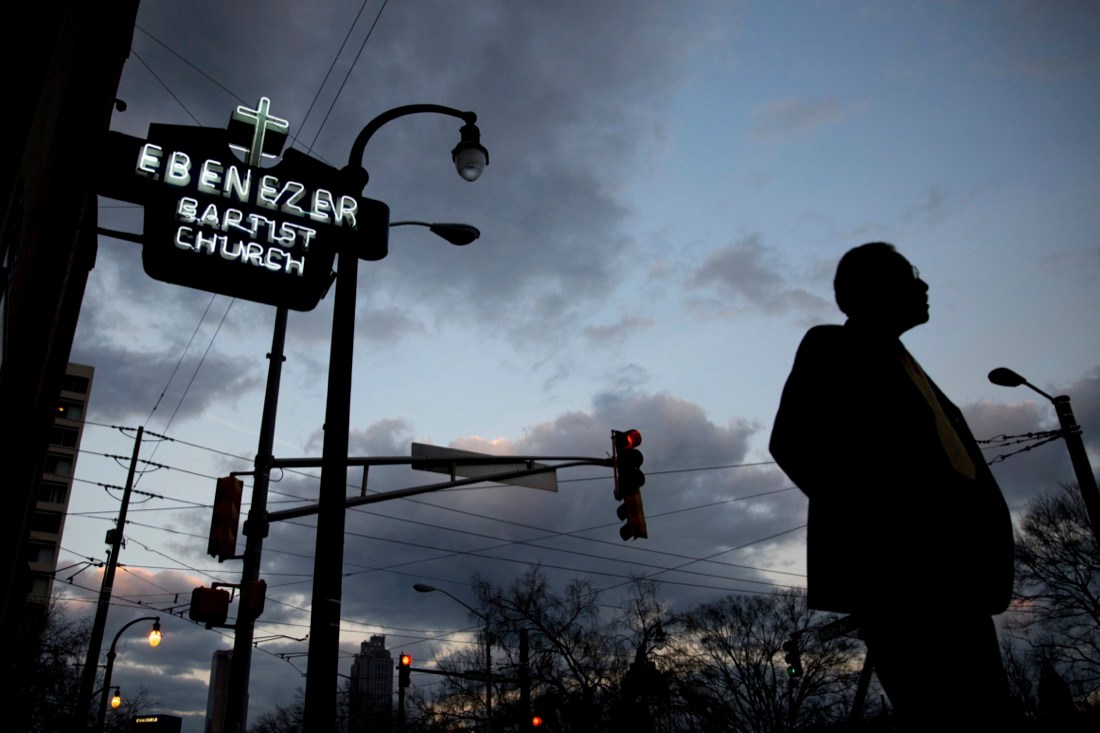
ATLANTA (AP) – For decades, the red-bricked Gothic Revival church where the Rev. Martin Luther King Jr. once preached has been a monument to the history of Black Americans’ fight for civil rights and the legacy of an activist icon.
It took a high-stakes Senate race and a Trump-era cultural debate to thrust Ebenezer Baptist Church into the center of the current political debate.
Its senior pastor, the Rev. Raphael Warnock, is running for the Senate in one of two runoff elections that could decide which party ultimately controls Congress in the first years of the incoming administration of President-elect Joe Biden. But Warnock’s preaching has become a focal point in the debate about race and justice in the election.
His opponent, Republican incumbent Kelly Loeffler, has run attack ads using snippets of sermons Warnock preached from Ebenezer’s pulpit to accuse him of being a far left, radical socialist who doesn’t support police officers or military service members.
For King’s former church, the intense spotlight isn’t new. Its 6,000 members are accustomed to standing-room only Sunday services, due in large part to the out-of-town visitors who flocked to the church. Still, Loeffler’s criticisms have renewed attention on a pillar of Black life in Atlanta and a tradition of political activism it represents.