
Saturday, October 31, 2026Oct 31

This story is free to read.

Could insulin pills prevent diabetes? Big study seeks answer

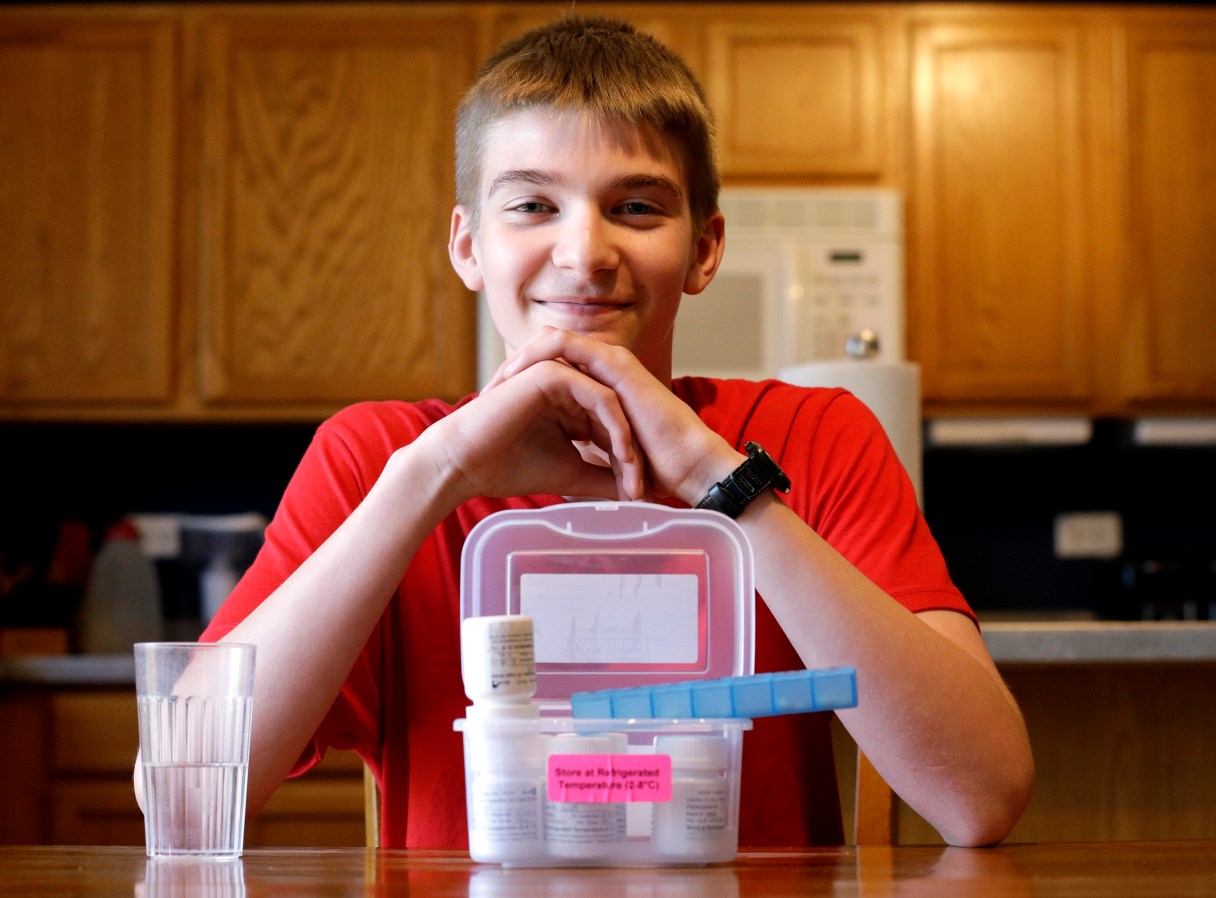
In this photo taken Wednesday, May 13, 2015, Hayden Murphy, 13, sits for a photo with his medicine at his home in Plainfield, Ill. Hayden is among more than 400 children and adults participating in U.S. government-funded international research investigating whether experimental insulin capsules can prevent or at least delay Type 1 diabetes. To enroll, participants must first get bad news: results of a blood test showing their chances for developing the disease are high. (AP Photo/Nam Y. Huh)
In this photo taken Wednesday, May 13, 2015, Hayden Murphy, 13, sits for a photo with his medicine at his home in Plainfield, Ill. Hayden is among more than 400 children and adults participating in U.S. government-funded international research investigating whether experimental insulin capsules can prevent or at least delay Type 1 diabetes. To enroll, participants must first get bad news: results of a blood test showing their chances for developing the disease are high. (AP Photo/Nam Y. Huh) In this photo taken Wednesday, May 13, 2015, Hayden Murphy, 13, sits for a photo with his medicine at his home in Plainfield, Ill. Hayden is among more than 400 children and adults participating in U.S. government-funded international research investigating whether experimental insulin capsules can prevent or at least delay Type 1 diabetes. To enroll, participants must first get bad news: results of a blood test showing their chances for developing the disease are high. (AP Photo/Nam Y. Huh)

CHICAGO (AP) – For decades, insulin shots have been a life-saving diabetes treatment. Now scientists have raised an unusual question. What if insulin in pills could prevent the disease?

They’re testing that idea in children and adults in a big study funded by the National Institutes of Health.

To qualify, subjects must have lab tests that show they’re at risk for developing Type 1 diabetes. That’s the kind usually diagnosed in childhood. It affects a little over 1 million Americans and is increasing worldwide for unknown reasons.

Thirteen-year-old Hayden Murphy of Plainfield, Illinois, is among the participants. He swallows a white capsule every day containing either insulin or a placebo. He’s hoping to avoid a life-changing condition, and he wants to help scientists better understand a disease already diagnosed in his little brother.