
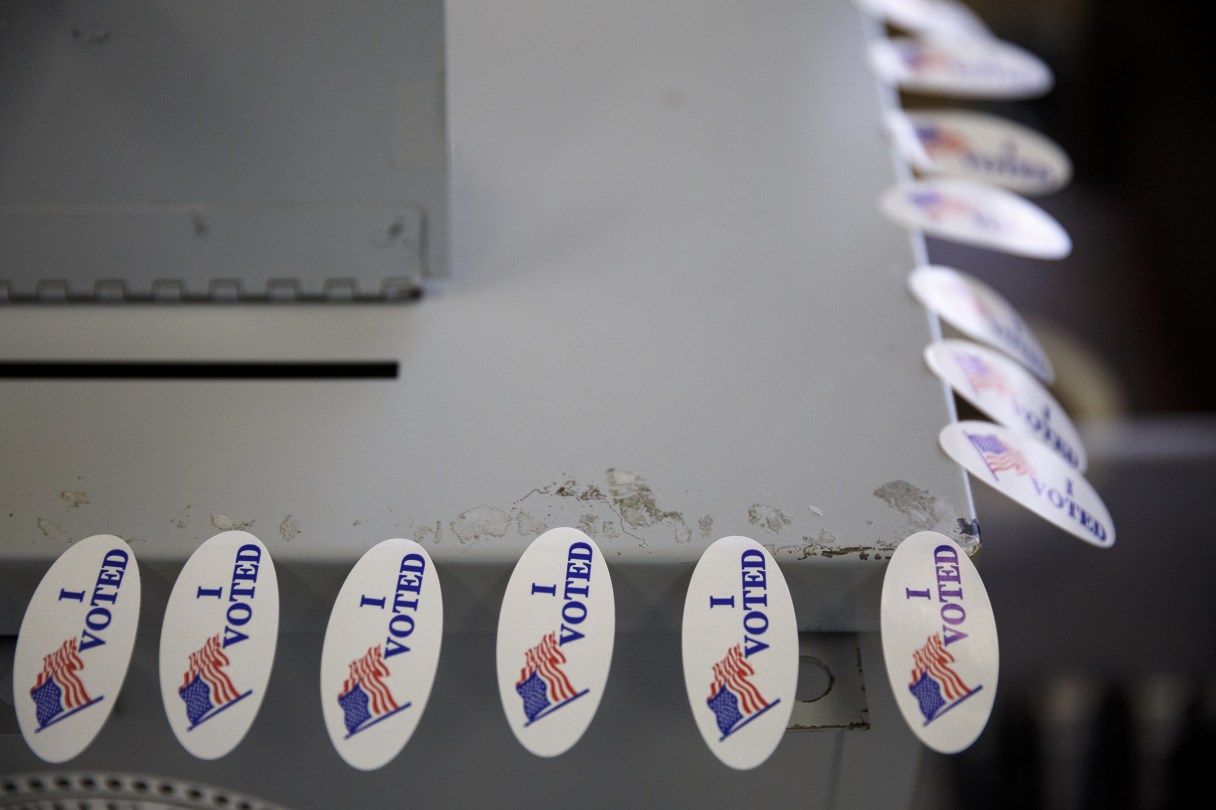
When President Lyndon Johnson signed the Voting Rights Act of 1965 a half-century ago, a year after passage of the Civil Rights Act of 1964, their combined reforms made the last phrase of the Pledge of Allegiance – “with liberty and justice for all” – a reality for black Americans. Together, they undermined the Jim Crow system that for generations had denied black Americans, most of them in the South, the same rights as whites.
It is nearly impossible to overstate the importance of the 1964 act as playing a crucial role in ending racial segregation in public accommodations, including restaurants, hotels, commercial transportation – even restrooms and water fountains. But it was the Voting Rights Act that overturned laws that for years had prevented mostly Southern blacks full citizenship through access to the voting booth.
One phrase still defines that practice: political evil. But in this election especially, those seeking to undermine some groups’ right to vote are choosing more updated efforts. Not for them the often violent tactics (in Selma, for example) used against blacks seeking the right to vote – and thus the realization full citizenship.
The current weapon of choice: voter ID laws based on the false premise that they prevent in-person voter fraud. They use more “sophisticated” measures intended to make voter registration more difficult, which often results in denying it altogether. (Let’s call them “James Crow” laws.)
And so, 50 years after the voting rights law, William Faulkner’s observation is newly relevant: “The past is not dead. In fact, it’s not even past.”