
Thursday, November 12, 2026Nov 12

Armenians still haunted by Turkish massacres 1 century later

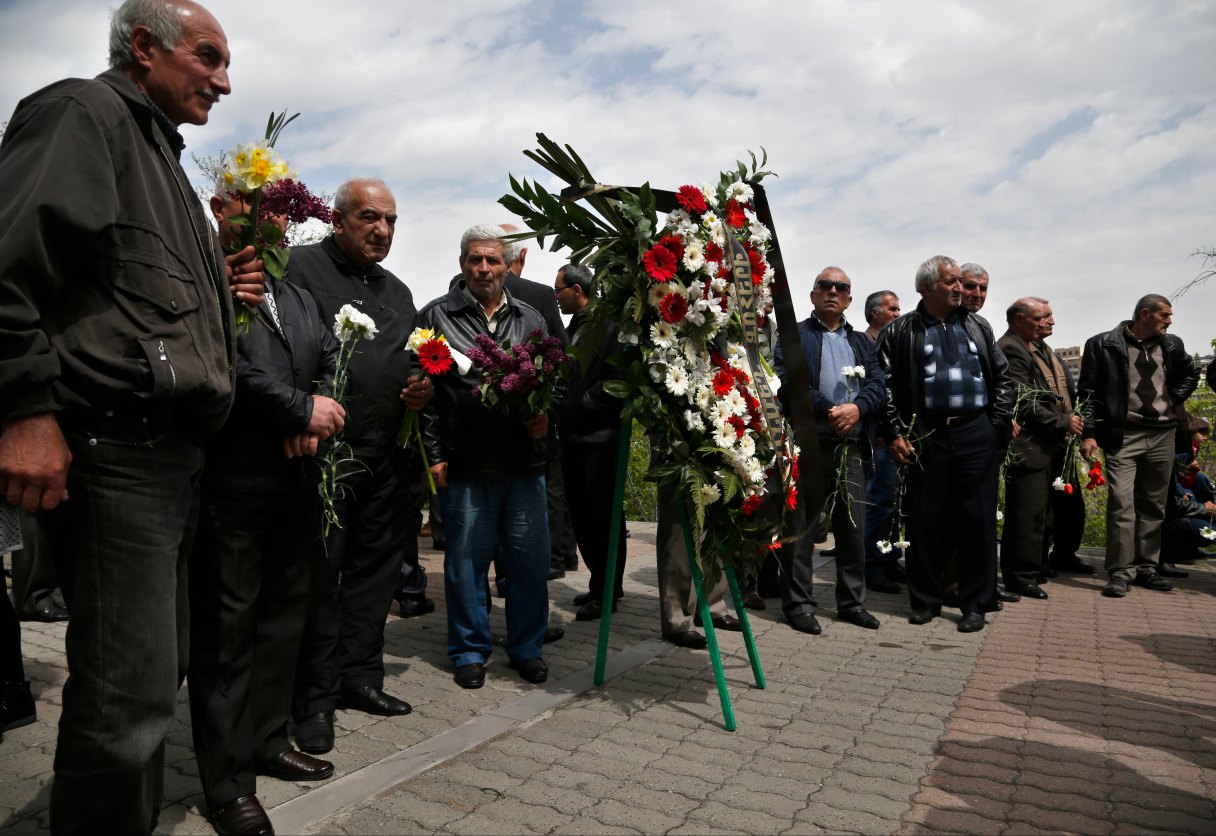
Armenians gather to lay flowers at a memorial to victims of massacres as they mark the centenary anniversary of the mass killings, in Yerevan, Armenia, Thursday, April 23, 2015. On Friday, April 24, Armenians will mark the centenary of what historians estimate to be the slaughter of up to 1.5 million Armenians by Ottoman Turks, an event widely viewed by scholars as genocide. Turkey, however, denies the deaths constituted genocide and says the death toll has been inflated. (AP Photo/Sergei Grits)
Armenians gather to lay flowers at a memorial to victims of massacres as they mark the centenary anniversary of the mass killings, in Yerevan, Armenia, Thursday, April 23, 2015. On Friday, April 24, Armenians will mark the centenary of what historians estimate to be the slaughter of up to 1.5 million Armenians by Ottoman Turks, an event widely viewed by scholars as genocide. Turkey, however, denies the deaths constituted genocide and says the death toll has been inflated. (AP Photo/Sergei Grits) Armenians gather to lay flowers at a memorial to victims of massacres as they mark the centenary anniversary of the mass killings, in Yerevan, Armenia, Thursday, April 23, 2015. On Friday, April 24, Armenians will mark the centenary of what historians estimate to be the slaughter of up to 1.5 million Armenians by Ottoman Turks, an event widely viewed by scholars as genocide. Turkey, however, denies the deaths constituted genocide and says the death toll has been inflated. (AP Photo/Sergei Grits)

VAGHARSHAPAT, Armenia (AP) – Life had barely begun for Khosrov Frangyan when he knew the fear of being an Armenian in the Ottoman Empire.

A century later, the memories still torment him.

“Somebody told us that Turks will come and start killing us,” said the 105-year-old, recalling how he and fellow villagers hid atop a mountain. “Turkish soldiers came and wanted to come up … We did not have weapons, so we started to throw stones and rocks on them.”

Frangyan and his family managed to escape by boat to Beirut and then on to Armenia itself. He now lives with his children and grandchildren in this city 20 kilometers (12 miles) outside the capital. But an estimated 1.5 million Armenians died in the massacres, deportations and forced marches that began in 1915.

Armenia, many scholars and some countries call it the 20th century’s first genocide. Modern Turkey, the successor to the Ottoman Empire, vehemently rejects the charge. Whatever it is called, the violence gouged a psychic wound so deep that it pains Armenians born generations later.