
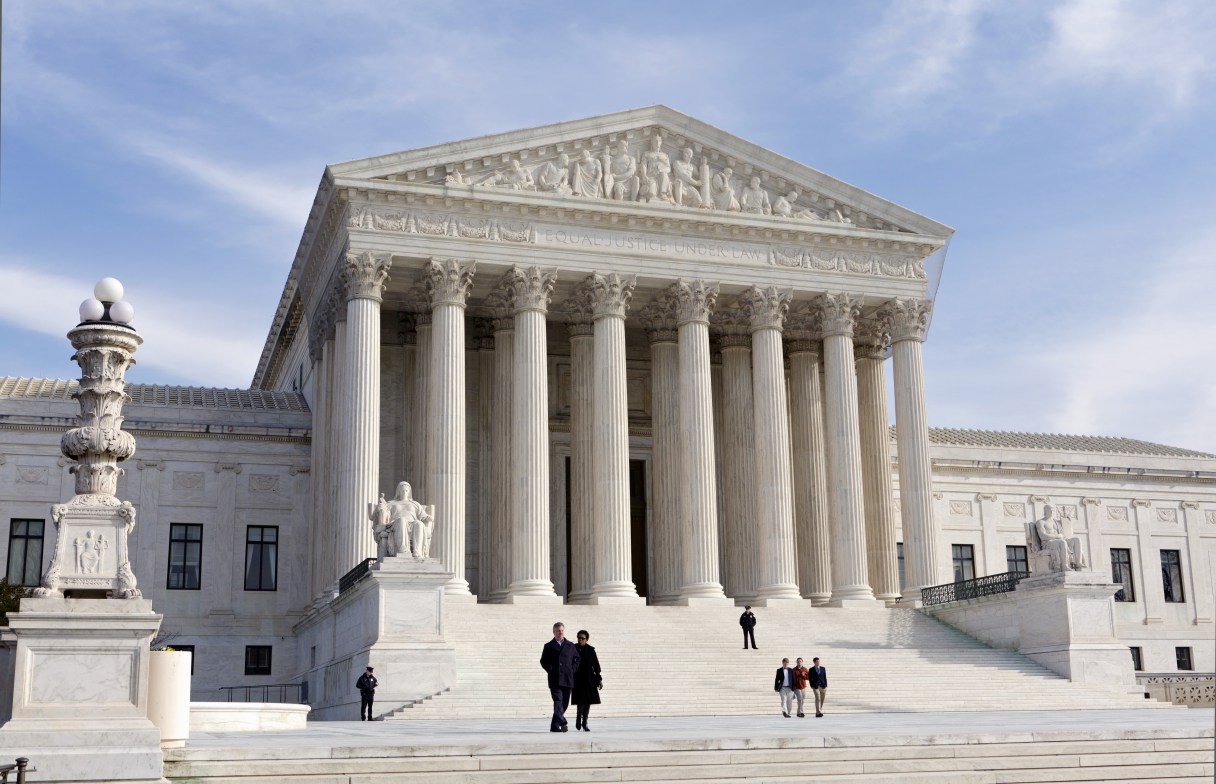
WASHINGTON (AP) – The Supreme Court has unanimously upheld a Texas law that counts everyone, not just eligible voters, in deciding how to draw electoral districts.
The justices turned back a challenge Monday that could have dramatically altered political district boundaries and disproportionately affected the nation’s growing Latino population.
The court ruled that Texas’ challenged state Senate districting map complied with the principle of “one person, one vote.” That’s the requirement that political districts be roughly equal in population.
The challengers said the districts had vastly different population counts when looking at eligible voters, in violation of the Constitution.
“Jurisdictions may design state and local legislative districts with equal total populations, we hold; they are not obliged to equalize voter populations,” Justice Ruth Bader Ginsburg said, summarizing her opinion for the court.