
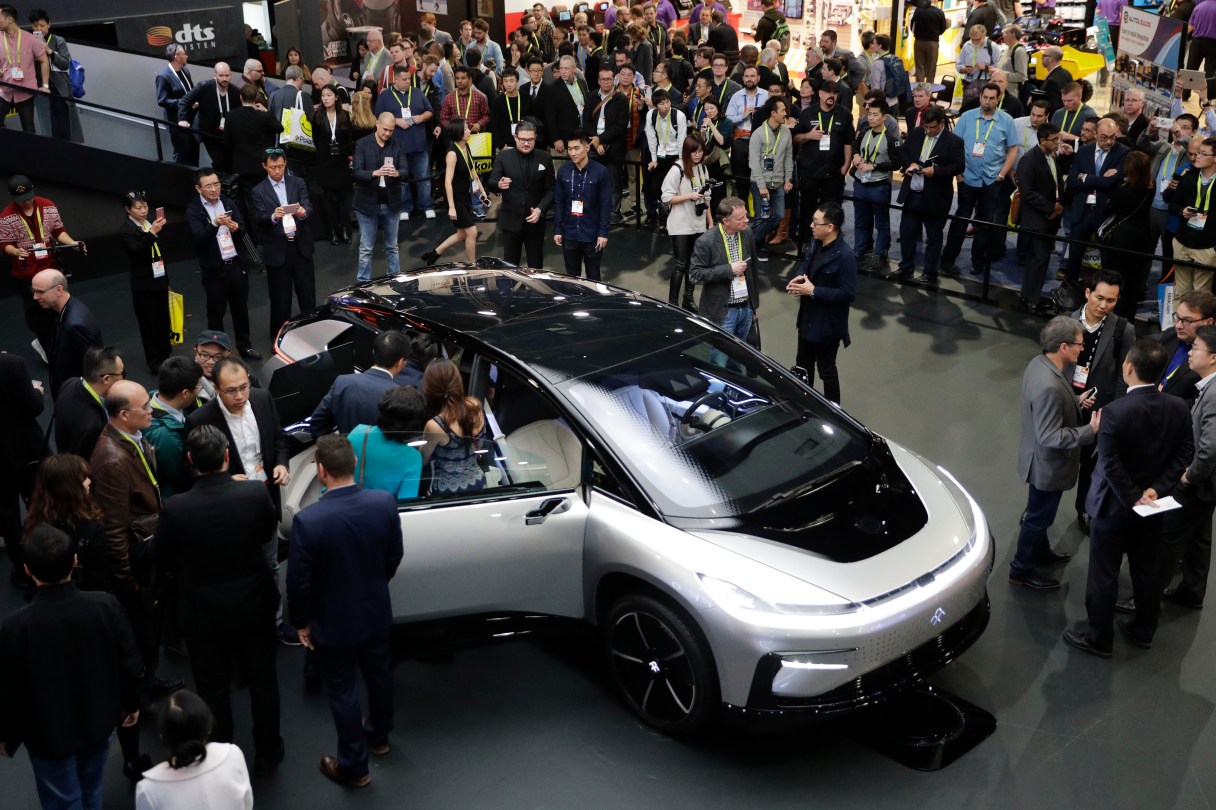
CARSON CITY, Nev. (AP) – An electric car maker deserted its plan to construct a $1 billion manufacturing plant in southern Nevada in a move experts say could spell trouble for the company and the broader niche electric automobile businesses.
Faraday Future Chief Financial Officer Stefan Krause said Monday’s decision to scrap the plant was due to a shift in business strategy. The Gardena, California-based company said in a statement that it will now look for an existing facility to produce its electric vehicles in California or Nevada.
Faraday Future halted work on the project outside Las Vegas last November, at the time calling the stoppage a “temporary adjustment” that wouldn’t affect plans to begin production in 2018. It sunk more than $120 million into the project.
“It can be somewhat hard to believe that a company that was so aggressively spending money and moving things forward in their claimed goals will suddenly change direction and still get to where they want to get to,” said Karl Brauer, executive publisher at Autotrader and Kelley Blue Book. “You kind of don’t know – is this just an adjustment or is there going to be a freefall here?”
He and others who closely watch the industry said the decision comes amid several industry changes that could drastically affect companies like Faraday and Tesla that offer uniquely all-electric lineups. Established car companies are releasing more electric options and it’s unclear whether President Donald Trump’s administration will continue tax breaks that incentivize the industry and motivate buyers.