
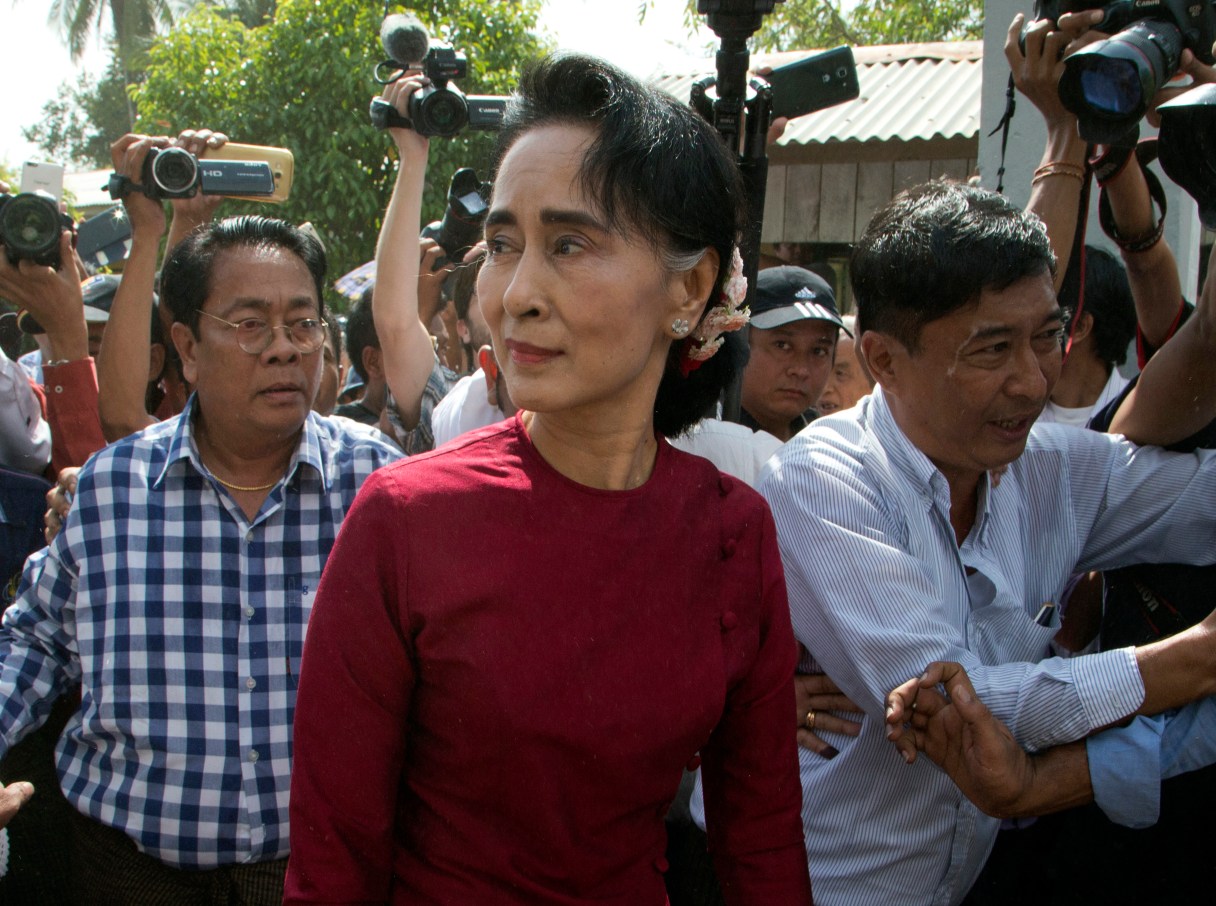
YANGON, Myanmar (AP) – Winning Myanmar’s election turned out to be easier than expected for Aung San Suu Kyi and her opposition party, but steering the country will be a test of how the Nobel Peace laureate balances her moral vision with political realities.
Almost complete returns released by the Election Commission by Sunday showed Suu Kyi’s National League for Democracy with a whooping majority that gives it control of the lower and upper houses of Parliament, along with enough votes to dictate who will be president when the new lawmakers convene their first session next year.
“The election result represents the people’s retribution against the military, which kept them under its boots for decades,” said Aung Din, a former political prisoner and prominent journalist. He added that the extent of Suu Kyi’s victory stunned everyone – the NLD, the military and the world’s foremost experts on Myanmar like himself.
Myanmar was under military rule from 1962 until 2011, when the elected but army-backed party took power after 2010 elections, which were boycotted by the NLD.
With the military automatically allotted 25 percent of the seats in each chamber, the NDL had to win two-thirds of the seats being contested to get the majority – not just 50 percent plus one. It met its mark easily. By Sunday morning, it had won about 78 percent of the combined houses – 387 of the 498 non-military seats, while the ruling military-backed Union Solidarity and Development Party had just 41.