
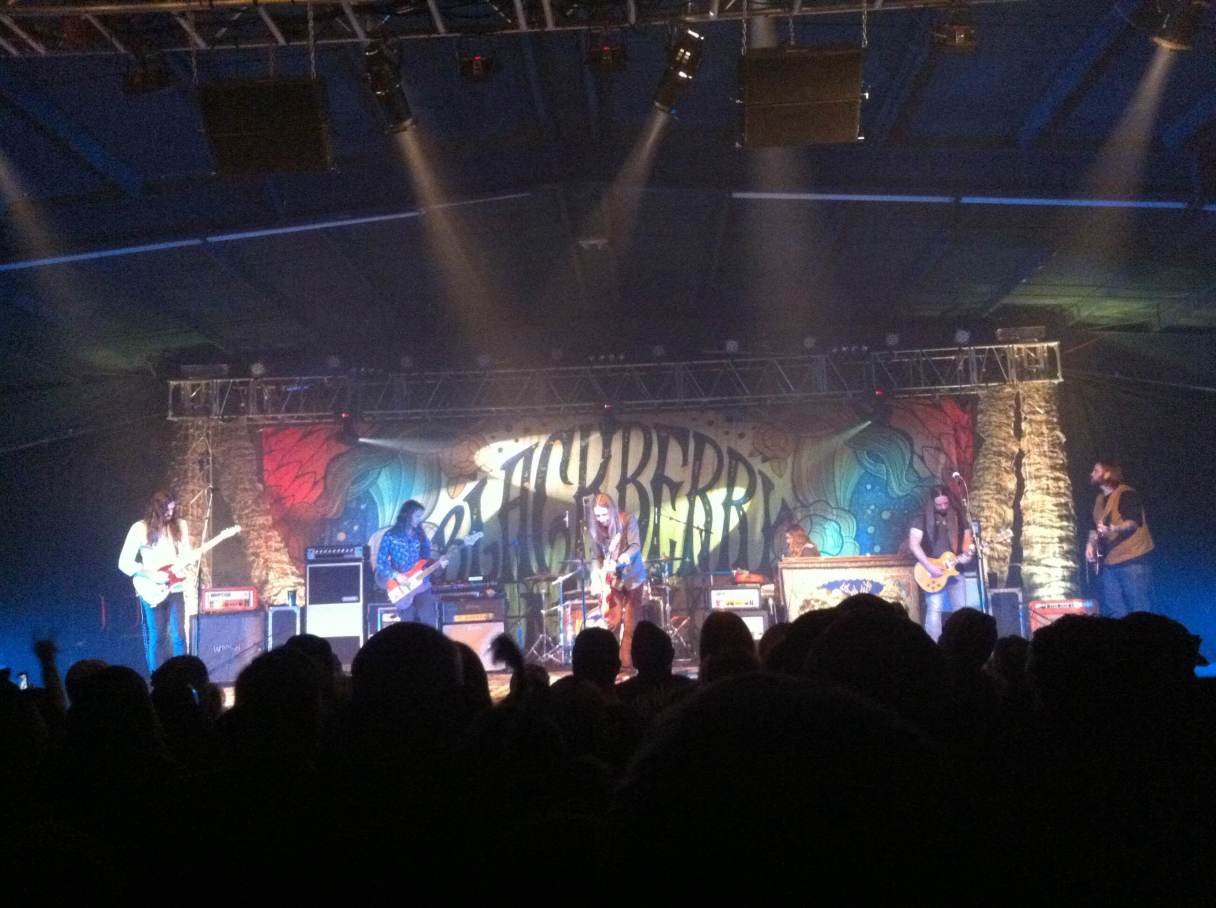
Can you imagine Austin, Texas, without music?
Neither could many of its residents, which explains why in 2008 Austin dwellers – who call themselves Austinites – were shocked when several music venues threatened to close. The city had long hosted everything from big band to country acts to rockers, but it blossomed in the ’70s and today boasts South By Southwest, which started in 1987 as a music festival and is now an internationally known music, film and Internet event.
Prior to 2008, however, there was no real organization in Austin to promote or protect one of its greatest assets – its entertainment community. So when the country’s economy hit a sour note, the city’s music scene was also hurt. Venue owners couldn’t pay their bills, and musicians who drew the crowds were finding it difficult to make ends meet and were looking elsewhere for survival.
ONLINE:
To read the Chattanooga Forward committee reports, visit www.chattanooga.gov/mayors-office/chattanooga-forward
Faced with the threat of losing a big part of Austin’s calling card, community leaders created the Live Music Task Force in 2008 to find ways to keep the venues and musicians in town.
“There were a bunch of clubs closing and there was anxiety about what was happening to the music scene,” says Jennifer Houlihan, executive director of Austin Music People, an advocacy group that focuses on policy issues such as sound ordinances, parking, busking and even safety concerns at loading zones near live music venues.
The group is just one of several organizations in Austin that now focuses on not only improving things for the venues, but for the musicians and the fans, Houlihan says. The SIMS Foundation, for example, works with musicians dealing with addiction and mental health issues. Another group fights for affordable housing, while one works finding cheap and quality health care for musicians.
“Music is the cultural soul of the city,” she says.
Chattanooga isn’t under threat of losing its music scene – which admittedly is not as well-developed as Austin’s – but it must get a handle on what it wants the city’s entertainment landscape to look like in the future, according to a task force charged with identifying just that. A report was presented to Mayor Andy Berke in October as part of Chattanooga Forward, a group of committees that looked at six separate issues: housing, arts and culture, downtown, sports and outdoors, technology, gig and entrepreneurship, and entertainment and attractions.
Lacie Stone, communication director in the mayor’s office, says Berke has been reviewing all the reports.
“Some recommendations can be achieved by partnering with organizations outside of city government while others would require an offer submitted to our Budgeting for Outcomes process,” she says. “A few could be implemented using little to no funds. Each recommendation is being thoroughly explored to determine feasibility, partners, timing and details of implementation.”
Chattanooga Convention and Visitors Bureau President Bob Doak was one of the chairmen of Chattanooga Forward, along with local talk show host Alison Lebovitz and Adam Kinsey, co-owner of Track 29 and a partner with Kinsey Probasco Hays, which owns the Chattanooga Choo Choo. Doak says the city is at a bit of a crossroads when it comes to planning for the future, including its entertainment industry.
“The Chattanooga way,” the notion of bringing together people with a common cause to move the city forward for the greater good, helped take Chattanooga from its bleak days in the 1980s when downtown was virtually empty at night to the thriving place it is today, Doak says. He believes the city has lost its way a bit in that regard, but with a new mayor and new city council, now is a good time to take advantage of the momentum generated in other areas, such as technology and the visual arts, and to create a plan for what the city could offer in the future.
Entertainment & Attractions Advice
Here are some of the conclusions in the report sent to Mayor Andy Berke Venture 2.0: A community-based team that focuses on maintaining the vibrancy of the Renaissance while looking for significant enhancements that will fill the gaps or create new experiences. – Convention and Visitor’s Bureau and Community Leadership Group Establish Entertainment districts to build unique music experiences. – City Council Shaping Ordinance Create a nonprofit organization to lead and manage the Tivoli Theatre, Memorial Auditorium and potentially similar venues. – City and key stakeholders Bring alive the waterfront – both sides by making it more animated, more accessible to multiple uses and more community friendly. – RiverCity and City of Chattanooga departments Reduce the red tape, lessen the bureaucracy and bring clarity (to the process of putting on an entertainment event or opening an entertainment business) with a city one-stop shop. – City of Chattanooga Source: Entertainment & Attractions Report
As part of the process, the Entertainment and Attractions committee of Chattanooga Forward conducted surveys, spoke with club owners and musicians and looked at the major venues and events, such as Finley Stadium, First Tennessee Pavilion, McKenzie Arena and the Riverbend Festival.
“We have some opportunities to do some really great things,” Doak says. “It’s time to go relaunch our efforts collectively on what we want our city to look like going forward.”
Part of the plan, though it isn’t a large part of the report, is the idea of identifying entertainment zones or districts that could have different and/or more tolerant rules governing noise levels and closing times, as well as how these zones work with any nearby homeowners or residents.
Moving ‘Forward’
The Entertainment & Attractions report offered Berke some details on how the city can improve, as well as hopes for the future. One suggestion is to create a nonprofit group to run the Tivoli Theatre and Memorial Auditorium, both now owned and operated by the city.
But the city of Chattanooga is naturally more conservative because of liability issues when it comes to operating the facilities, Doak says, and the same is true to a degree at the city-owned Finley Stadium and at McKenzie Arena, which is owned by the University of Tennessee at Chattanooga.
“Everyone is very risk averse, and that is probably a function of who they work for – government or quasi-government groups,” he says.
Conservatism shows up not only in acts that aren’t even considered for a show here because of upfront costs or because they don’t meet perceived community standards, but also in the amount of paperwork promoters must fill out or insurance liabilities they must assume to present a show here.
“Sometimes you’ve got to take risks,” Doak says. “Smart risks, and it has to be done in a world-class way. We as a community need to figure out how to help these venues and then go support them.
“When we talked to the bigger venues, they all talked about cutting expenses. Switching to LED lighting, cutting staff, those kinds of things. Not one talked about top-line growth [gross sales] or growing revenue.”
Easing congestion
Other topics in the report include improving the “after 5 p.m. experience for adults” and streamlining the process for people who want to produce an event at places like Coolidge Park or the 21st Century Waterfront. As it is now, anyone interested in presenting an event in a city park or open space must talk to everyone from the police to city services (311) to Friends of the Festival, which handles booking the 21st Waterfront.
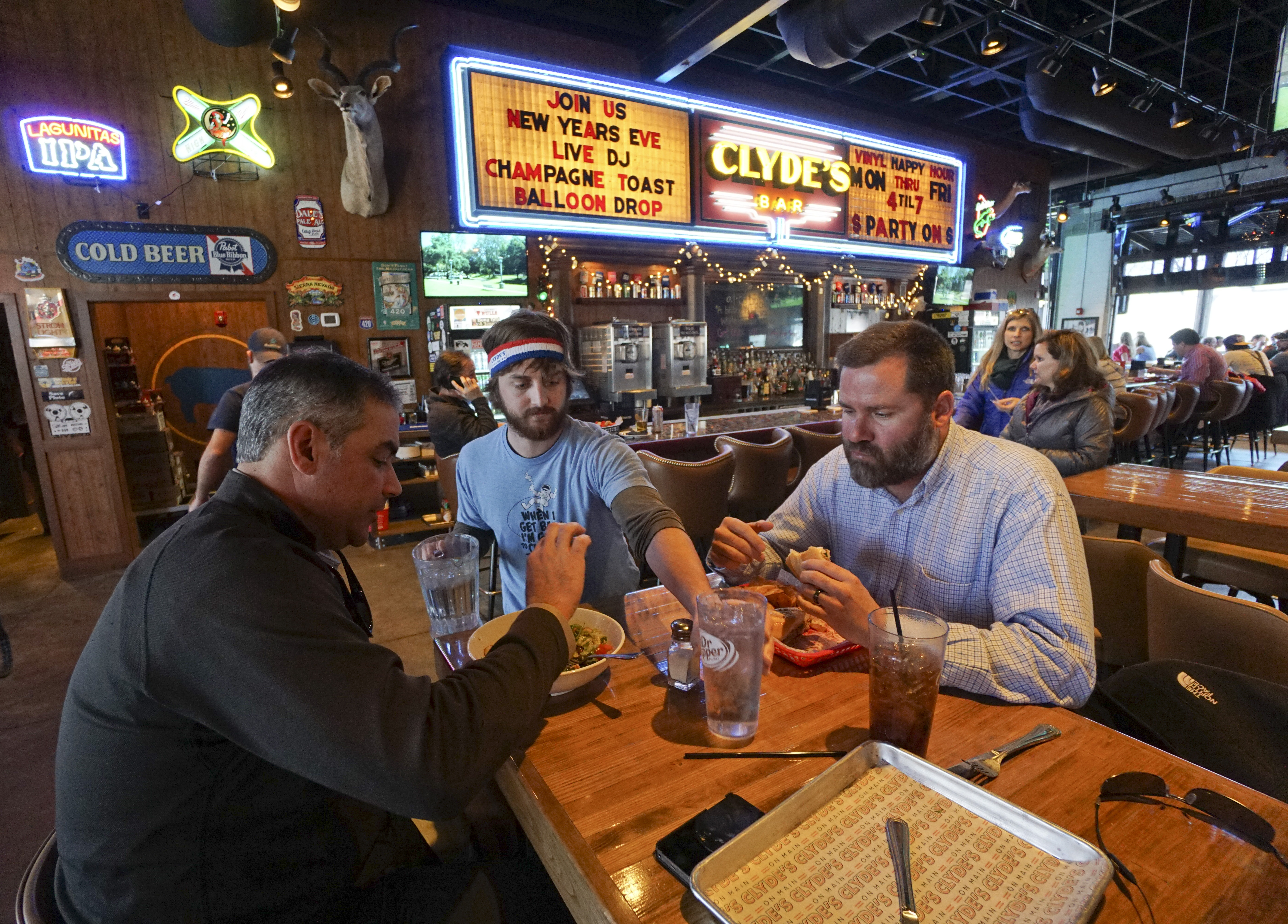 Since opening in August, Clyde’s on Main has become a bustling addition to the Main Street corridor.
“There are a lot of different folks you need to go talk to,” Kinsey says.
Kinsey and Doak say they’d like to see the process reduced to a single phone call, or at least a single office.
“Atlanta does that. They have a one-stop-shop setup,” says Patrick Roddy, chief operating officer of AC Entertainment in Knoxville, which produces the Bonnaroo Music & Arts Festival in Manchester, Tenn., as well as the Big Ears festival in Knoxville and the Forecastle festival in Louisville, Ky. In Atlanta, the contact is Ebony Barley, director of special events in Mayor Kasim Reed’s office.
Roddy says other cities also make it easy to work with them.
“Louisville is fantastic to work with, as is their mayor. They do what cities could do,” Roddy says. “For events like this to be successful – and not just for the promoter but the city – everybody has to come together and work together. From permitting to police to fire to medical. Also, the business community can work together and embrace it.”
Hotels that are in walking distance of the Forecastle festival site block off rooms for the Louisville event and offer discounts, Roddy says. Knoxville hotels and restaurants did the same for Big Ears.
“The hotels came up with a rate. The restaurants asked, ‘How can we be involved?’ The art museums even asked how they could be involved. It takes a total community buy-in,” Roddy says.
And rewards can go beyond the immediate financial payoff, he says.
“What happens is that the New York Times, the Los Angeles Times and the Wall Street Journal all come and get to experience Knoxville and then tell their readers about it.”
At one time, the closest thing the city had to a one-stop source of information was Chattanooga Presents owner Carla Pritchard, the former executive director of Chattanooga Downtown Partnership, which produced events such as Nightfall and the Starlight Parade for the RiverCity Co. That setup, which lasted about 20 years, ended in 2010 when RiverCity dropped its relationship with Downtown Partnership, saying it wanted to get out of the events-promotion business.
Pritchard has met with city officials in recent months to discuss ways to streamline the process of putting on events downtown.
“I think it’s a great idea. People don’t often know who they have to talk to and just what does have to happen,” she says. “Do I need to close down the streets and am I responsible for barricades? Those kinds of things.”
Work in progress
AC Entertainment also books the touring acts that play Track 29, which is often cited as a positive example of what is good about the Chattanooga music scene. Since opening in September 2011, the 1,800-capacity music venue has had almost three dozen sold-out shows, many featuring acts such as Jack White, who traditionally bypassed playing here, either because the city didn’t have the right-sized venue or because it just didn’t have the hipness cachet to warrant a show.
“The hunger for music is here. It’s landing the right demographic,” says Monica Kinsey, Adam’s wife and Track 29 co-owner.
Both Adam Kinsey and Lebovitz, as well as Chattanooga Forward committee member Jonathan Susman, a Chattanooga musician who is also active in promoting local music, say the Entertainment & Attractions committee and its report are the first steps in bringing the community together because they gave voice to local venue owners and musicians.
Almost four years ago, Susman created a Music Council that, over time, identified many of the same issues discussed in the Entertainment and Attractions report. In fact, his council was essentially absorbed into the Entertainment and Attraction committee when it came into being. Susman believes the new committee’s work continues what he started by bringing together club owners and musicians to discuss the local issues. He believes Chattanooga Forward can present those ideas on a larger scale.
“This shows there is a real, vested interest in this community and this report catches up on a lot of things,” Susman says. “It’s a good way to focus all those efforts. I also think it provides some more validity to what different groups have been saying for years.”
Lebovitz adds that the work by Chattanooga Forward also engaged a lot of people who, in the past, may not have been part of the conversation when the city discussed entertainment issues.
“I thought it [the Chattanooga Forward exercise] was a great process for a lot of entertainment and music people in this community who have worked in silence,” she says. “They are so happy to come to the table and talk about how we can work together.”
After dark
Part of the report to Berke looked at the issue of what to do in town after 5 p.m. Down near the river, the city has focused on attracting families with the Tennessee Aquarium, the Creative Discovery Museum, Coolidge Park and The Imax 3D Theatre, Doak says.
The report recommends that the city identify area that either already exist, such as the Jack’s Alley area between Broad and Market and Fourth and Fifth streets, and new ones such as Main Street, to market as entertainment districts.
Doak says such districts are not the type of thing you can plan in great detail because they must grow on their own and do so fairly organically – for instance, the zone that’s blossomed between Track 29, the Main Street arts district and the Flying Squirrel and Clyde’s on Main restaurants, all owned by different people but all of whom see the same potential for the area.
Still, while wanting such entertainment areas to grow on their own, “you set some guidelines and parameters,” Doak says.
The report also recommends that a task force be put together comprised of business owners, residents and city staff to discuss everything from the city’s noise ordinance to protecting neighborhoods.
The issue of noise came up this past summer when residents near Track 29 complained that music from the club often rattled their windows and furniture. The city in July proposed that new guidelines be established to allow for venues within proposed entertainment districts to apply for permits to play louder music after 9 p.m.
The new ordinance allows for venues within designated districts to apply for permits allowing them to have music played at louder volume during certain times of the night.
Track 29 is part of the Chattanooga Choo Choo campus, which is undergoing a $7 million renovation in coming months that will include the addition of a new live music venue, a sports bar and the relocation of The Comedy Catch from Brainerd. Some believe the renovation could lead to the Choo Choo and Main Street area becoming the “after 5 p.m.” entertainment district, which would be another arrow in the city’s marketing quiver.
“Chattanooga does not have the part of town where the (Convention and Visitor’s Bureau) can go to Nashville, Atlanta, Knoxville and say, ‘This is our after-5 part of town,'” Kinsey says.
The Choo Choo development is “definitely going to create that after-5 place to go, and it’s not just us,” he says. “It’s really the Southside. It’s the Flying Squirrel and Clyde’s on Main. It’s a collective of businesses and neighbors and it’s already happening.”
Since opening in August, Clyde’s, located in the former Clyde’s Auto Glass on Main Street, has become a local favorite for the lunchtime and nighttime crowd, with lines to get in the door on weekend nights.
“It’s been amazing,” says manager Kelsey Womble. “I would describe it as a whirlwind. Just when we think it can’t get any busier, it does.”
Roddy says AC is aware of what is happening in Chattanooga and likes what it sees, especially the changes coming at the Choo Choo.
“It creates an evening. What we see coming from Chattanooga is very, very positive.”
Contact Barry Courter at bcourter@timesfree press.com or 423-757-6354.