
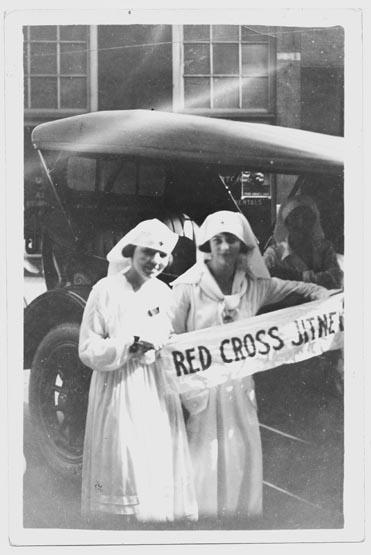
Over the last two centuries, Chattanoogans have faced epidemics of smallpox, cholera, yellow fever and polio as well as outbreaks of scarlet fever and measles. Many vividly remember the spread of polio in Chattanooga in the early 1950s but the list of other diseases over time is long.
In 1917, just as the United States entered World War I, more than 60,000 military trainees passed through Fort Oglethorpe. A year later the Spanish Flu pandemic followed, leaving 392 dead among Chattanooga’s 44,604 residents.
The sickness first appeared at the fort when 28 soldiers fell ill on Sept. 28, 1918. On Oct. 8, Mayor Jesse Littleton and county Judge Sam Conner issued health orders closing “all places of public gathering moving picture houses, theaters, poolrooms, dance halls, public schools, the University of Chattanooga, private schools, churches, Sunday schools, missions and all other places until further notice,” according to library newspaper archives. At the peak, 38 civilians and 53 soldiers died in one day. Understaffed factories had a difficult time but were expected to produce. Unlike the yellow fever epidemic in the 1870s, when many prayed for a killing frost, residents in fall 1918 hoped for warmer weather to keep the flu away.
Newspapers issued precautionary measures: “Keep out of crowds, cover coughs and sneezes, do not spit, shun the common drinking cup and towel found in public places and above all, stay home if you feel sick.” Civilian nurses, particularly from the Red Cross, volunteered, and donor cars were left on Market Street for caretakers to deliver medicines and supplies.
The wave of the epidemic started to wane after a month, and by Oct. 29, Chattanoogans resumed business.
Dr. Mark Anderson, a Chattanooga infectious disease specialist, described the 1918 flu as a new strain for which there were no immunities and worried that the rapidly spreading sickness affecting young and old could easily come back.
Another disease, polio, affecting mainly children, sprang up in August 1941. Poliomyelits, or infantile paralysis, moved quickly from person to person. The disease affected the muscles, primarily legs and also neck, head and diaphragm. On Aug. 9, newspapers described the situation as “alarming.” By Aug. 13, the city was called a”polio hot spot.” Swimming pools closed, parents were advised to watch for symptoms and avoid crowds.
As the number of new polio cases increased to 90, Dr. F.O. Pearson, director of the city-county Health Department, announced that all 16 movie houses be closed; all amusement places shuttered; churches, public and private schools closed; churches services ceased; and funeral attendance restricted.
WDOD radio held a “Sunday School of the Air” devoted to children quarantined at home.
The health department quarantined all known cases for two weeks and required identification of the house with a sign. No one was to enter or leave without “written permission from the health department.”
Restaurants remained open but were encouraged to be extra vigilant in sterilizing utensils. On Sept. 9, Dr. Pearson told newspapers: “We have a serious situation in our city and we must have the co-operation of the entire public if we are to get this epidemic under control. Parents must keep their children at home and restrict their own movements to necessities.”
Dr. Pearson declared the epidemic over on Sept. 24, and school opened Sept. 26. Some victims started out in iron lungs and wheelchairs and never fully recovered. Some regained their health. This epidemic included 100 reported cases and four deaths. Another polio attack occurred in 1948 and closed Baylor School.
Parents continued to fear further attacks but none came until the early 1950s. The Times Free Press on March 21, 2020, included the horror of that outbreak then followed up on April 4 with personal recollections about the “disabling, life-threatening disease that forced families to make life-altering changes.” Dr. Jonas Salk’s new vaccine in 1955 cut polio cases by 80% to 90% within 2 years. The U.S. has not had a natural polio case since 1979.
Chattanoogans now face the 2020 coronavirus pandemic. Schools, public places, libraries and businesses have been shut to stem the spread of the disease for the last several weeks and are just now beginning to reopen.
Newspaper articles over the years tell the stories of smallpox, cholera, yellow fever, measles, influenza, polio, AIDS and other diseases and citizen reaction. What will future researchers learn about Chattanooga’s response to COVID-19?
Contact Suzette Raney, archivist at the Chattanooga Public Library, localhistory@lib.chattanooga.gov.