
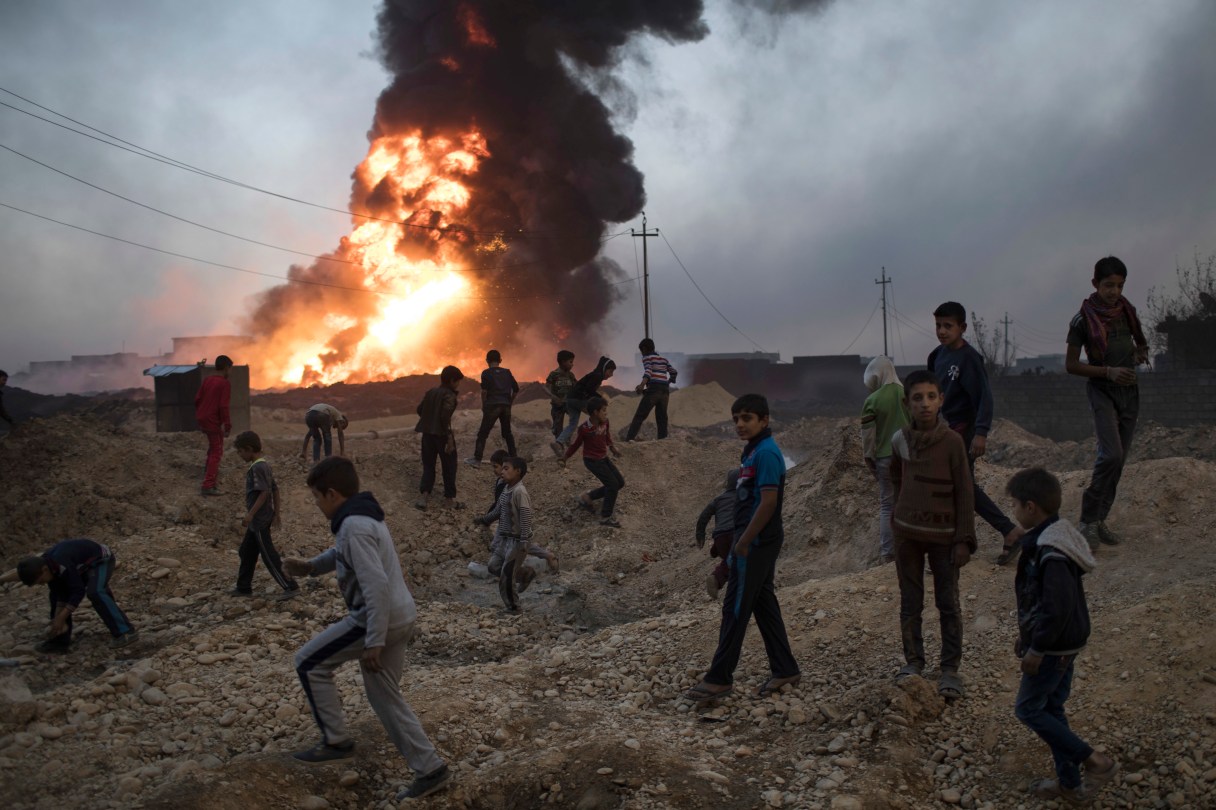
MOSUL, Iraq (AP) – As Iraqi forces pushed Islamic State militants out of Mosul’s eastern neighborhoods this week, hundreds of civilians faced a dilemma: Stay in an area still beset by heavy fighting and surrounded by government troops that many still distrust, or evacuate for the uncertainty of a displacement camp.
The elite special forces entered the Gogjali district Tuesday, touching off an exodus by hundreds of residents, many herding sheep, cows and goats as they fled to the east.
But still more have been told by the troops to stay in their homes as the battle is changing to one of urban combat with the extremists who hold Iraq’s second-largest city. Those civilians who remain have essentially become trapped on the front lines.
As a convoy of armored Iraqi vehicles twisted through narrow dirt roads, a handful of families waved. Some children shouted and smiled at the passing troops, but other residents peeked cautiously from behind garden gates. In the center of the district, a crowd lined up to collect boxes of aid.
One resident at the aid distribution site said the mood in the neighborhood was more tense than exuberant.