
Wednesday, November 11, 2026Nov 11

House panel is told of slavery in Thai seafood industry

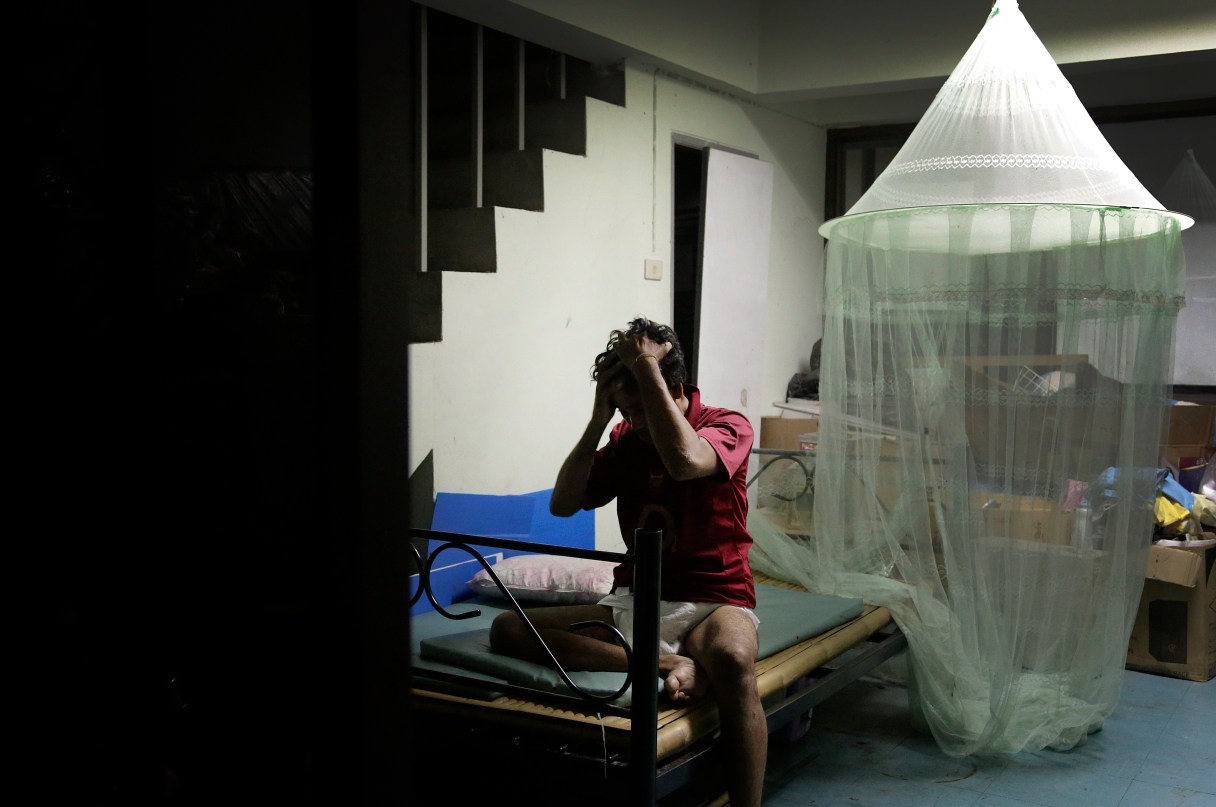
FILE - In this Friday, Dec. 12, 2014, file photo, Min Min, from Myanmar, tears at his hair in agitation as he tries to remember details about his family. Min Min was rescued from a tiny island in December, on the verge of starvation, and brought back to Thailand, the world's third-largest seafood exporter. In its first report on trafficking around the world, the U.S. criticized Thailand as a hub for labor abuse. Yet 14 years later, seafood caught by slaves on Thai boats is still slipping into the supply chains of major American stores and supermarkets. (AP Photo/Wong Maye-E, File)
FILE - In this Friday, Dec. 12, 2014, file photo, Min Min, from Myanmar, tears at his hair in agitation as he tries to remember details about his family. Min Min was rescued from a tiny island in December, on the verge of starvation, and brought back to Thailand, the world's third-largest seafood exporter. In its first report on trafficking around the world, the U.S. criticized Thailand as a hub for labor abuse. Yet 14 years later, seafood caught by slaves on Thai boats is still slipping into the supply chains of major American stores and supermarkets. (AP Photo/Wong Maye-E, File) FILE - In this Friday, Dec. 12, 2014, file photo, Min Min, from Myanmar, tears at his hair in agitation as he tries to remember details about his family. Min Min was rescued from a tiny island in December, on the verge of starvation, and brought back to Thailand, the world's third-largest seafood exporter. In its first report on trafficking around the world, the U.S. criticized Thailand as a hub for labor abuse. Yet 14 years later, seafood caught by slaves on Thai boats is still slipping into the supply chains of major American stores and supermarkets. (AP Photo/Wong Maye-E, File)

WASHINGTON (AP) – Modern-day slavery persists around the world, including the abuse of fishermen in the Thai seafood industry whose catch can end up in U.S. markets, a congressional panel was told Wednesday.

“As has been reported for years, the Thai fishing industry is rife with forced labor, both on the high seas and within seafood processing and packing plants,” Mark Lagon, former State Department ambassador for trafficking in persons, told a House Foreign Affairs subcommittee.

Lagon, who now heads Freedom House, a nonprofit organization that advocates for human rights, said it remains to be seen whether the Obama administration will impose sanctions it is authorized to deploy, which would bar Thai seafood from U.S. markets.

The State Department’s key weapon for combatting human trafficking comes in a politically charged annual ranking in “tiers”- Tier 1 is best, 2 means more could be done, and 3 is a blacklist that can spark sanctions. The House global human rights subcommittee urged the Obama administration to come down hard on those countries that violate human rights when it releases the report in June.

Rep. Chris Smith said China was prematurely upgraded to Tier 2 in 2014, and singled out Myanmar, also known as Burma, Malaysia and Thailand as countries that need to do more to fight human trafficking across shared borders. Unless they’ve dramatically changed their law enforcement, prosecutions and investigations, several African countries face automatic downgrades this year.