
Sunday, November 8, 2026Nov 8

This story is free to read.

New hope for endangered eels, Japanese summer delicacy

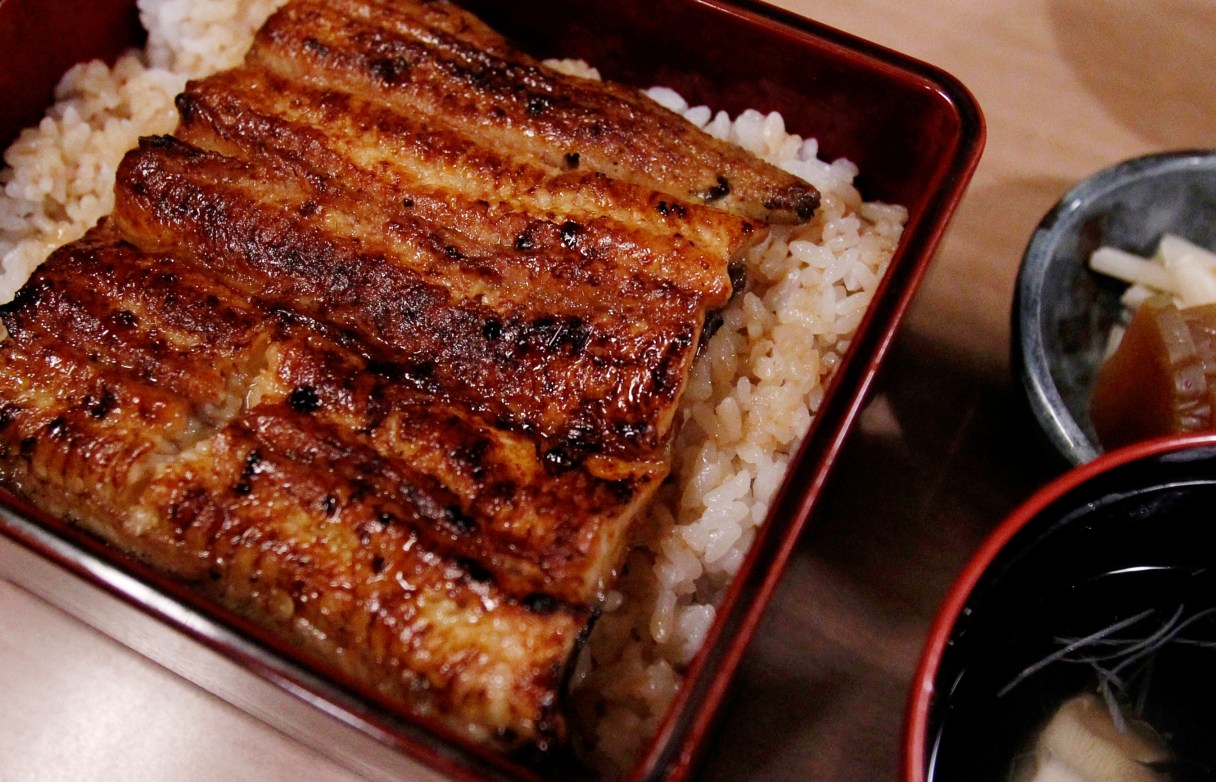
In this Aug. 2, 2017 photo, unajyu is served at Hashimoto, a Michelin one-star unagi restaurant in Tokyo. Known as "unajyu," the grilled "kabayaki" eel delicacy served on hot steaming rice in a neat lacquer box is what many Japanese people indulge in during the summer to celebrate the Day of the Ox. The endangered Japanese summer delicacy may get a new lease on life with commercial farming. (AP Photo/Sherry Zheng)
In this Aug. 2, 2017 photo, unajyu is served at Hashimoto, a Michelin one-star unagi restaurant in Tokyo. Known as "unajyu," the grilled "kabayaki" eel delicacy served on hot steaming rice in a neat lacquer box is what many Japanese people indulge in during the summer to celebrate the Day of the Ox. The endangered Japanese summer delicacy may get a new lease on life with commercial farming. (AP Photo/Sherry Zheng) In this Aug. 2, 2017 photo, unajyu is served at Hashimoto, a Michelin one-star unagi restaurant in Tokyo. Known as "unajyu," the grilled "kabayaki" eel delicacy served on hot steaming rice in a neat lacquer box is what many Japanese people indulge in during the summer to celebrate the Day of the Ox. The endangered Japanese summer delicacy may get a new lease on life with commercial farming. (AP Photo/Sherry Zheng)

FUJISAWA, Japan (AP) – The Japanese summer delicacy of roasted eel, braised with a tangy sauce and sprinkled with prickly mountain pepper, is in question as the creatures with their mysterious migrations become increasingly endangered.

Soaring demand helped put the creatures on the “Red List” of endangered species in 2014. It’s even spurring poaching of similar species off the U.S. east coast.

Katsumi Tsukamoto, “Dr. Eel” of the only “Eel Science Laboratory” at Nihon University in Japan, thinks he’s unlocked the secrets to eventually farming the eels, known as unagi, sustainably and profitably. Tsukamoto found out where the eels are spawning, and that helped researchers study conditions needed to raise them from the egg stage to adulthood.

Some fishermen see such farming less as competition than as a way to help save the species.