
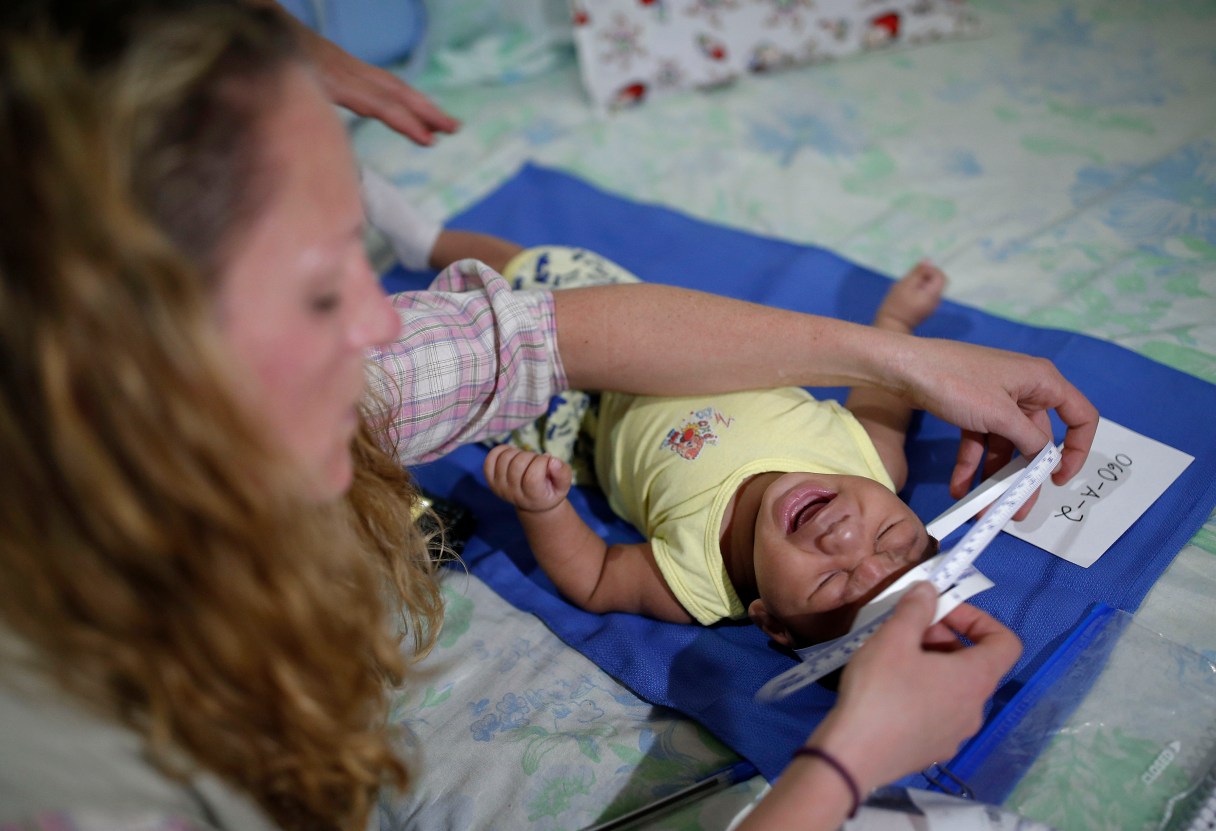
JOAO PESSOA, Brazil (AP) – Teams of U.S. and Brazilian health workers ventured into dicey slums, fought through snarled traffic and braved torrential downpours on the first day of their effort to determine if the Zika virus is causing babies to be born with a birth defect affecting the brain.
The eight teams, each made up of one “disease detective” from the U.S. Centers for Disease Control and Prevention and three Brazilian health workers, went to work Tuesday in Paraiba, the impoverished state in northeastern Brazil that is one of the epicenters of the country’s tandem outbreaks of Zika and microcephaly.
Their goal is to persuade about 100 mothers of infants recently born with the defect as well to enroll in the study. They also need participation as controls of two to three times as many mothers from the same areas who delivered babies without microcephaly at about the same time.
The study aims to determine if the Brazilian government is right that Zika can cause microcephaly, or whether the mosquito-borne virus is not in fact to blame or is only partially responsible, as a growing chorus of doctors in Brazil and beyond have begun to suggest.
The seemingly straightforward task of locating the women and infants was fraught on day one by traffic jams, logistical snags and menacing weather, though the teams soldiered stoically on.