
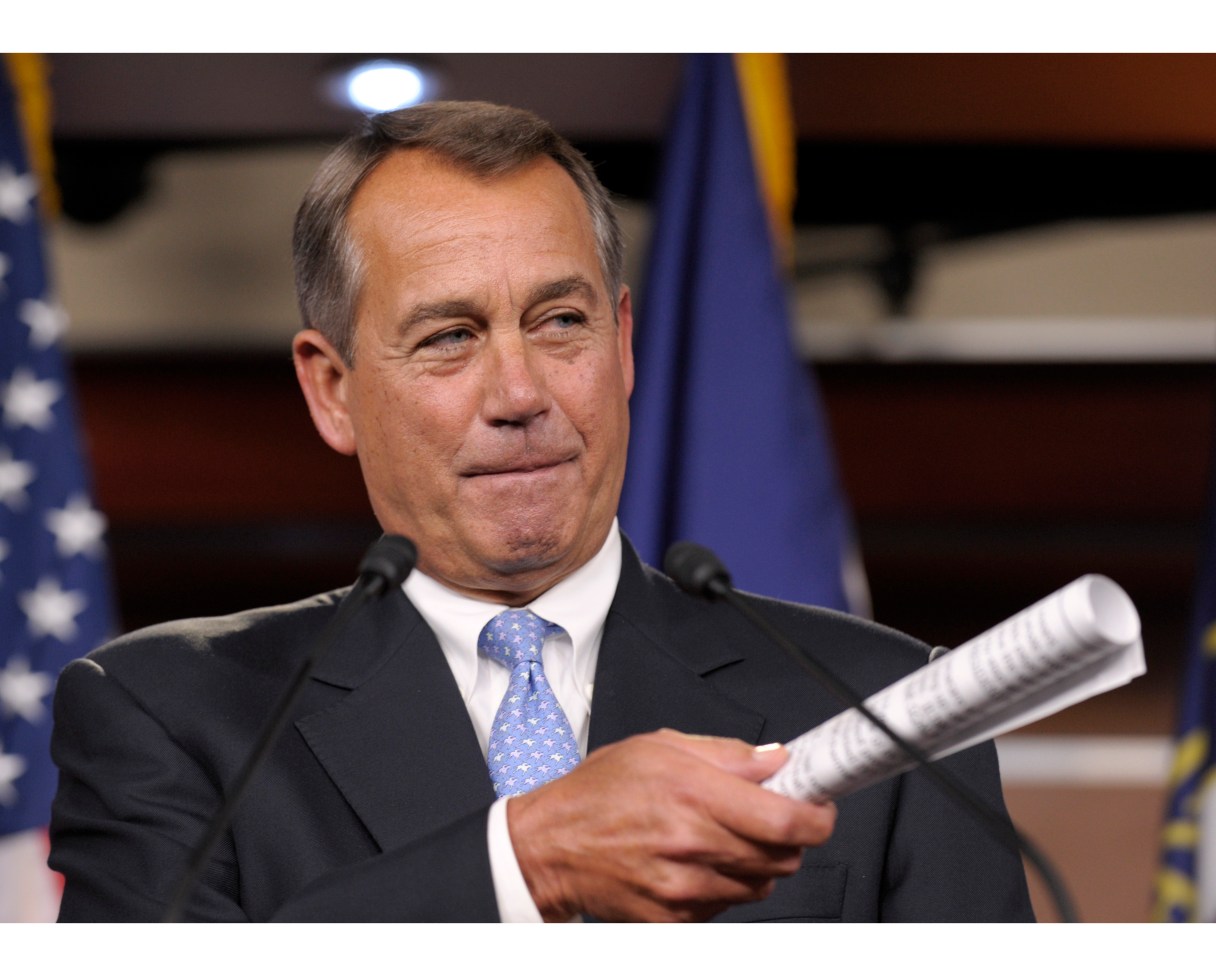
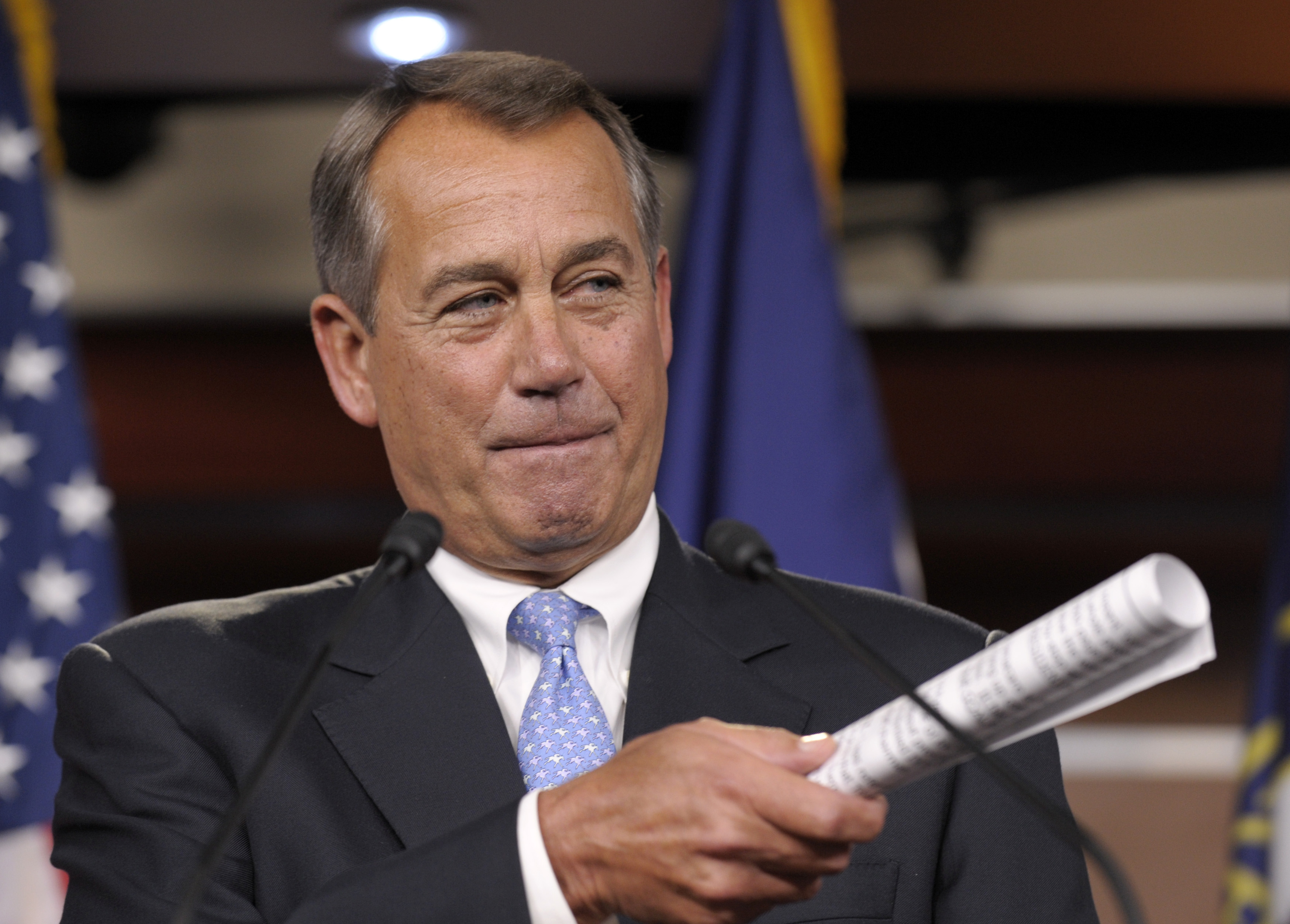
 House Speaker John Boehner
Given the rapidly vanishing time needed to put a “fiscal cliff” solution in place to avoid automatic spending cuts and tax increases by Jan. 1, House Republicans are apparently looking for a two-step out. Speaker John Boehner and his minions are reportedly considering swallowing a renewal of Bush-era tax cuts only for the middle class, as President Obama insists, and waiting for the next debt-ceiling-increase debate early in the new year to leverage new tax cuts for the wealthiest 2 percent — and deep cuts in Social Security, Medicare and other vital programs for everyone else.
The apparent premise of this strategy is that they can again hold the country captive to a default on national debt to extort new tax breaks for their largest campaign donors, never mind all the resulting financial turmoil, recessionary pressure and increased costs of interest on the nation’s debt that would fuel. If they believe that would be a politically winning strategy for them, they are over-looking large gaps in their tunnel-vision extortionist tactics.
One fault-line is their limited view of the debt ceiling. It is raised only to pay for prior spending that Congress has already permitted. Threatening to default on that debt would be a self-inflicted wound.
In any case, the bulk of the national debt arises from the fiscal misfeasance of prior Republican-controlled congresses and presidents. The biggest portion of the current national debt of $14.7 trillion was accumulated by George W. Bush and his Republican predecessors, Ronald Reagan and George Herbert Walker Bush, and their toady GOP majorities in Congress.
Though he inherited massive debt, Bill Clinton was able work budget deficits and national debt levels down. He achieved three surplus budgets by the end of his tenure. George W. Bush, who came into office with the debt at roughly $5.7 trillion, enjoyed two Clinton-driven budget surpluses, but quickly returned to deep deficit spending for two unfunded wars and deep tax cuts that mainly favored the nation’s ultra-wealthy. He left office with the debt build-up at over $12 trillion, and with several trillion more in the pipeline for President Obama for the continuing Bush wars and tax cuts.