
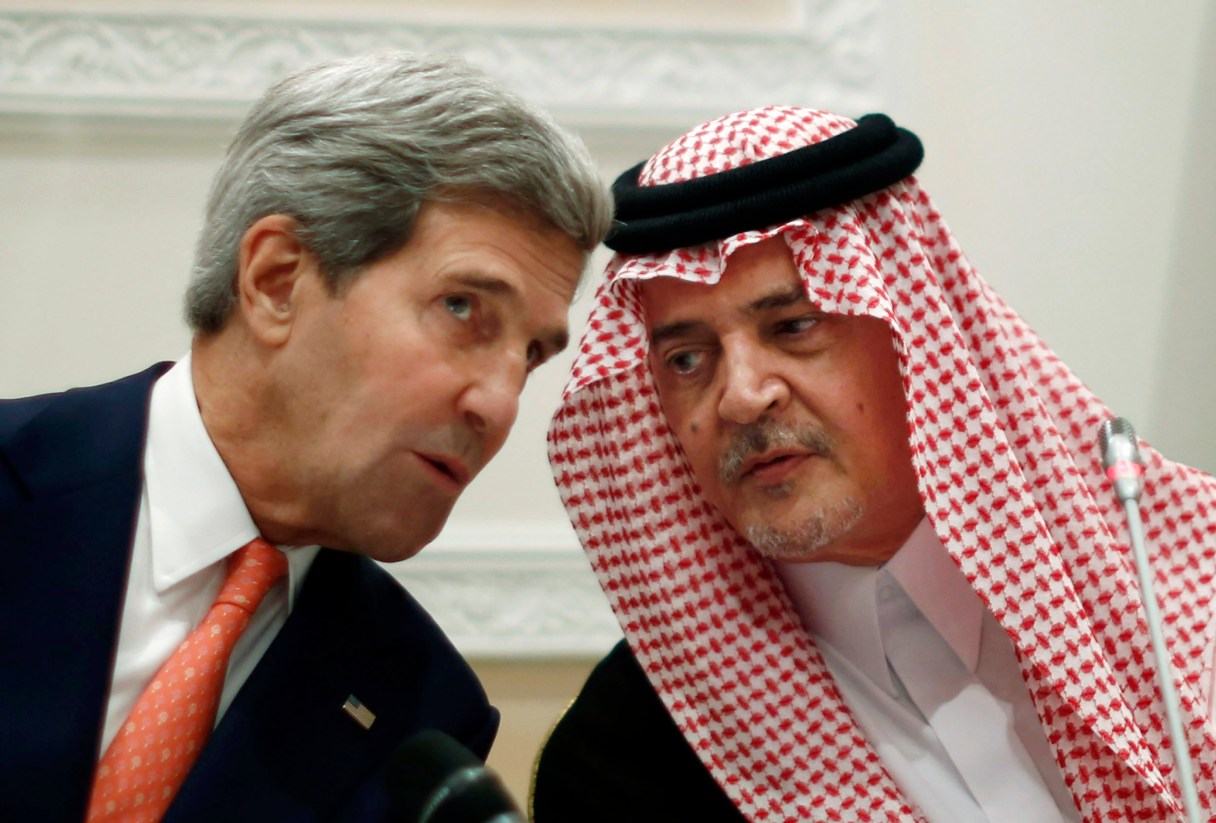
RIYADH, Saudi Arabia (AP) – Saudi Arabia’s Prince Saud al-Faisal, who was the world’s longest-serving foreign minister with 40 years in the post until his retirement this year, has died, the ministry spokesman said Friday. He was 75.
The tall, stately Prince Saud was a fixture of Mideast diplomacy, representing the oil-rich Gulf powerhouse as it wielded its influence in crisis after crisis shaking the region – from Lebanon’s civil war in the 1970s and 1980s, through multiple rounds of Arab-Israeli peace efforts, the 1990 Iraqi invasion of neighboring Kuwait and the subsequent Gulf War, al-Qaida’s 9/11 attacks in the United States, the 2003 U.S.-led invasion of Iraq to the current day’s tensions between the Gulf and Iran, Arab Spring uprisings, Syrian civil war and the spread of Islamic State group extremists.
Saudi Foreign Ministry spokesman, Osama Nugali announced Saud’s death on his official Twitter feed, saying, “The eye tears, the heart saddens. We all are saddened to be separated from you.” He did not elaborate on the cause of death. The prince had undergone multiple surgeries in recent years for his back, which left him walking with a cane, and for other ailments.
The prince, who took the ministry post in 1975, retired on April 29, citing health reasons. At the time, U.S. Secretary of State John Kerry hailed him, saying he “has not just been the planet’s longest-serving Foreign Minister but also among the wisest.” He was succeeded in the post by Adel al-Jubeir, who before that was Saudi Arabia’s ambassador in Washington.
Saud was the son of Saudi Arabia’s third king, Faisal, who ruled from 1964 until he was assassinated in 1975. Prince Saud, who had a bachelor’s degree in economics from Princeton University and had been deputy petroleum minister, was soon after appointed to the foreign minister post, which his father had held during his reign. The young prince, fluent in English and French, brought an air of sophistication and charisma, whether in crisp suits or in the traditional Saudi white robe and gold-trimmed black cloak with a red-checkered head piece. Soft spoken, he often showed a sense of humor not often seen among the publicly stolid royal family.