
Wednesday, November 11, 2026Nov 11

European Central Bank head Draghi says stimulus still needed

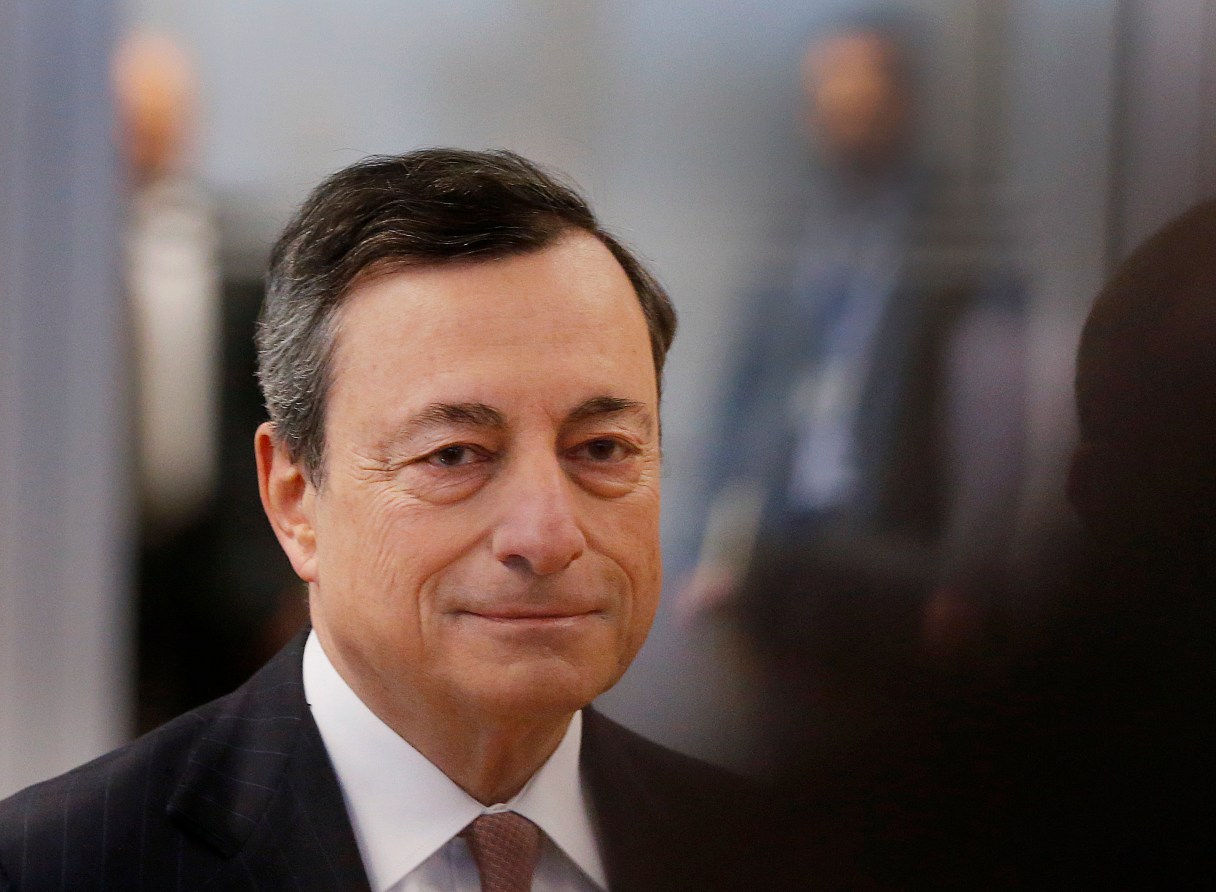
FILE - In this Jan. 19, 2017 file picture President of the European Central Bank, Mario Draghi , is on his way to a news conference after a meeting of the governing council in Frankfurt, Germany.   The head of the European Central Bank says  Monday Feb. 6, 2017 that its monetary stimulus efforts are still very much needed to support the continent's economic recovery — despite the recent spike in inflation in the countries that use the euro currency. (AP Photo/Michael Probst,file)
FILE - In this Jan. 19, 2017 file picture President of the European Central Bank, Mario Draghi , is on his way to a news conference after a meeting of the governing council in Frankfurt, Germany. The head of the European Central Bank says Monday Feb. 6, 2017 that its monetary stimulus efforts are still very much needed to support the continent's economic recovery — despite the recent spike in inflation in the countries that use the euro currency. (AP Photo/Michael Probst,file) FILE - In this Jan. 19, 2017 file picture President of the European Central Bank, Mario Draghi , is on his way to a news conference after a meeting of the governing council in Frankfurt, Germany. The head of the European Central Bank says Monday Feb. 6, 2017 that its monetary stimulus efforts are still very much needed to support the continent's economic recovery — despite the recent spike in inflation in the countries that use the euro currency. (AP Photo/Michael Probst,file)

FRANKFURT, Germany (AP) – The head of the European Central Bank says that its monetary stimulus efforts are still very much needed to support the continent’s economic recovery – despite the recent spike in inflation in the countries that use the euro currency.

Mario Draghi told members of the European Parliament on Monday that the uptick in annual inflation to 1.8 percent was mainly due to higher oil prices, not to fundamental price pressures in the economy from rising wages.

The inflation figure for January was a big jump from 1.1 percent in December and on paper complies with the bank’s goal of just under 2 percent. Yet the increase may not last, and when excluding volatile items like food and fuel, inflation is still only 0.9 percent.

Draghi said that the bank’s strategy “prescribes that we should not react to individual data points and short-lived increases in inflation.”

He said “underlying inflation pressures remain very subdued” because workers’ wages and business hiring remained slacker than they could be. He even held out the possibility that the stimulus could be stepped up if the outlook worsens.