
Thursday, November 12, 2026Nov 12

Questions and answers about the Catalonia independence vote

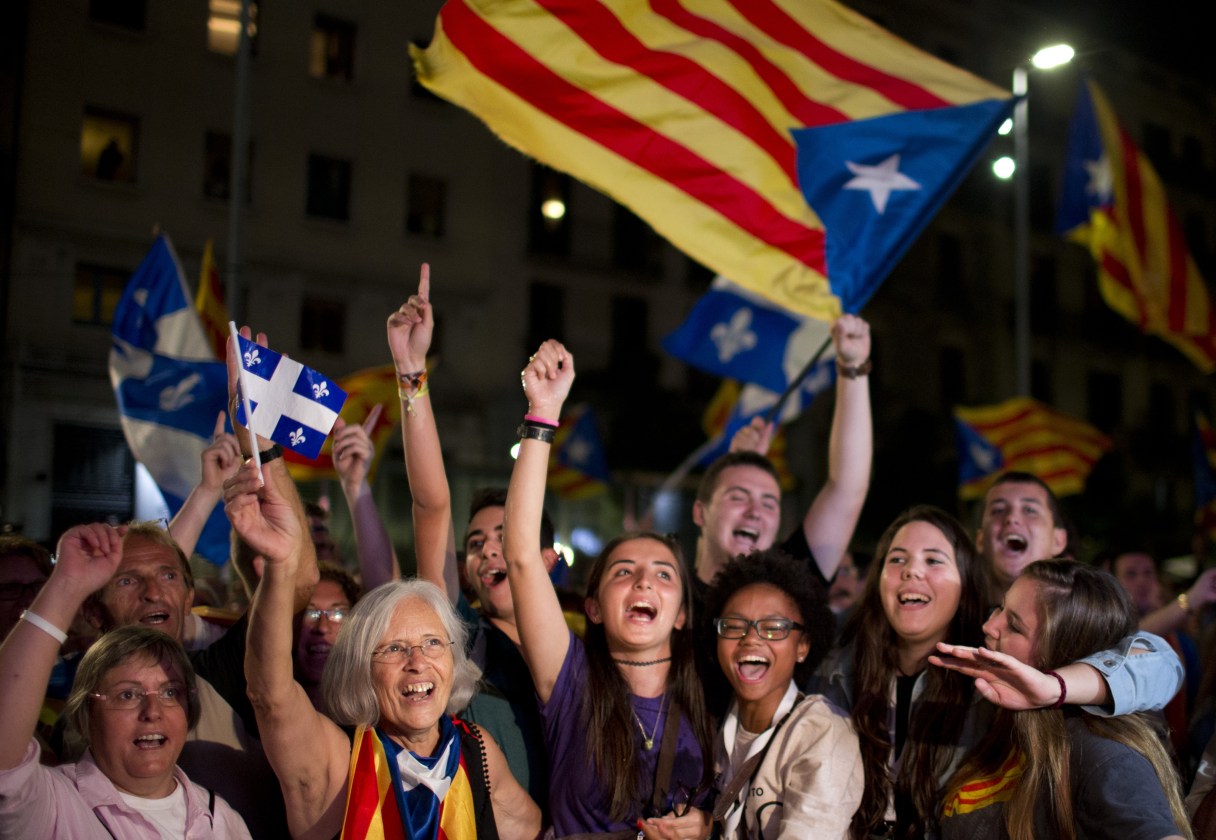
Catalonian pro-independence supporters celebrate in Barcelona, Spain, Sunday Sept. 27, 2015. Voters in Catalonia participated in an election Sunday that could propel the northeastern region toward independence from the rest of Spain or quell secessionism for years. (AP Photo/Emilio Morenatti)
Catalonian pro-independence supporters celebrate in Barcelona, Spain, Sunday Sept. 27, 2015. Voters in Catalonia participated in an election Sunday that could propel the northeastern region toward independence from the rest of Spain or quell secessionism for years. (AP Photo/Emilio Morenatti) Catalonian pro-independence supporters celebrate in Barcelona, Spain, Sunday Sept. 27, 2015. Voters in Catalonia participated in an election Sunday that could propel the northeastern region toward independence from the rest of Spain or quell secessionism for years. (AP Photo/Emilio Morenatti)

BARCELONA, Spain (AP) – Parties pushing for independence from Spain won a majority of seats in Catalonia’s regional Parliament in a ballot Sunday, but failed to secure more than 50 percent of the popular vote in an election they had hoped would give them a clear, unequivocal mandate for secession.

With 90 percent of the votes counted, the “Together for Yes” group of secessionist parties had 63 seats in the 135-member parliament, meaning they would need to join forces with the radical Popular Unity Candidacy party – that secured 10 seats – to be able to push regional legislation through.

However, together they only won 47.6 percent of the popular vote, meaning opponents to independence were in a majority.

Here are some questions and answers about the Catalonia independence vote:

Q: How and why did the vote come about?