
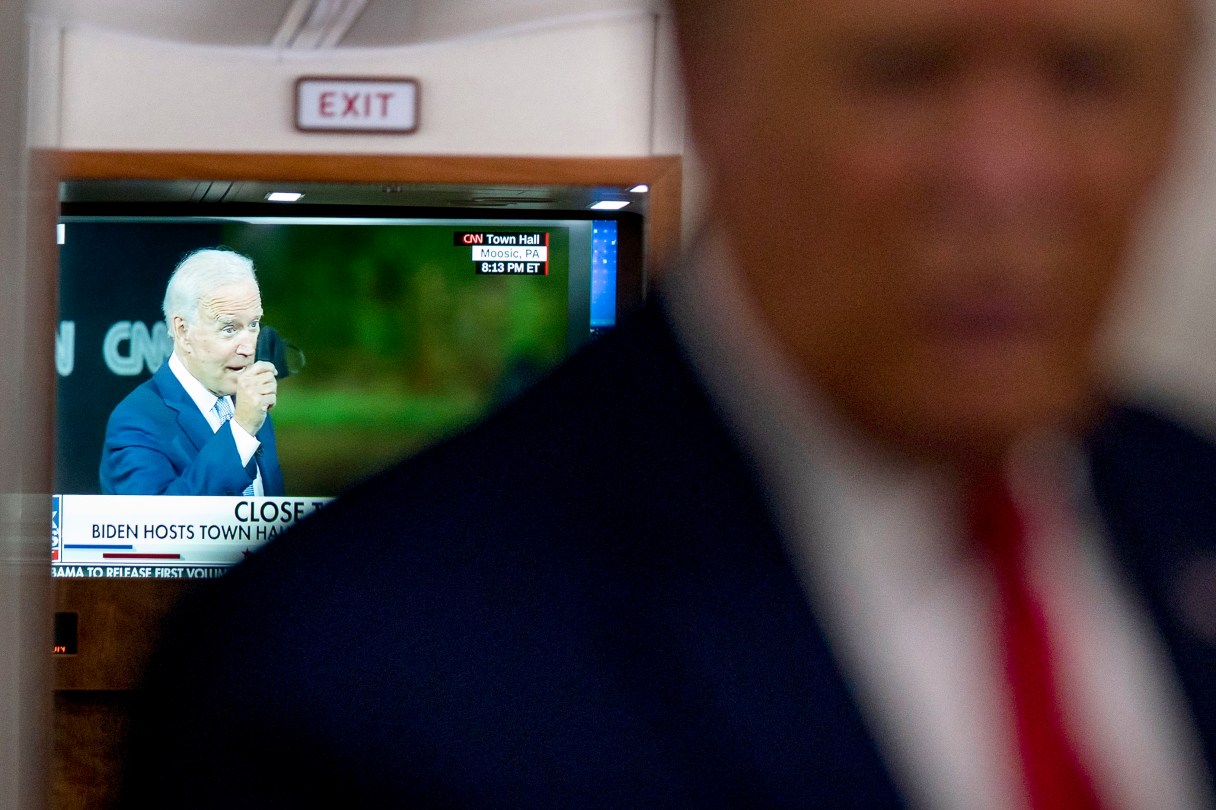
MINNEAPOLIS (AP) – Minnesota has backed Democratic presidential candidates for nearly half a century and rarely receives much attention during the final stages of the race. This is when campaigns typically focus their resources on more traditional swing states like Florida or Pennsylvania.
But Minnesota will feel like a genuine battleground on Friday as President Donald Trump and his Democratic challenger, Joe Biden, campaign here to mark the beginning of early voting.
They’re expected to avoid the state’s most populated areas near Minneapolis to focus on largely white rural and working-class voters, some of whom shifted to Republicans for the first time in 2016. Trump will be in Bemidji, about 200 miles (320 kilometers) north of Minneapolis, while Biden will swing through Duluth, on the banks of Lake Superior and close to the Wisconsin border.
Since narrowly losing Minnesota in 2016, Trump has emphasized the state in hopes that a victory this year could offset losses in other states. He has visited regularly and kept a close eye on issues of particular importance to rural corners of the state. He’s reversed an Obama administration policy prohibiting the development of copper-nickel mining and has bailed out soybean, corn and other farmers who have been hurt by trade clashes with China.
More recently, he’s embraced a “law and order” message aimed nationally at white suburban and rural voters who may be concerned by protests that have sometimes become violent. That’s especially true in Minnesota, where the May killing of George Floyd by a police officer sparked a national reckoning on racism.