
Tuesday, November 10, 2026Nov 10

Coronavirus takes toll on US military as it tries to aid civilians

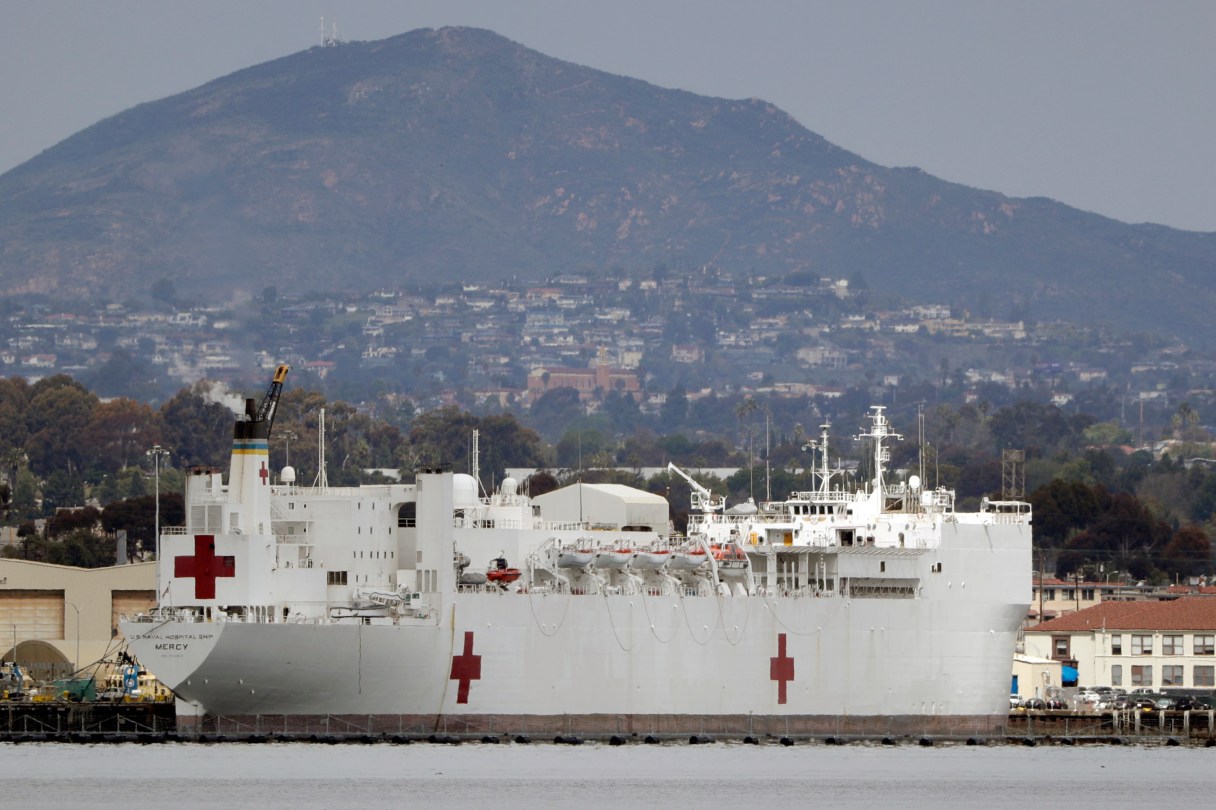
FILE - In this Wednesday, March 18, 2020, file photo, The USNS Mercy, a Navy hospital ship is seen docked at Naval Base San Diego in San Diego, Calif. To help combat an expected shortage of hospital beds as the virus spreads, the U.S. Naval hospital ship Mercy departed San Diego on Monday, March 23, bound for Los Angeles to treat non-coronavirus patients. The 1,000-bed USNS Mercy is expected to arrive in less than a week and begin accepting patients within a day of arrival, Capt. John R. Rotruck said. (AP Photo/Gregory Bull, File)
FILE - In this Wednesday, March 18, 2020, file photo, The USNS Mercy, a Navy hospital ship is seen docked at Naval Base San Diego in San Diego, Calif. To help combat an expected shortage of hospital beds as the virus spreads, the U.S. Naval hospital ship Mercy departed San Diego on Monday, March 23, bound for Los Angeles to treat non-coronavirus patients. The 1,000-bed USNS Mercy is expected to arrive in less than a week and begin accepting patients within a day of arrival, Capt. John R. Rotruck said. (AP Photo/Gregory Bull, File) FILE - In this Wednesday, March 18, 2020, file photo, The USNS Mercy, a Navy hospital ship is seen docked at Naval Base San Diego in San Diego, Calif. To help combat an expected shortage of hospital beds as the virus spreads, the U.S. Naval hospital ship Mercy departed San Diego on Monday, March 23, bound for Los Angeles to treat non-coronavirus patients. The 1,000-bed USNS Mercy is expected to arrive in less than a week and begin accepting patients within a day of arrival, Capt. John R. Rotruck said. (AP Photo/Gregory Bull, File)

WASHINGTON (AP) – The coronavirus is taking a growing toll on the U.S. military, and commanders and senior officials are bracing for worse. From nuclear missile fields at home to war zones abroad, from flight lines to ships at sea, the Pentagon is striving to shield vital missions even as it faces urgent calls for help on the civilian front.

Training exercises big and small, including one of the largest in Europe since the end of the Cold War, have been curtailed. Army recruiting stations have closed. Troops around the globe are hunkering down to confront an enemy unlike anything the world’s most lethal armed forces have encountered before.

“It’s unprecedented in my lifetime,” Defense Secretary Mark Esper said, adding that he believes that “in a period of months” the worst will be over and the force will once again be “fully mission capable.”

Until then, the ramifications of COVID-19 for the military are likely to expand. There are worries, for example, about the defense industry being weakened and key weapons development slowed.

Gen. Mark Milley, chairman of the Joint Chiefs of Staff, says that in a worse-case scenario, the military will lose some of its preparedness for combat and other missions. But the impact is likely to be “moderate to minor to low in terms of its risk” to national defense, he told reporters on Monday.