
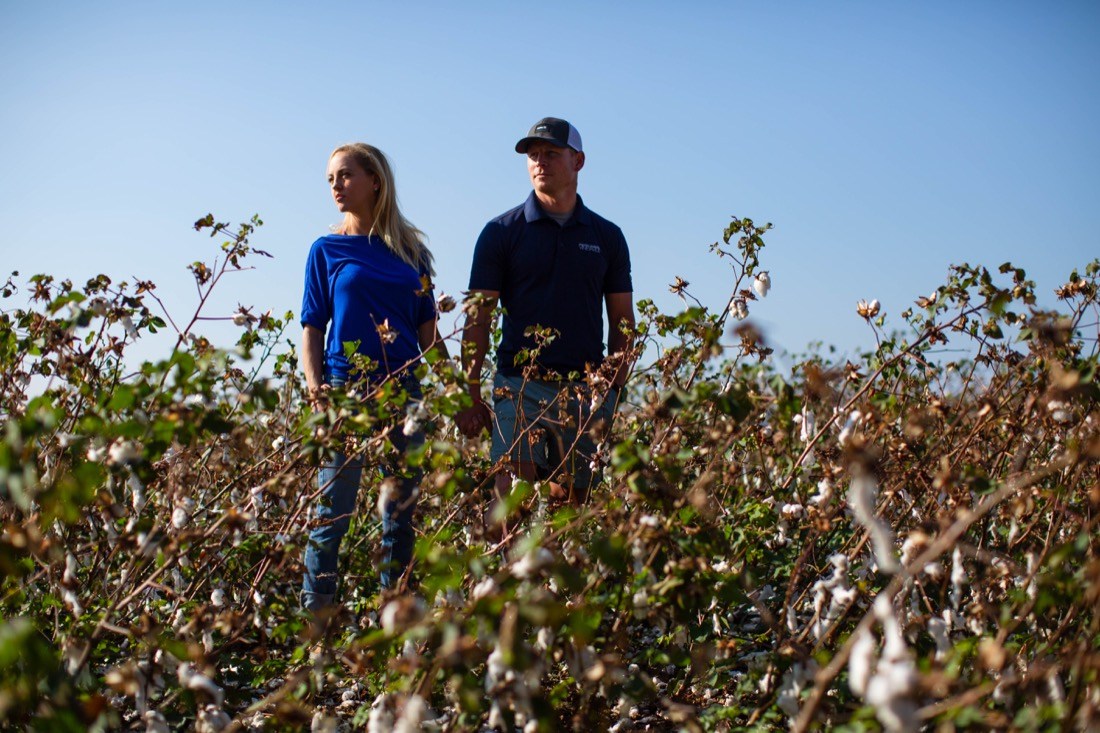
CAMILLA, Ga. – Renee Moss was standing in her ruined cotton field, boot-toeing a fallen boll that looked like a dirty snowball and debating her husband, Clayton, about how maybe, just maybe, Hurricane Michael was a result of climate change.
“Nope,” was the immediate response from Clayton Moss, a third-generation farmer in rural Mitchell County, where the storm’s 100-mph winds last week destroyed a robust cotton crop at the precise moment when the bolls were fattest, fluffiest and set to be harvested.
A few minutes earlier, Moss’ insurance broker had told him that his losses were likely to be in the 80 to 100 percent range, the same faced by nearly every other farmer in this part of southwest Georgia. The area, which was directly in the path of the storm, is one of the largest bastions of multigenerational family farming in the country, and a major national producer of cotton, peanuts, sweet corn, pine timber and poultry.
“Look, I know the storms are making it unsustainable. If what’s happened this year happens next year, we’re done,” Moss, 38, told his wife. “But we’ve always had bad weather. Is it getting worse? Have we had three bad years in a row? Yeah. But I’m worried about the weather, not about climate change.”
Renee Moss, 41, shrugged. “House divided,” she said.