
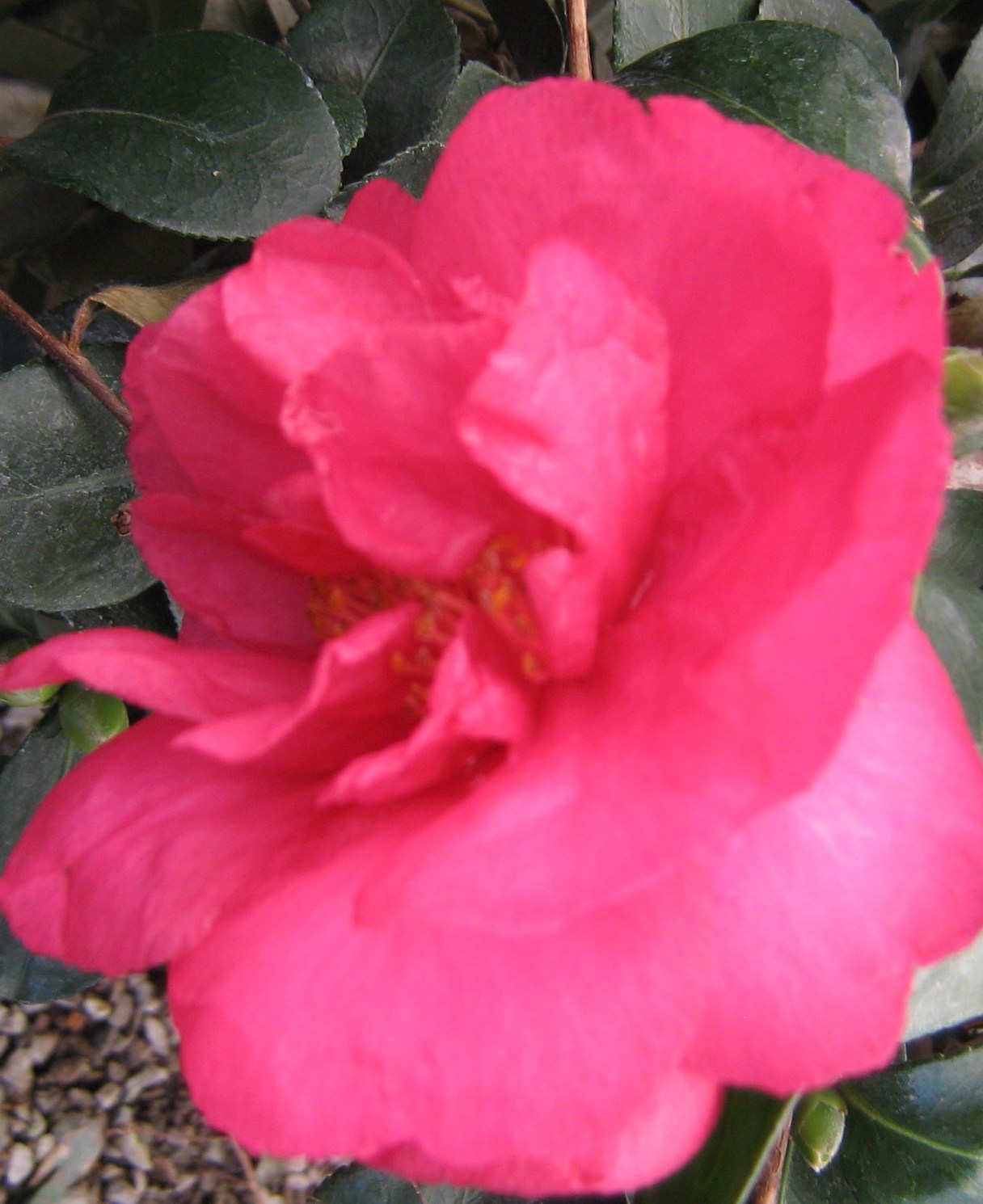
Against the stark landscape of late fall and winter, camellias blooming in your yard sparkle with eye-catching color.
“There are so many wonderful cold-hardy varieties now, and they are just starting to come into bloom for the fall,” said Barn Nursery manager Sara Melton.
There are two types of camellias: sasanqua and japonica.
“Sasanqua varieties bloom mainly in the fall and early winter and tend to have great numbers of small to medium-size flowers,” Melton said. “Some of our favorites are the deep-rose Bonanza, soft-pink Jean May and double-white Snow Flurry.
“Japonica camellias bloom from late winter to spring,” she continued. “They have larger, glossy leaves, and some types have very large double blooms. Japonicas have the best double-red flowers, including Kramer’s Supreme and Tom Knudsen.”
Here are five tips for choosing camellias.
1Color choices: Camellias mainly come in shades of white, pink and red, but there are a few that are soft yellow and dark burgundy. Flowers can take many shapes, from single flowers with strong yellow centers to rose-shaped blossoms with many petals.
2Starter sizes: The best size to buy is the three- to five-gallon container. These plants are large enough to have lots of blooms but are not too big to handle. One-gallon sizes, though maybe better for budgets, are for patient gardeners. In our climate, there is a two- to three-year difference between the one-gallon and three-gallon containers.
3Sun and temperature: Camellias prefer partial shade as well as an area protected from freezing winter winds. The most important thing is to choose varieties that are hardy enough for your winter. If you live on one of the mountains, choose camellias like Winter’s Cupid, a single white flower that blooms in early winter, or Betty Sette, a double-rose japonica that blooms in spring.
4Bloom time: The sasanqua varieties start blooming in mid-October and continue through December. Cleopatra is a great single pink that is blooming now, Melton said. Yuletide is a beautiful red variety that has a natural pyramidal shape and blooms in the Christmas season. The spring-blooming types will start in mid to late February and continue through early May. Farther South, camellias bloom in midwinter, but here it gets too cold.
5Pruning and feeding: Feed camellias with the same fertilizer you use for azaleas. Melton said The Barn likes Holly-tone, an organic, slow-release fertilizer with lots of micronutrients to keep the leaves deep green. Camellias can be pruned in spring after the blooms have faded. Prune fall-blooming types before the first of May and spring bloomers by June 15.
Contact Anne Braly at abraly@timesfree press.com or 423-757-6285.