
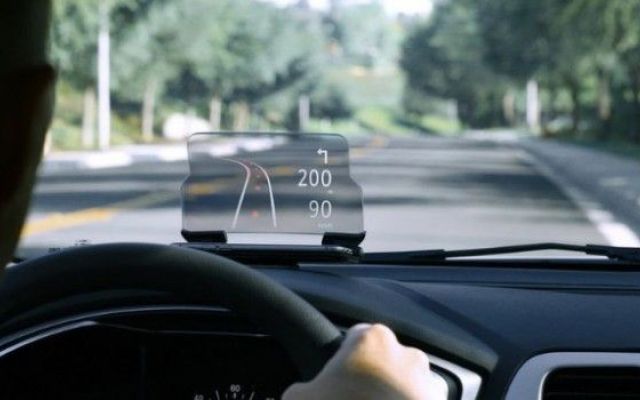
 The Hudway Glass is an aftermarket device that cradles a smartphone face-up on the dash and reflects the HUD smart phone app of the user’s choosing onto transparent glass in the driver’s line of sight.
Distracted driving has become a big safety issue on U.S. roads, as Americans become ever more addicted to their smartphones.
Glancing away from the road for any reason, from reading a text to fiddling with a radio knob, while driving at 65 or 70 mph for a mere four seconds leaves a driver distracted for the length of a football field.
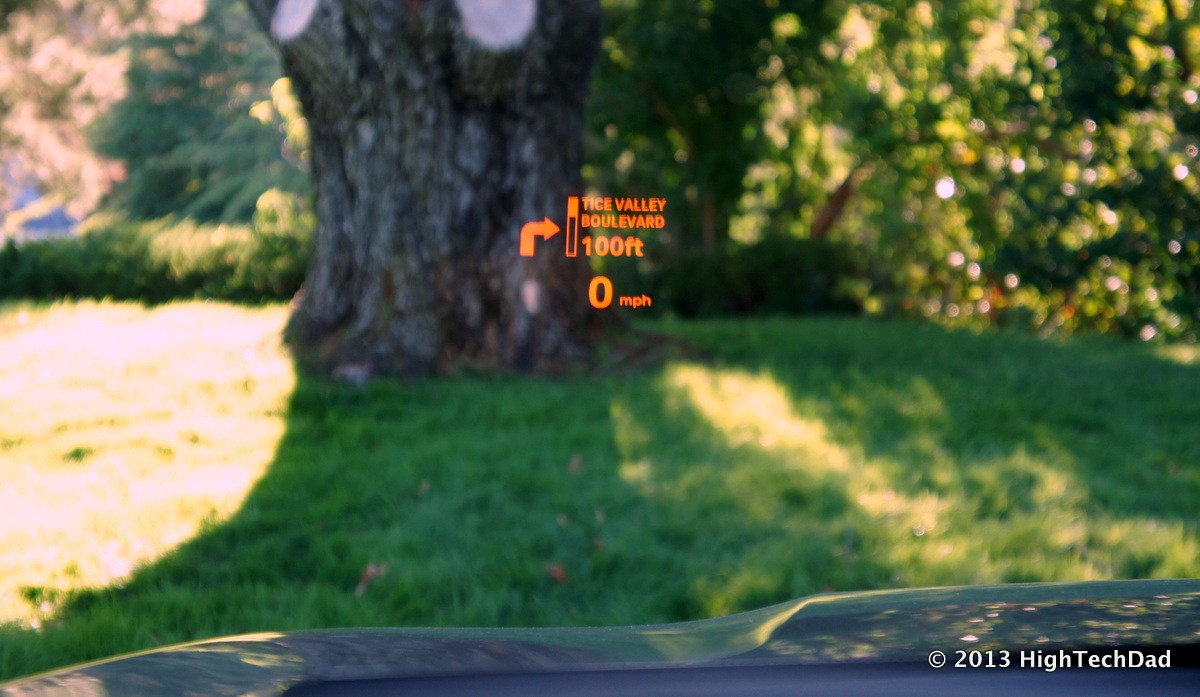
But there’s a potential high-tech solution for that: a head-up display or heads-up display (HUD), a technology borrowed from the cockpits of fighter jets that projects important information such as a car’s speed and turn-by-turn driving directions on the windshield so a driver never has to look aside.
HUD has become more common as a factory install as well as an aftermarket product – including through smartphone apps.
Oldsmobile was the first automaker to offer a HUD as an option on its 1988 Cutlass Supreme convertible Indy 500 Pace Car. It’s since been offered in a number of makes and models, including such luxury brands as BMW, Cadillac and Mercedes-Benz.
So buying (or test-driving) a brand-new luxury car with HUD as an option is one (not so practical) way to experience a top-of-the-line head-up display.
Aftermarket options include Navdy, an $800 device that’s attached to your dash with magnets. It plugs into a 1996-and-later-model car’s on-board diagnostics port, OBD II. Navdy not only shows the vehicle’s speed and gives driving directions, but lets users get notifications about texts and calls from their smartphones that they can dismiss or accept with a wave of the hand.
At the less-expensive end of the aftermarket spectrum are such devices as the Hudway Glass, an $80 universal vehicle accessory that the manufacturer says “turns any smartphone into a head-up display (HUD) for any car.” It’s a device that cradles your smartphone face-up on the dash and reflects the HUD smart phone app of your choosing onto transparent glass in the driver’s line of sight.
“The reflected image is discernible in any visibility (day and night),” Hudway Glass’s advertising says.
Or, the cheapest (as in free) way to experiment with head-up display is to simply download one of a number of free HUD apps to your iPhone or Android device and set your smartphone face-up on your dash so the windshield can reflect the smartphone’s screen. This works best at night.
The old saying “you get what you pay for” applies for head-up displays, with the best performance (at least in terms of visibility in all conditions; day or night) is reported from factory-installed HUDs and higher-end head-up aftermarket devices such as Navdy. These devices use projectors that put the display on the windshield in such a way that it appears to float in space above the hood.
While head-up display is touted as a safety device by automakers, aftermarket companies and app-makers, concerns have been raised about them making vehicles less safe due to “information overload.”
One thing’s certain: Head-up displays are becoming more common as what was once an exotic technology becomes commonplace. Head-up display will be in about 10 percent of new vehicles in 2020, by some estimates.