
Monday, November 9, 2026Nov 9

What happens to North Korea missiles fired into the sea?

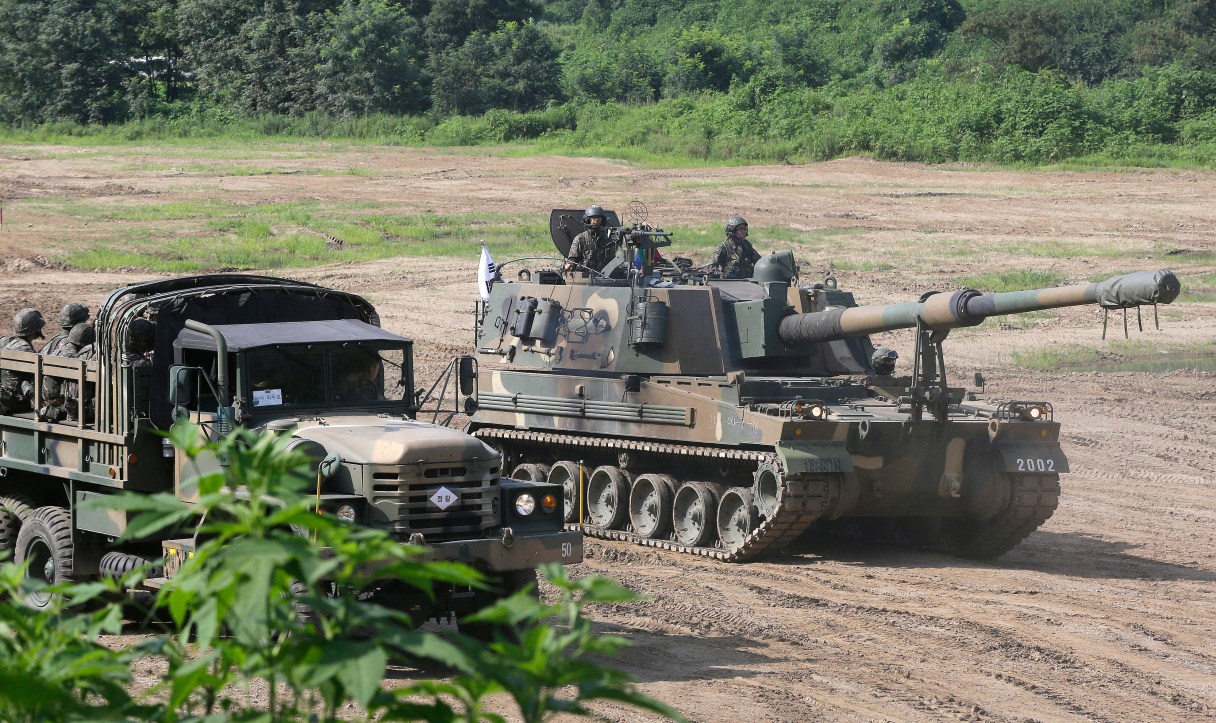
South Korea's army K-9 self-propelled artillery vehicle moves during an exercise in Paju, South Korea, near the border with North Korea, Thursday, Aug. 4, 2016. A medium-range ballistic missile fired Wednesday by North Korea flew about 1,000 kilometers (620 miles) and landed near Japan's territorial waters, Seoul and Tokyo officials said, one of the longest flights by a North Korean missile. (AP Photo/Ahn Young-joon)
South Korea's army K-9 self-propelled artillery vehicle moves during an exercise in Paju, South Korea, near the border with North Korea, Thursday, Aug. 4, 2016. A medium-range ballistic missile fired Wednesday by North Korea flew about 1,000 kilometers (620 miles) and landed near Japan's territorial waters, Seoul and Tokyo officials said, one of the longest flights by a North Korean missile. (AP Photo/Ahn Young-joon) South Korea's army K-9 self-propelled artillery vehicle moves during an exercise in Paju, South Korea, near the border with North Korea, Thursday, Aug. 4, 2016. A medium-range ballistic missile fired Wednesday by North Korea flew about 1,000 kilometers (620 miles) and landed near Japan's territorial waters, Seoul and Tokyo officials said, one of the longest flights by a North Korean missile. (AP Photo/Ahn Young-joon)

SEOUL, South Korea (AP) – North Korea has fired a barrage of missiles, artillery pieces and rockets into the waters off its east coast, including a medium-range ballistic missile that fell near Japan’s territorial waters this week.

The launches are meant to test its weapons systems, express anger in times of standoffs with South Korea and the United States, or prove it has the capability to attack its archrivals.

But little is known about what happens to those weapons. Do they cause any environmental problems in the ocean? Are some countries trying to retrieve the missile parts to study them?

Here is what we know about the likely fate of the weapons in the sea, which in some places is 3,000 meters (1.9 miles) deep or possibly deeper.

___