
Tuesday, November 10, 2026Nov 10

Holocaust survivor in Denver preserves memories in book

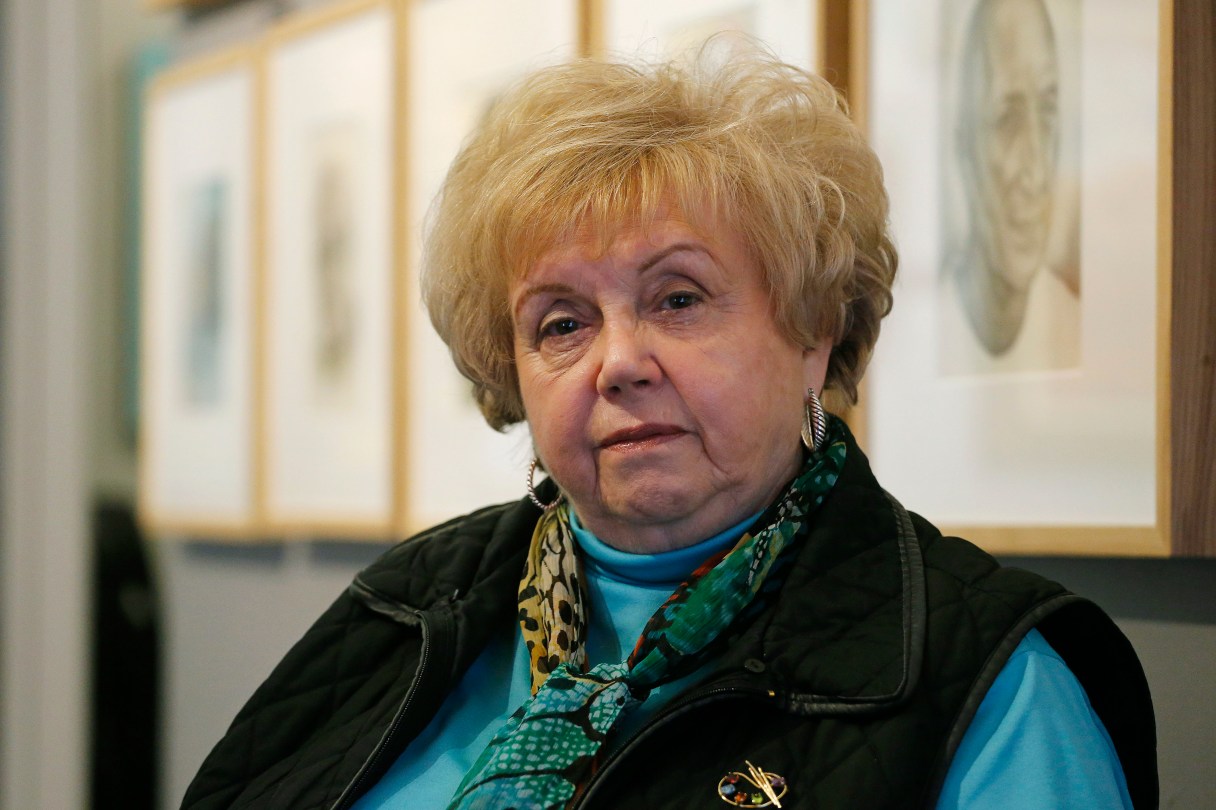
In this March 3, 2015 photo, Holocaust survivor and author Paula Burger, who is 80, sits inside the Mizel Museum of Jewish heritage, in Denver. Her 2013 memoir, "Paula’s Window: Papa, the Bielski Partisans and a Life Unexpected," tells her story of surviving the Nazi occupation of Eastern Europe as a child under the protection of the partisan fighters who roamed the forest along the border of Poland and Belarus. (AP Photo/Brennan Linsley)
In this March 3, 2015 photo, Holocaust survivor and author Paula Burger, who is 80, sits inside the Mizel Museum of Jewish heritage, in Denver. Her 2013 memoir, "Paula’s Window: Papa, the Bielski Partisans and a Life Unexpected," tells her story of surviving the Nazi occupation of Eastern Europe as a child under the protection of the partisan fighters who roamed the forest along the border of Poland and Belarus. (AP Photo/Brennan Linsley) In this March 3, 2015 photo, Holocaust survivor and author Paula Burger, who is 80, sits inside the Mizel Museum of Jewish heritage, in Denver. Her 2013 memoir, "Paula’s Window: Papa, the Bielski Partisans and a Life Unexpected," tells her story of surviving the Nazi occupation of Eastern Europe as a child under the protection of the partisan fighters who roamed the forest along the border of Poland and Belarus. (AP Photo/Brennan Linsley)

DENVER (AP) – From her kitchen window, Paula Burger can see children playing in the snow. On days like this, she thinks of the harsh winters when she, her little brother, her father and other Jews were hiding from the Nazis in the wilderness.

“I remember the cold, being in a forest without having anyplace else to go, and not even being safe where you are,” she said in an interview in her Denver apartment. “You make a conscious effort to live in the present. But the past is never far from you. It can come back in an instant.”

In her Holocaust memoir, Burger does not immediately confront the reader with the time when her choices were cold, disease and hunger in the forest; or brutality, cold, disease and hunger in the ghetto. Instead, she opens with her father carrying her on his shoulders to Sabbath services on a winter day before World War II. Afterward, the two walk home hand-in-hand.

“The journey culminated in the arms of my mother Sarah, who would pick me up and spin me around…”

“Paula’s Window: Papa, the Bielski Partisans and a Life Unexpected” is a story of survival, but also of faith in family, compassion and the possibility of beauty.