
ROME – During the circuslike years of Silvio Berlusconi, Italians grew flinchingly accustomed to being the butts of the world’s jokes.
Will they have the last laugh?
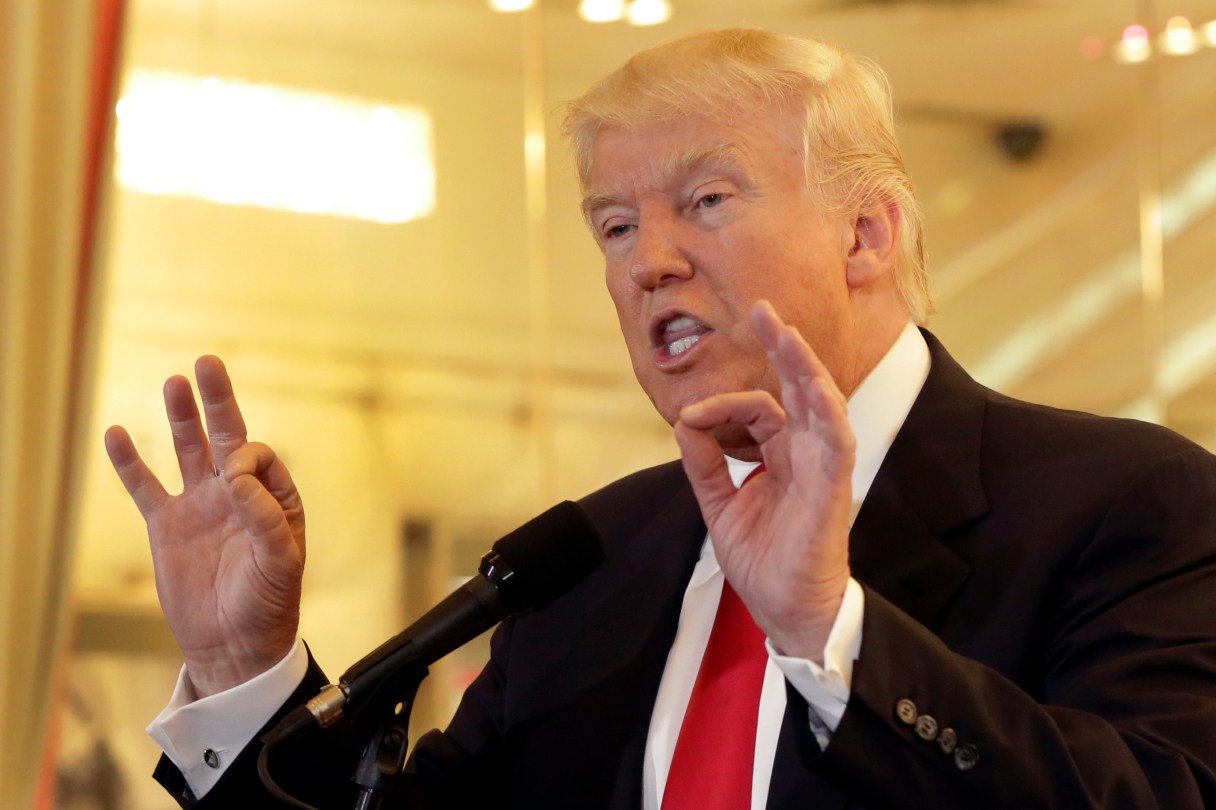
They look toward America and wonder. Me, too. In Donald Trump, we have a version of their buffoonish former prime minister – a clown all our own. He baffles and appalls much of Europe.
Here in Italy, he prompts an additional reaction: relief, even satisfaction, that another country is proving vulnerable to an emphatically tanned, flamboyantly randy and frequently ridiculous billionaire who makes promises he can’t possibly keep.
The Ferragamo is on the other foot.
“We do feel, partly, ha-ha-ha,” said Maria Valentini, a professor at a university just outside Rome. “It’s your turn.”
After I ended a telephone chat with an Italian architect I know well, he texted me an assessment from his assistant, who explained that under Berlusconi, “We felt like idiots. Now we feel better, thinking that in the U.S., they are being idiots squared.”
“It’s our revenge,” Roberto D’Alimonte, an Italian political scientist, told me. “Maybe America is becoming more like Italy.” He wasn’t entirely serious about the revenge. He was about America.
Italy is a fascinating vantage point for the upheavals of 2016.
Harsh nationalist sentiments are gripping Europe, and they demonstrate the pervasiveness of the anxieties that Trump is preying on and of the social and economic currents behind his rise. Austria nearly became the first Western European country with a democratically elected leader from the far right since the end of World War II. Britain is about to decide whether to exit the European Union.
There’s concern about a revival of fascism, as The Times’ Peter Baker recently noted.
And yet Italy, where Fascism was forged after World War I, seems placid in the context of the Continent. The current prime minister, Matteo Renzi, is charting an unremarkable center-left course.
“Italy has become some kind of oasis,” Patrizio Nissirio, a senior editor at the Italian news agency ANSA, told me.
Make no mistake: Italy has problems. Desperate migrants by the thousands are trying to reach Sicily by boat from Northern Africa, and many are dying en route. In October, there will be an epochal vote about a constitutional change that would reconfigure Italy’s Parliament, and Renzi has staked his government on its success.
I arrived in Milan to be foiled by a train strike. I made my way to Rome just in time for a garbage strike. The city’s most recent mayor resigned in disgrace, and the campaign to pick his successor has been a morose one. None of the Romans I encountered envisioned better days ahead.
But they were glad not to be residents of France, where Marine Le Pen surges anew. Or of Greece, where everything has fallen apart.
Or of the United States. Berlusconi, they argued, looks tame next to Trump. They have a point.
Berlusconi’s ascent was as surprising to many Italians in the 1990s as Trump’s was to many of us.
Berlusconi came to power by fashioning himself as a bold exception and antidote to the professional political class, which had just been racked by a widespread corruption scandal. He saw his opening.
He was a superrich businessman who knew how to feed the media – heck, he owned much of the media – and he pledged to use his entrepreneurial savvy to restore Italy’s economic dynamism, pushing the country forward by bringing it back to supposedly brighter days. He promised a “new Italian miracle.”
Many Italians note a more crucial difference. Trump, they say, has the potential to muck up the world in a way that Berlusconi never could. So Americans’ indulgence of him is infinitely more dangerous than Italians’ of Berlusconi.
“Italy doesn’t claim to be the watchdog of the world,” Valentini observed. “You are.”
New York Times News Service