
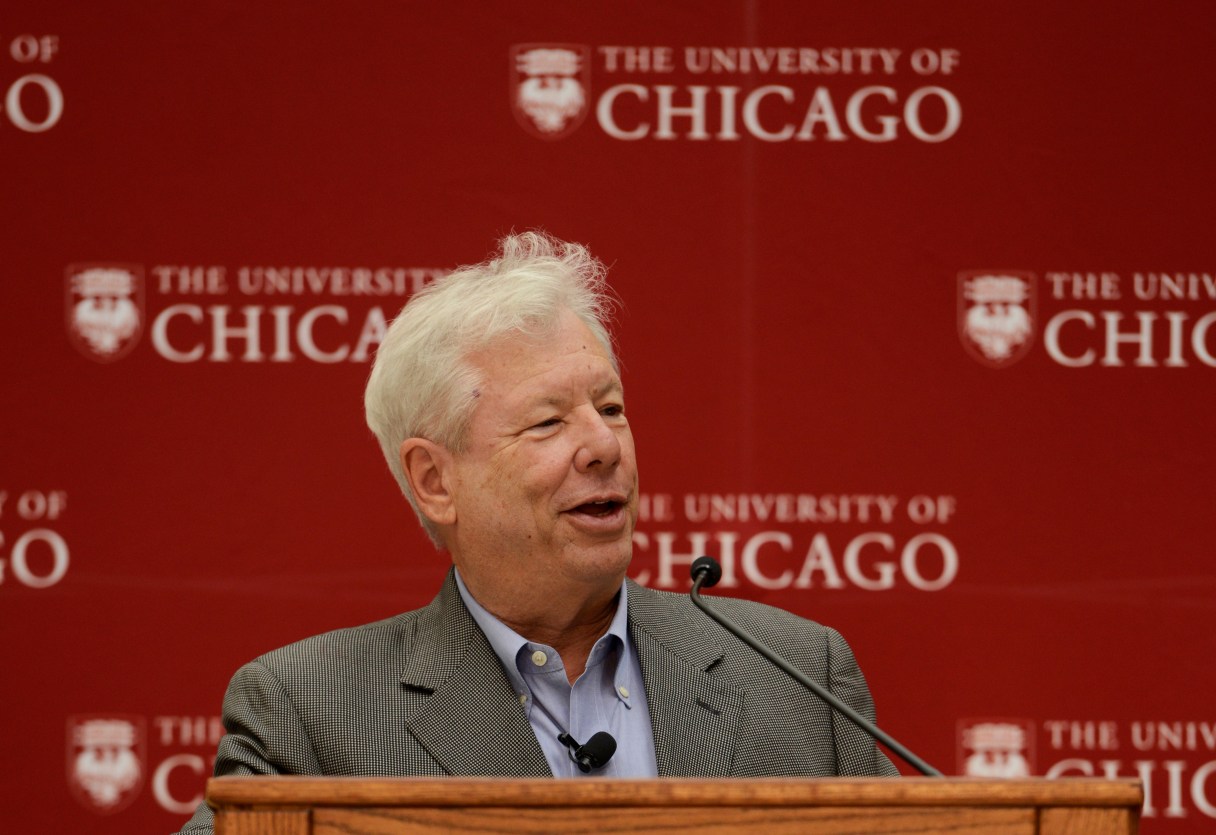
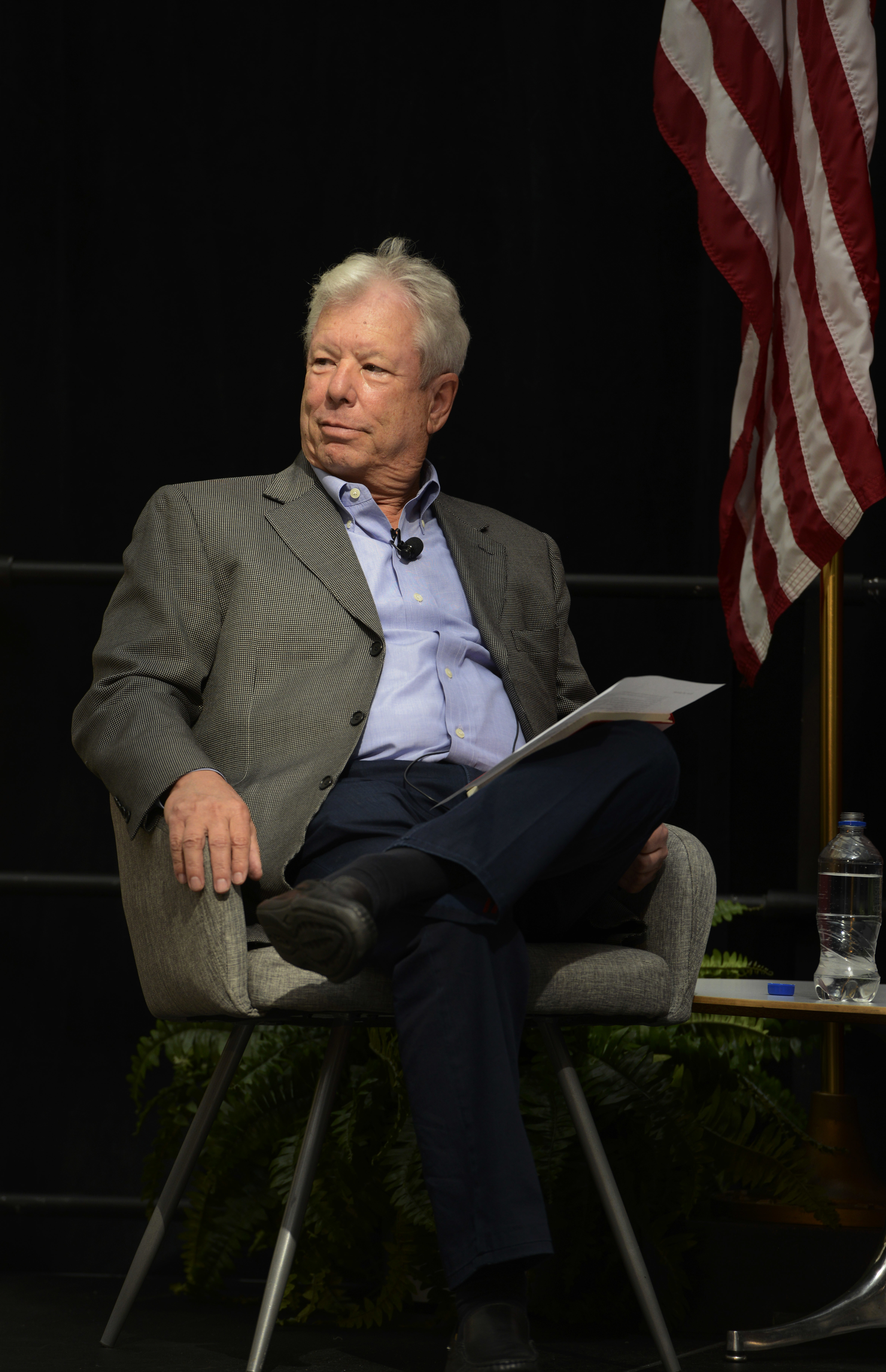
 University of Chicago professor Richard Thaler sits during a news conference announcing him as the winner of the Nobel economics prize Monday, Oct. 9, 2017, in Chicago. Thaler won for documenting the way people’s behavior doesn’t conform to economic models. As one of the founders of behavioral economics, he has helped change the way economists look at the world. (AP Photo/Paul Beaty)
WASHINGTON – People make poor economic choices. They don’t save enough for retirement. They refuse to cut their losses on plummeting investments because they won’t own up to mistakes. They buy houses and stocks when prices are high, thinking that what’s going up today will keep going up tomorrow.
Richard Thaler of the University of Chicago on Monday won the Nobel economics prize for documenting the way people’s behavior doesn’t conform to economic models that portray them as perfectly rational. As one of the founders of behavioral economics, he has helped change the way economists look at the world.
“Thrilling news,” said Thaler’s collaborator, Cass Sunstein of Harvard Law School. “He changed economics, and he changed the world.”
Far from being the rational decision- makers described in economic theory, Thaler found, people often make decisions that don’t serve their best interests.
Illogical human behavior has economic consequences: Baby Boomers haven’t saved enough for old age. Americans kept buying houses even as prices soared in the mid-2000s, creating a bubble that burst and triggered the biggest economic downturn since the 1930s. To limit the damage, behavioral economists say, economic policy needs to take human foibles into account.