
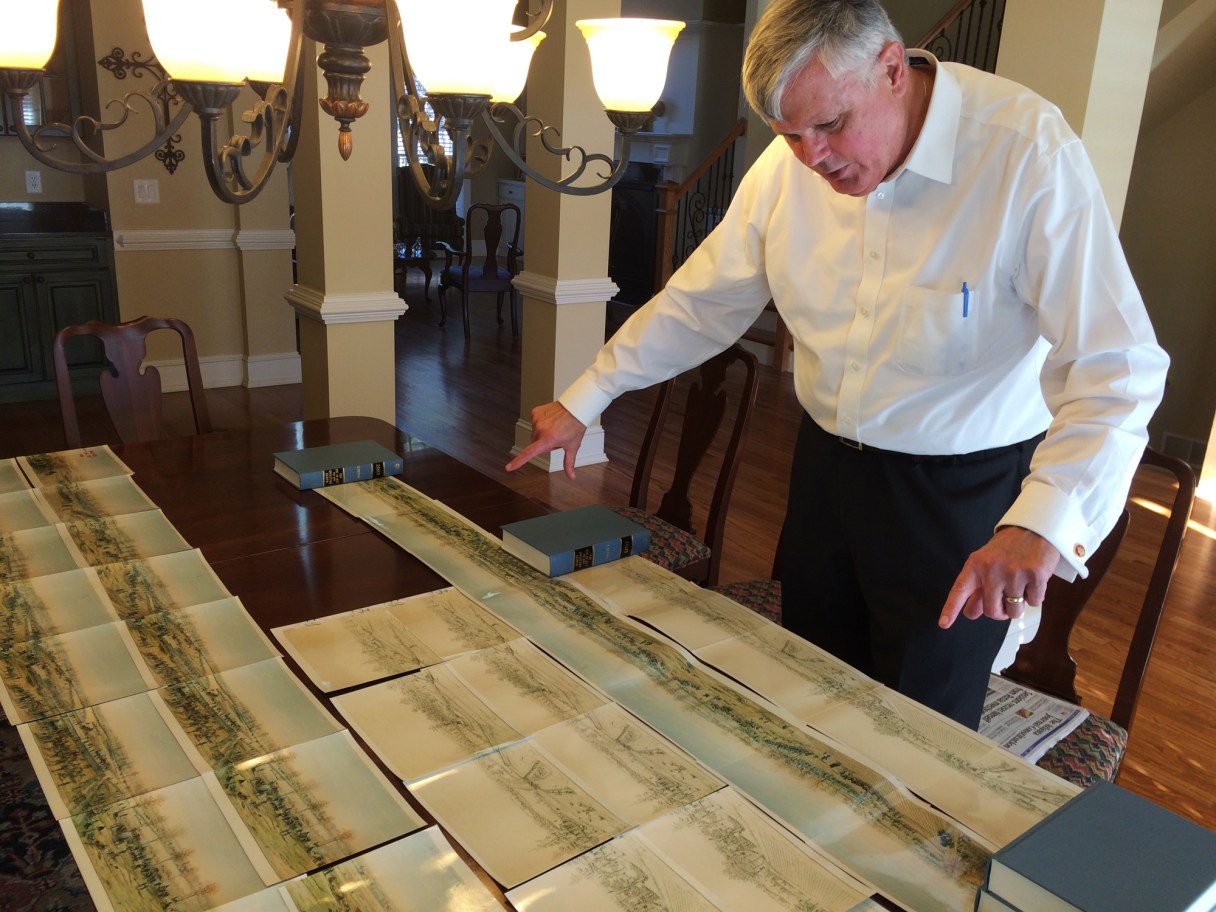
ATLANTA (AP) – As preservationists restore Atlanta’s colossal Cyclorama – a landmark that’s a sort of 19th-century high-tech Civil War history lesson – they also plan to showcase an all-but-forgotten drawing that reveals a little-known fact: There once were plans for another Atlanta Cyclorama.
The Atlanta History Center is restoring the 150,000-square-foot, cylindrical panorama painting showing the 1864 Battle of Atlanta. One of the world’s largest artworks, it was painted by German and Austrian immigrants hired in the 1880s to depict key moments in America’s Civil War.
One of the 19th century immigrant panorama painters, Louis Kindt, nearly destroyed the evidence of the second planned Cyclorama. He threw some of his sketches outside on a rainy night in a fit of rage, said his great-grandson, John Kindt. One drawing showed the Battle of Atlanta from a different perspective; the other, the Battle of Nashville.
There’s no evidence either was turned into one of the giant cycloramas he’d planned.
But Louis Kindt’s daughter retrieved the drawings from the rain. They were discovered years later.