
Thursday, November 12, 2026Nov 12

See-through mice reveal details of inner anatomy

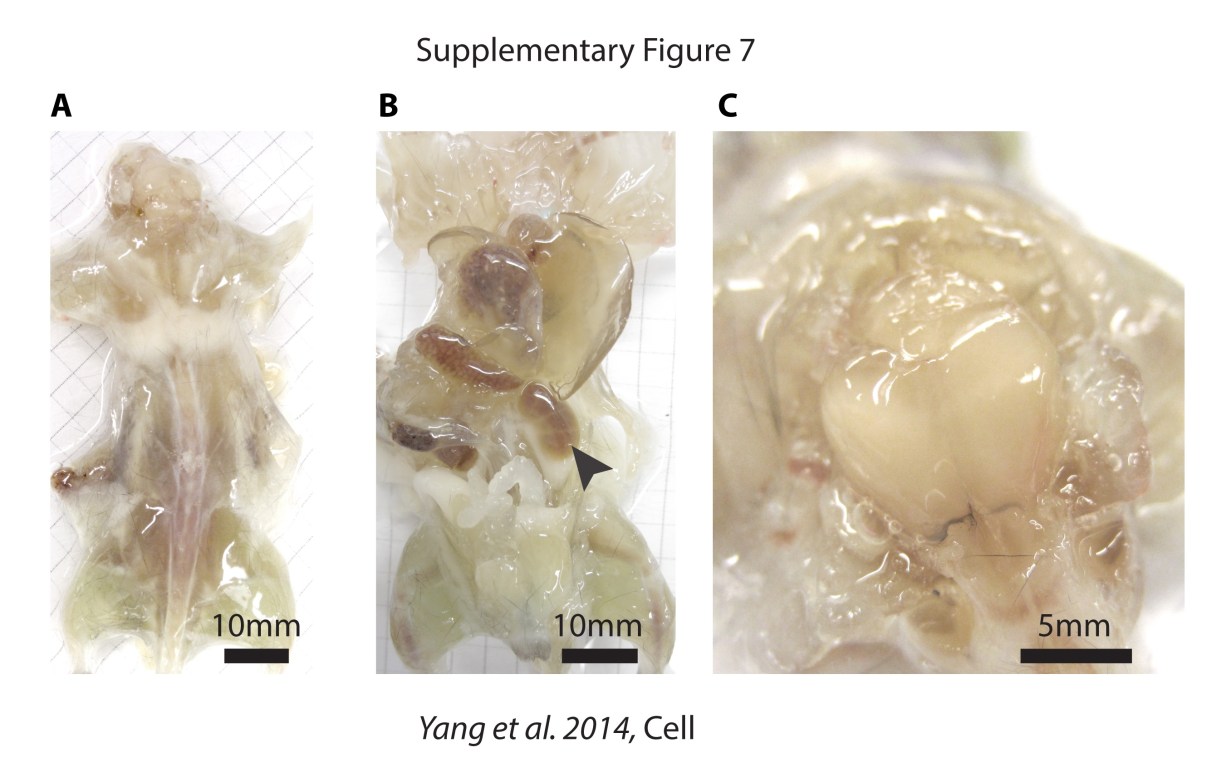
This undated photo combo provided by the journal Cell and taken with a bright field camera, shows a mouse with its skin removed during various stages of examination. In a study released by the journal Cell on Thursday, July 31, 2014, researchers describe a way to make see-through mice and rats, a step that should help them study fine details of anatomy for basic research. The center image shows the mouse after one week of the process. The image at right shows the latter stage, showing the brain of the mouse with it's skull removed. (AP Photo/Cell, Yang et al)
This undated photo combo provided by the journal Cell and taken with a bright field camera, shows a mouse with its skin removed during various stages of examination. In a study released by the journal Cell on Thursday, July 31, 2014, researchers describe a way to make see-through mice and rats, a step that should help them study fine details of anatomy for basic research. The center image shows the mouse after one week of the process. The image at right shows the latter stage, showing the brain of the mouse with it's skull removed. (AP Photo/Cell, Yang et al) This undated photo combo provided by the journal Cell and taken with a bright field camera, shows a mouse with its skin removed during various stages of examination. In a study released by the journal Cell on Thursday, July 31, 2014, researchers describe a way to make see-through mice and rats, a step that should help them study fine details of anatomy for basic research. The center image shows the mouse after one week of the process. The image at right shows the latter stage, showing the brain of the mouse with it's skull removed. (AP Photo/Cell, Yang et al)

NEW YORK (AP) – Researchers have found a way to make see-through mice, but you won’t find these critters scampering in your kitchen.

The transparent rodents aren’t alive and they’re for research only, to help scientists study fine details of anatomy.

Before they are treated with chemicals, the animals are euthanized and their skin removed. Researchers made their inner organs transparent, but not their bones.

The results look like a rodent-shaped block of gelatin with the organs held in place by connective tissue and a gel used in the procedure.

Mice are mainstays of biomedical research because much of their basic biology is similar to ours and they can be altered in ways that simulate human diseases.